


Staffordshire Figure Vase
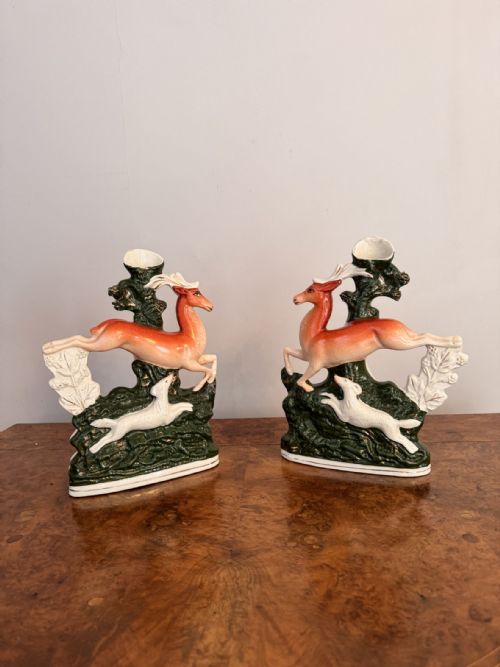
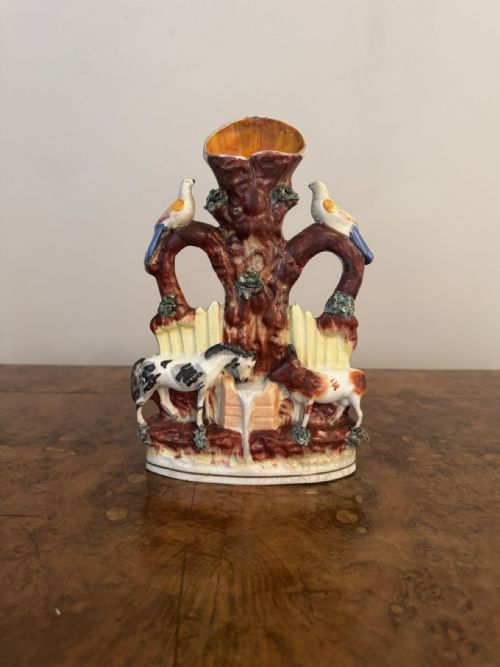
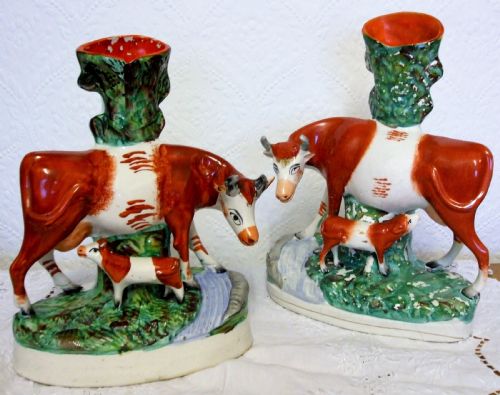
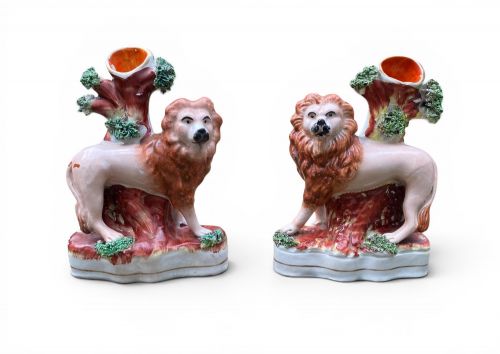
These Staffordshire figure vase examples bring Victorian mantelpieces alive with modelled animals, figures and practical spill holders.
Staffordshire Figure Vase
A staffordshire figure vase combines sculptural earthenware figures with a hollow spill holder designed to hold wooden matches for household fires. You encounter pairs of animals such as deer, cows with calves, lions, sheep and swans, alongside human figures including Scottish harvesters and literary scenes like Babes in the Wood.
Most pieces date from the nineteenth century during the Victorian period, spanning decades from eighteen fifty to nineteen hundred. These earthenwares take the form of flat back models intended to stand against a wall, or substantial symmetrical pairs created for mantelpiece display.
How they were made
The ceramic bodies rely on local clay traditions, fired to create sturdy decorative pottery before final enamel decoration and glazing took place in the kilns.
William Tell occasionally appears holding a crossbow next to a giant apple.
What varies in quality
Glaze consistency and the preservation of enamel colours over time determine the visual strength of each ceramic piece.
Walton
The Staffordshire Figure Vase Glossary
- Spill vase
- A hollow ceramic cylinder combined with a figurine, designed to hold wooden spill tapers for lighting lamps and fires. These vessels form an integral part of the modelled backdrops.
- Flat back
- A moulding technique where the reverse of the figure remains unmodelled and flat so the piece rests against a wall. This construction method saves ceramic material and weight.
- Pearlware
- A refined earthenware developed with a thin glaze that pools with a slight bluish tint. It provides a pale body for hand-painted enamel decoration.
- Enamel
- Opaque coloured decoration applied over the fired glaze and fixed with a lower temperature second firing. These mineral pigments supply the bright reds, greens and blues on the figures.
Staffordshire Figure Vase: Frequently Asked Questions
What is a Staffordshire figure vase?
A Staffordshire figure vase is a nineteenth century ceramic sculpture that incorporates a hollow cylindrical holder for wooden spills alongside modelled human or animal figures.
Potters made these earthenware pieces in Staffordshire as decorative mantelpiece ornaments that doubled as practical household accessories.
How were these vases used?
Victorian households placed these ceramic figures on mantelpieces where the integrated hollow section held wooden spill tapers close to the fireplace.
Users pulled a thin wooden spill from the vase, lit it from the fire, and carried the flame to candles or oil lamps.
How do I date a Victorian piece?
Dating relies on stylistic clues, ceramic bodies, and the distinct characteristics of Victorian production methods recorded across the nineteenth century.
Changes in enamel palettes and glaze compositions help distinguish mid century examples from those produced towards nineteen hundred.
Why are animals common subjects?
Victorian buyers favoured domestic animals and wildlife, leading potteries to produce numerous spill vases featuring deer, sheep, cows, lions and swans.
These subjects reflected rural life and popular sentiment during the nineteenth century.