

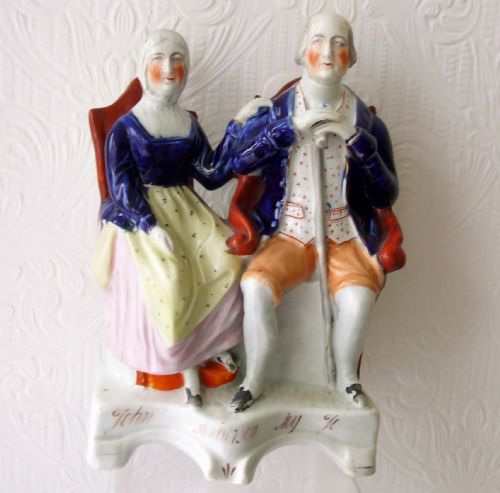


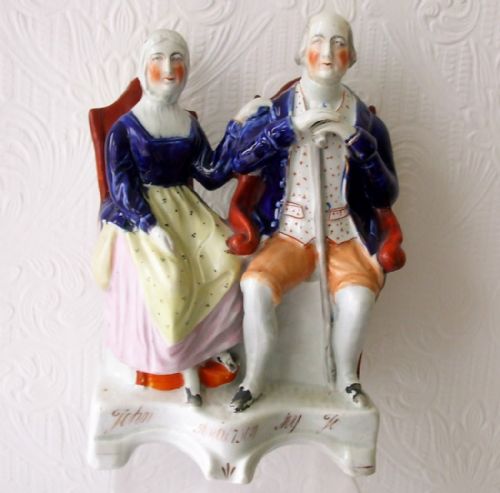


Staffordshire Couple Figure
These Staffordshire couple figure examples bring domestic Victorian folk art into the room, offering characterful portrayals of couples and companions.
Staffordshire Couple Figure
A staffordshire couple figure represents pairs of people, courting couples, or companions, often designed as flatbacks to sit neatly against a mantelpiece. These ceramic statuettes and decorative figurines capture the social tastes of the nineteenth century through paired subjects.
The pieces on this page span the Victorian period, including styles such as Victorian folk art and rococo revival. Subjects range from country couples and Scottish lairds to theatrical figures and literary characters.
Makers produced these pottery figurines as ornamental items for British homes. Buyers frequently find spill vases combined with the figures, serving a practical purpose alongside the decoration.
How They Were Made
Potters shaped these figures from earthenware and porcelain, applying lead glaze and enamel paint to build up the surface decoration. Many pieces utilise simple moulding techniques typical of nineteenth-century ceramic production.
Craftsmenship relied on hand-finishing with enamel paints and occasional applications of gold leaf to highlight details. The flatback construction left the reverse unglazed or partially finished for display against a wall.
Staffordshire Couple Figure Retail Price Guide 2026
Typical asking prices for staffordshire couple figure among the pieces listed under this phrase on Sellingantiques today, from the lower quarter to the upper quarter. They describe what is for sale here now, not the wider market.
Listings feature nineteenth-century earthenware and porcelain, incorporating lead glaze, enamel paint, and gold leaf across Victorian styles.
What Varies in Quality
Quality rests in the crispness of the moulding and the neatness of the enamel paintwork. Finer examples retain bright, well-applied pigments without muddy bleeding across the glazed surfaces.
Minton
The Staffordshire Couple Figure Glossary
- Flatback
- A figure moulded with a flat, unpainted reverse designed to stand against a wall or mantelpiece. This method saved materials during production.
- Spill Vase
- A hollow vertical cylinder incorporated into the figure to hold wooden spills for lighting fires. They combine utility with decorative display.
- Lead Glaze
- A glossy coating applied to earthenware before firing to seal the porous clay body. It gives the figures their characteristic shine.
- Enamel Paint
- Vitreous colours applied over the glaze and fired at a lower temperature. This technique allowed makers to achieve vibrant hues on finished ceramics.
Staffordshire Couple Figure: Frequently Asked Questions
What is a flatback figure?
A flatback figure is a ceramic ornament moulded with a finished front and a plain, flat back. This design allowed the piece to sit flush against a wall or mantelpiece.
Makers adopted this style extensively during the Victorian era to economise on material while creating visually appealing domestic decorations.
How were spill vases used?
Spill vases held thin wooden tapers used for transferring a flame from the hearth to candles or pipes. They served a practical function in nineteenth-century homes.
Potters integrated these holders into the design of couple figures, blending everyday utility with decorative portraiture.
Which periods do these figures date from?
The pieces on this page date primarily from the nineteenth century, spanning decades such as the eighteen-fifties and eighteen-eighties. Most examples belong to the Victorian era.
Stylistic shifts across these decades moved from simple country subjects towards more detailed theatrical and literary pairs.
What materials make up the figures?
These ornaments consist mainly of earthenware and porcelain bodies finished with lead glazes. Artisans decorated the surfaces using enamel paint and occasional gold leaf.
The combination of ceramic bodies and colourful glazes produced the durable, decorative objects collected today.