


Staffordshire Dog Figure
A Staffordshire dog figure brings the charm of the Victorian fireside directly into a modern room.
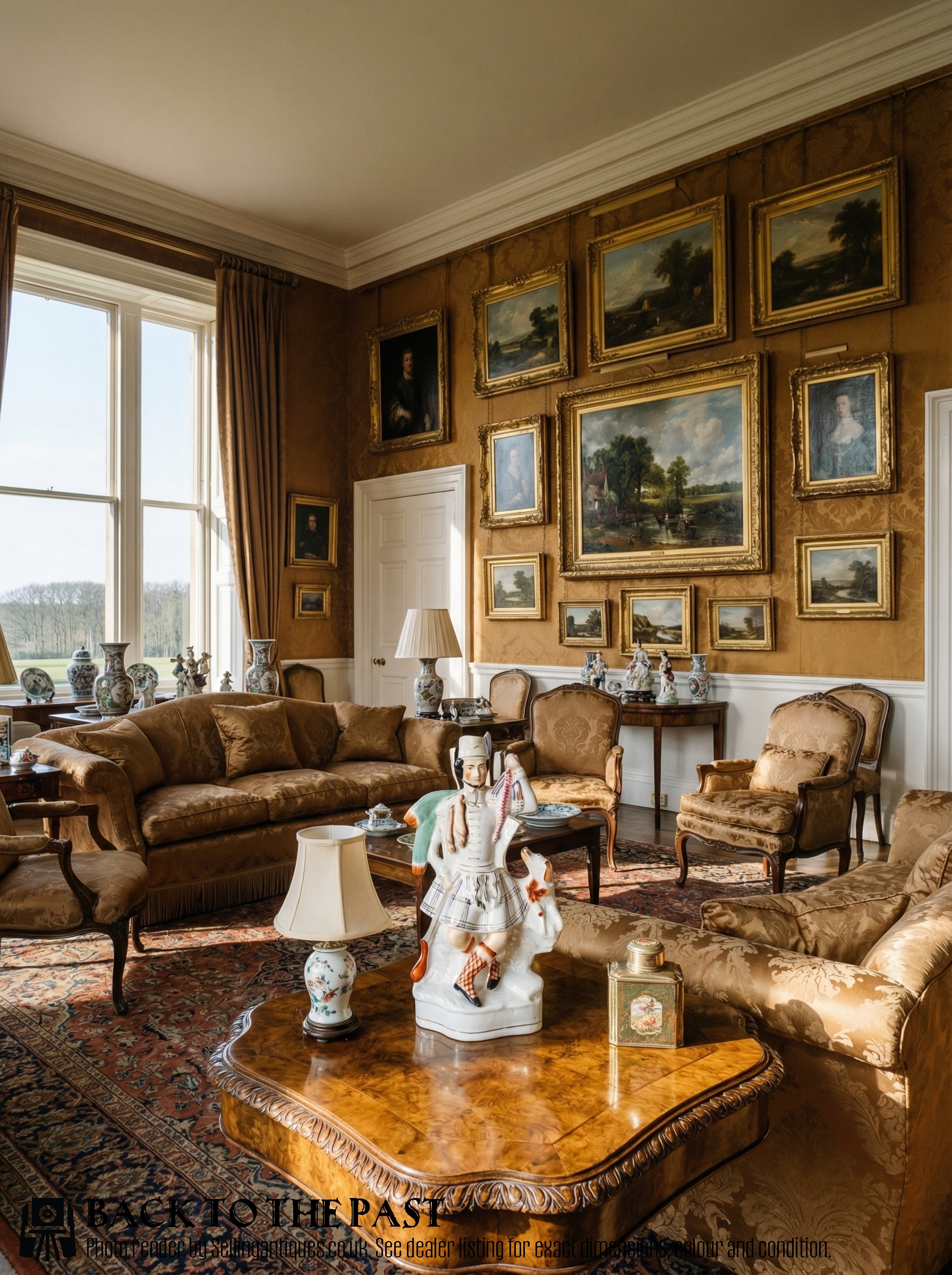
Staffordshire Dog Figure
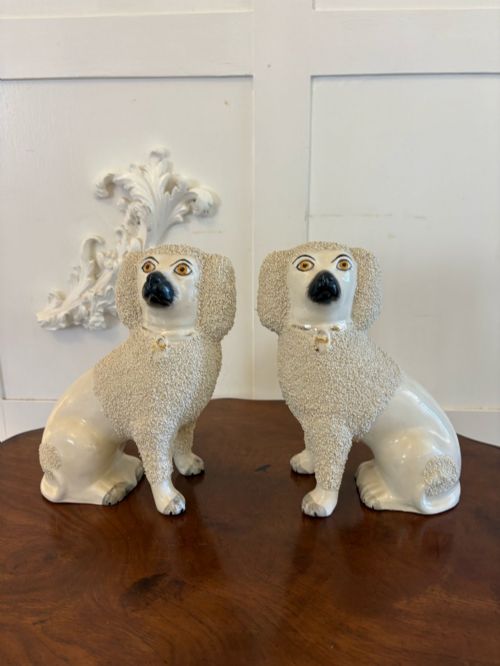
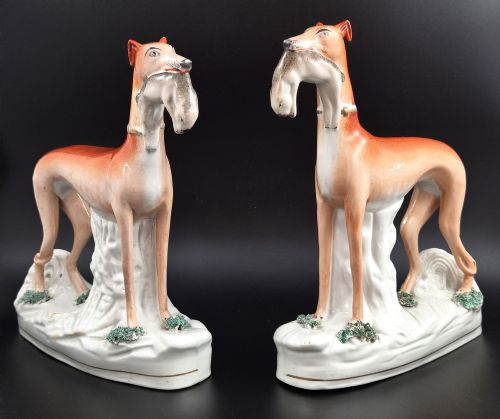
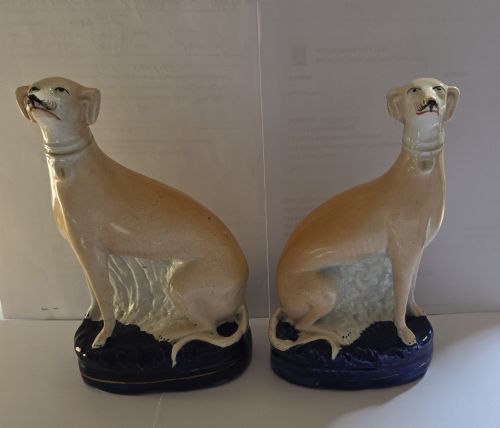
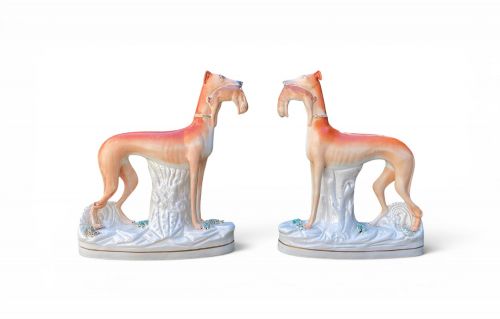
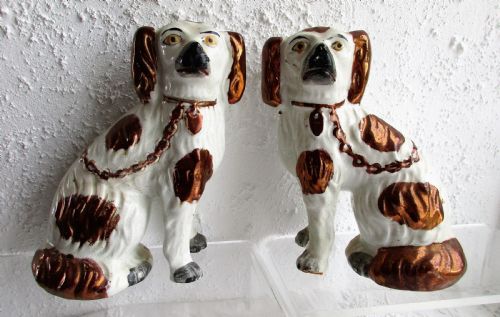
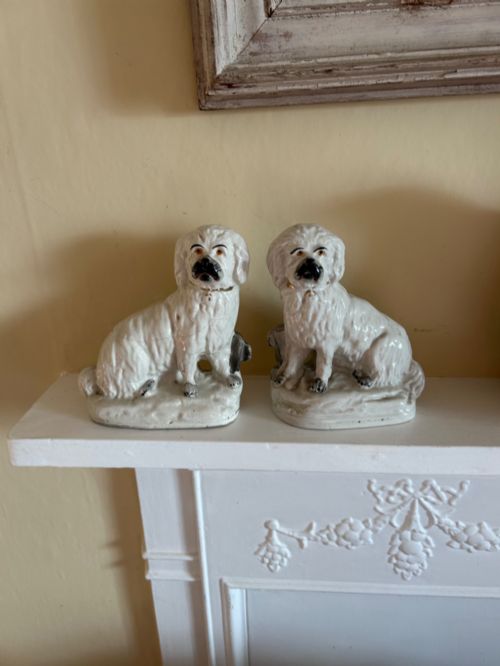
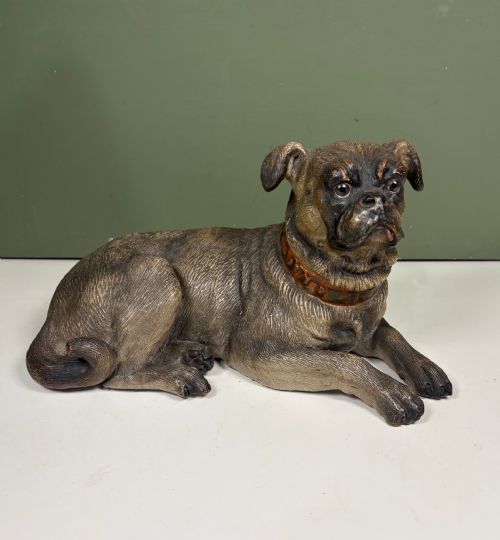
A staffordshire dog figure typically takes the form of a seated spaniel, greyhound, poodlex or pug, often arranged as a mirrored pair. These ceramic mantel ornaments appear across the nineteenth century, with Victorian examples dominating the selection alongside occasional Georgian and Edwardian pieces.
Beyond standard mantel figures, the search phrase encompasses practical forms such as inkwells, quill holders, and money boxes modelled as dogs. Collectors encounter various breeds, including dalmatians, maltese terriers, and whippets, produced by regional potteries in England.
How they were made
Potters shaped these earthenware figures using slip-casting or pressing methods, applying a clear lead glaze over the ceramic body. Many items feature hand-painted enamel details, sometimes complemented by gilt highlights or gold leaf.
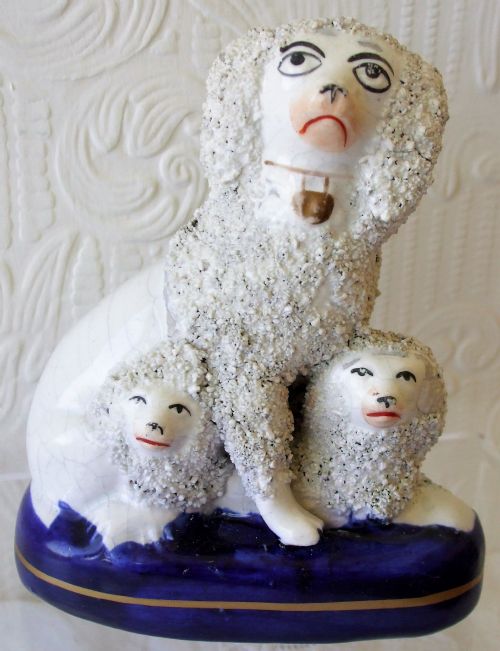
Specialist surface effects appear on specific examples, including copper lustre finishes and textured clay applications such as confetti or gravelware to simulate animal coats.
Listings feature earthenware bodies finished with lead glaze, enamel paints, and occasional gold leaf.
What varies in quality
Overall scale and proportion also define the better examples, with larger models or unusual pairings like hunting dogs with hares showing superior sculptural ambition from the potter.
Thomas Parr·Wooley·Wedgwood & Co. Ltd
The Staffordshire Dog Figure Glossary
- Earthenware
- A porous pottery body fired at lower temperatures, commonly used for nineteenth-century figures. It requires a glaze to become impermeable to liquids.
- Lead glaze
- A glossy coating containing lead oxide applied to ceramic wares before firing. This technique produces a smooth, reflective surface across many traditional figures.
- Copper lustre
- A metallic glaze finish imparting a coppery sheen to the ceramic surface. Potters achieved this effect by applying metallic salts during a reduced-oxygen firing.
- Confetti dog
- A textured pottery figure featuring small applied clay fragments mimicking shaggy fur. This specialised technique is frequently seen on nineteenth-century poodles.
- Quill holder
- A desk accessory featuring a modelled figure with built-in apertures for resting writing implements. These functional items combine decorative ceramic art with desktop utility.
Staffordshire Dog Figure: Frequently Asked Questions
What breeds were most commonly made?
Spaniels, poodles, and greyhounds appear most frequently across the available inventory. Potters also modelled rarer breeds like pugs, dalmatians, and whippets.
These dogs were usually produced in pairs to sit symmetrically on mantelpieces. Smaller miniature versions and functional items like inkwells also exist within the broader tradition.
Were these figures meant for display?
Mantel decoration served as the primary purpose for the vast majority of pairs. They were designed to ornament the principal living rooms of nineteenth-century homes.
Some pieces doubled as useful objects, functioning as money boxes, quill holders, or desk inkwells. Even these utilitarian forms remained primarily decorative in intent.
How do I care for antique ceramics?
Gentle dusting with a dry, soft brush is the safest method for routine maintenance. Avoid using water or cleaning solutions on painted enamel surfaces, which can be sensitive to moisture.
Keep figures away from direct sunlight and areas subject to sudden temperature fluctuations. Stable placement prevents accidental tipping and damage to brittle earthenware.