




Staffordshire Ceramic Animals
Staffordshire ceramic animals are characterful figures of dogs, lions, and farm animals that bring a touch of nineteenth-century charm to a mantelpiece.
Staffordshire Ceramic Animals
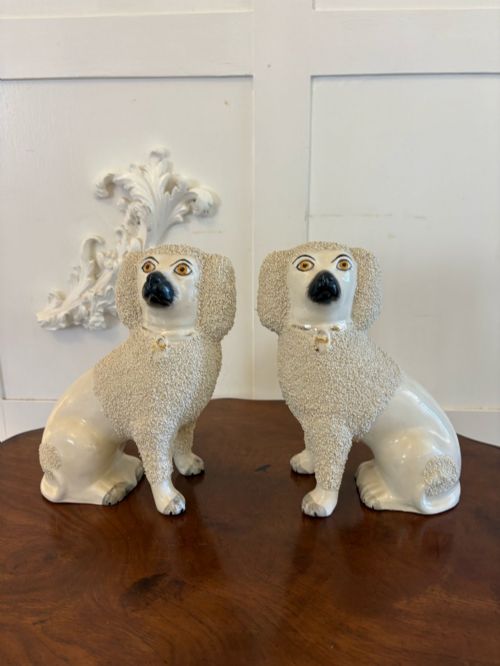
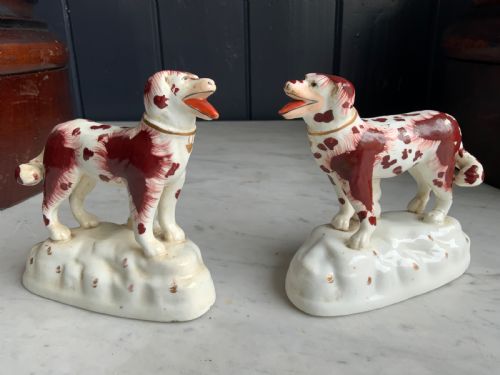
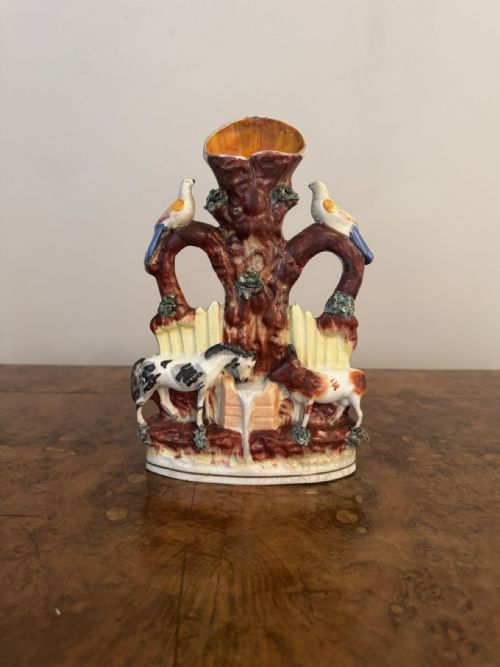
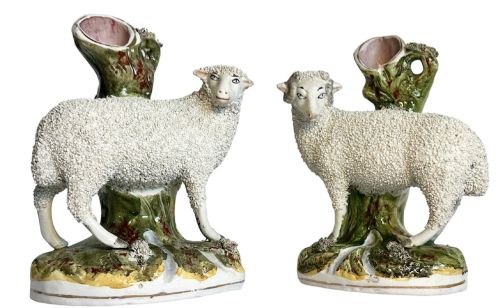
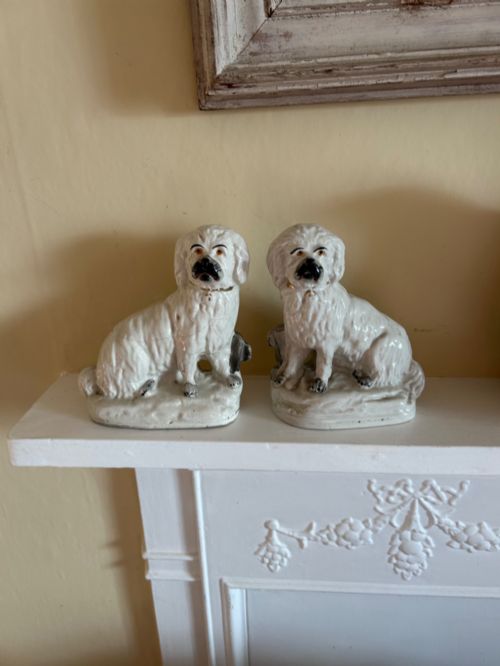
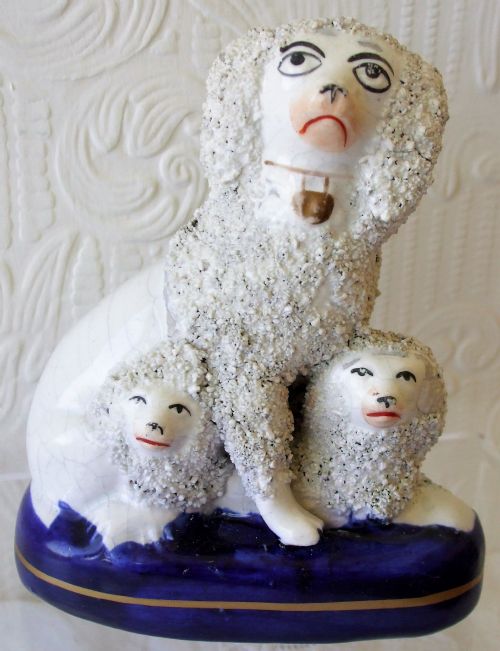
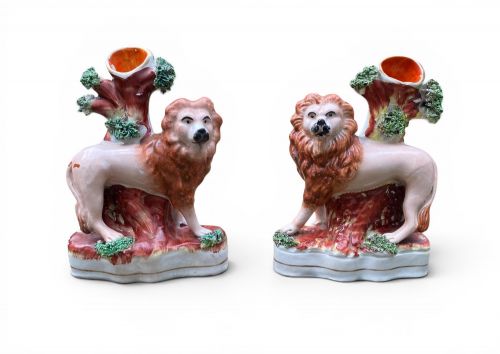
Staffordshire ceramic animals include decorative figures, spill vases, and bookends depicting poodles, lions, sheep, zebras, and cats. These pieces capture the domestic and exotic menagerie popular in nineteenth-century homes, often modelled as facing pairs.
The Victorian period dominates the selection, though earlier Regency examples and later nineteenth-century pieces also appear. Figures range from miniature dogs to large reclining lions and cows with calves.
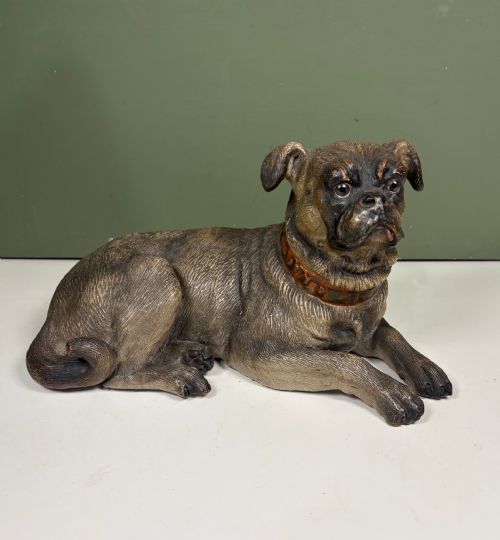
Makers and regional potteries such as Walton produced pearlware and earthenware versions that have become hallmarks of English country pottery. Buyers encounter spaniels, pugs, greyhounds, and leopards most frequently on this page.
Materials and methods
Potters shaped these figures using earthenware, pearlware, and porcelain, frequently finishing them with lead glaze and enamel colours. Some pieces utilise a treacle glaze to achieve a deep, lustrous brown surface.
Judging quality and character
Superior examples display crisp modelling in the clay and careful, detailed brushwork on the facial expressions and coats. The definition in the fur and the symmetry of a matched pair distinguish finer pieces from simpler production.
The richness of the glaze and the preservation of the enamel colours play a significant role in a piece's visual impact. Early pearlware bodies and well-executed transfer or hand-painted markings elevate the standing of a figure.
Walton·Wooley·Rockingham Pottery
The Staffordshire Ceramic Animals Glossary
- Pearlware
- A refined earthenware developed in the late eighteenth century featuring a subtle blue-tinted glaze over a white body. It provides a smooth surface for hand-painted enamel decoration.
- Spill vase
- A hollow ceramic tube attached to a figure designed to hold wooden spills for lighting candles or fires. These combine practical utility with decorative animal sculpture.
- Treacle glaze
- A rich, dark brown lead glaze that produces a glossy, molasses-like finish on ceramic figures. It appears frequently on nineteenth-century lions and dogs.
- Lead glaze
- A glossy coating containing lead oxide applied to earthenware before firing. It seals the porous clay body and deepens the underlying colours.
Staffordshire Ceramic Animals: Frequently Asked Questions
What animals appear most often?
Dogs such as poodles, pugs, and greyhounds form the largest group, alongside lions, sheep, and cows. Exotic creatures like zebras and leopards also occur.
Pairs of animals intended for mantle display make up a large portion of the available selection.
How are spill vases used?
Spill vases feature a cylindrical container integrated behind the main animal figure to hold wooden spills. These thin spills transferred flames from the hearth to candles.
They combine sculpture and fireside utility in a single ceramic object.
What is pearlware?
Pearlware is an early type of refined earthenware with a pale blue-tinged glaze. It bridged the gap between creamware and later white earthenwares.
Potters used it extensively for figures and animal groups in the late eighteenth and early nineteenth centuries.
Are these figures glazed?
Most pieces feature a clear lead glaze that protects the painted enamel details underneath. Some incorporate a dark treacle glaze for a glossy brown appearance.
The glaze gives the ceramic surface its characteristic shine.