


Staffordshire Blue White Tureen
These staffordshire blue white tureen pieces offer rich transfer-printed transfer scenes and sturdy earthenware forms that anchor a traditional dining table.
Staffordshire Blue White Tureen
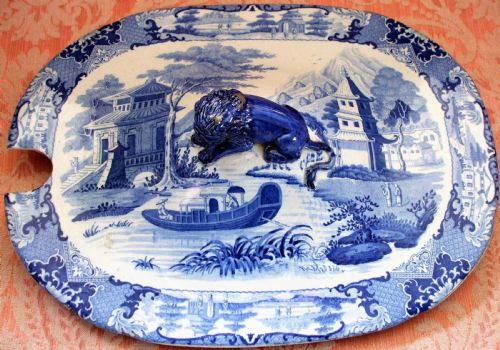
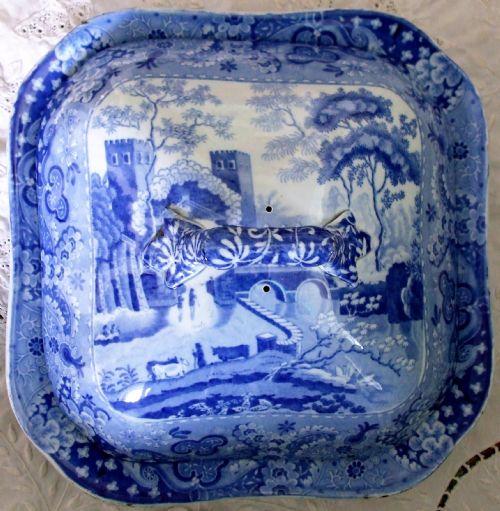
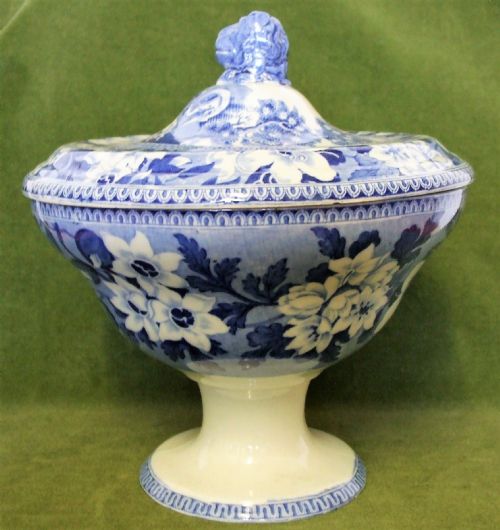
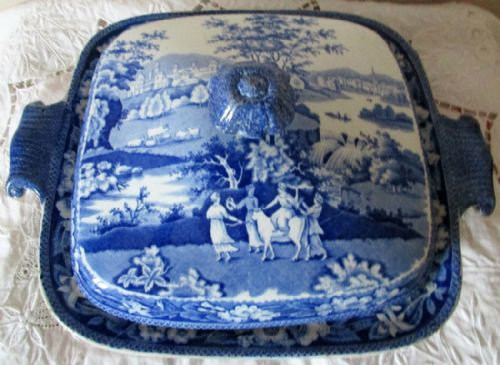
A staffordshire blue white tureen combines practical servingware with intricate blue transfer-printed imagery derived from 19th Century and Georgian manufacturing traditions. Buyers will encounter vegetable tureens, sauce tureens, and matching covers that showcase pictorial subjects like castle and elephant patterns.
The objects stem predominantly from the 19th Century, incorporating Georgian, Regency, and Victorian stylistic influences across various forms including miniature dinner service pieces and soup ladles. Most examples survive as covered vegetable tureens or sauce vessels complete with decorative handles and stands.
Materials and Manufacture
Potters shaped these vessels from earthenware and pearlware, applying a transparent lead glaze over the ceramic body to seal the porous clay. Cobalt oxide provided the deep blue pigment utilised in the transfer-printing process.
Makers transferred engraved paper patterns onto the fired ceramic surfaces before glazing and refiring the pieces to fix the blue designs permanently into the finish.
Certain sauce tureens feature charming lion head covers that peer out over the table while holding gravy.
Quality Factors
The crispness and depth of the transfer print dictate visual appeal, with sharper lines and consistent cobalt saturation distinguishing superior pieces. Faint smudging in the blue oxide reduces the definition of complex pictorial scenes.
Completeness alters desirability, as tureens retaining their original matching covers and stands command greater interest among collectors. The condition of the lead glaze and the absence of heavy crazing also influence overall merit.
Robert Hamilton·J. and R. Clews·John Rogers and Son·John and Richard Riley·James Wallace and Co.·Copeland and Garrett
The Staffordshire Blue White Tureen Glossary
- Transfer-printed
- A decorative technique where an engraved copper plate transfers a printed design onto paper, which is then applied to the ceramic body before glazing. This method allowed potteries to produce intricate pictorial patterns rapidly across large runs.
- Pearlware
- A refined earthenware developed in the late 18th century featuring a thin glaze with a slight bluish tint that pooled in crevices. It bridges the gap between creamware and later white earthenwares.
- Flow blue
- A style of ceramic decoration where the cobalt blue pigment intentionally blurred or bled into the surrounding white glaze during firing. This created a soft, misty aesthetic highly popular in mid-19th-century tableware.
- Lead glaze
- A glossy coating containing lead oxide applied to ceramic bodies to create a smooth, waterproof surface. It enhances the brightness of the underlying blue transfer prints.
Staffordshire Blue White Tureen: Frequently Asked Questions
What is a staffordshire blue white tureen used for?
These covered vessels served soups, sauces, or vegetables at the dining table during the 19th Century.
Today, they function primarily as decorative centrepieces or storage vessels in traditional interiors.
How do I date a staffordshire blue white tureen?
Dating relies on stylistic clues, pattern names, potter marks, and the specific tone of the blue transfer print.
Earlier Georgian pieces often feature pearlware bodies, whereas later Victorian examples show distinct glaze and body compositions.
Are these tureens safe for daily use?
Most antique earthenware tureens possess historical glaze compositions and delicate structures unsuited for modern dishwashers or frequent dining.
Collectors generally treat them as display objects to preserve the integrity of the ceramic and glaze.
Why do patterns vary between different tureens?
Potteries drew inspiration from romantic landscapes, classical architecture, and exotic animals to decorate their tableware lines.
Named patterns like Canton River Scene, Castle, or Elephant gave each manufacturer a distinctive artistic identity.