





Antique English Vegetable Tureen
These antique English vegetable tureen examples bring stately dining heritage to the table, offering generous proportions and striking transfer-printed pottery designs.
Antique English Vegetable Tureen
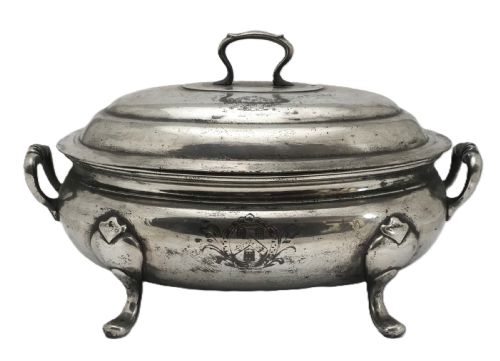
An antique English vegetable tureen serves as a covered vessel designed for presenting vegetables or side dishes at formal dining tables. The pieces found here span the Georgian, Regency, and Victorian periods, showcasing traditional serveware forms from the late eighteenth century onwards.
Most selections feature earthenware, ironstone, or porcelain bodies, often accompanied by matching covers and sometimes ladles. The forms range from large covered bowls and entrée dishes to smaller sauce tureens suited for refined table service.
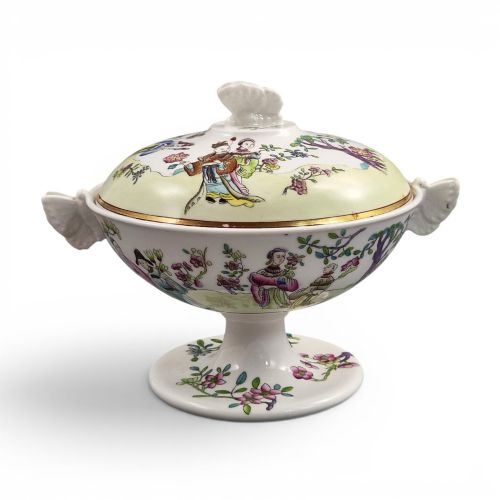
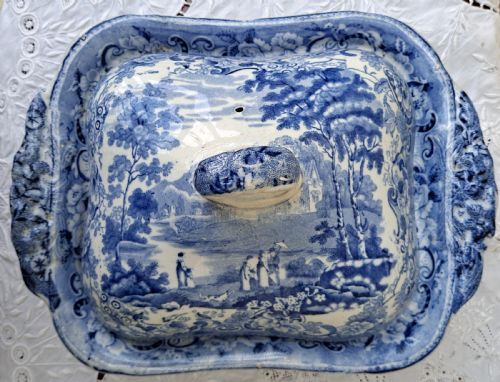
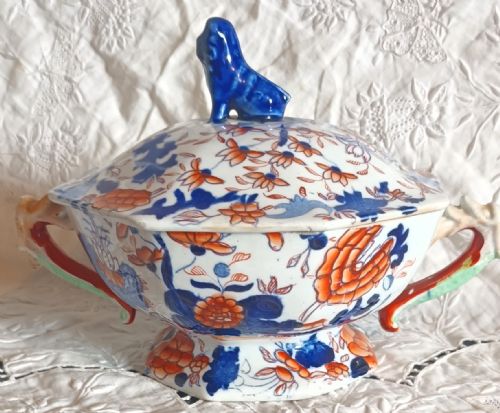
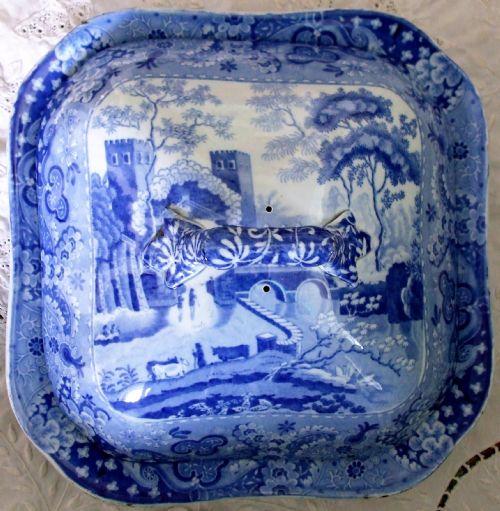
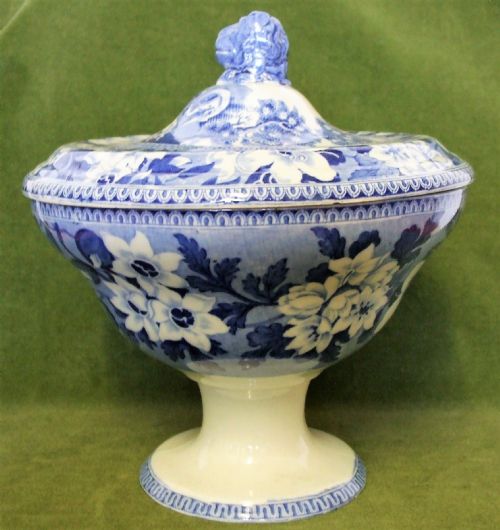
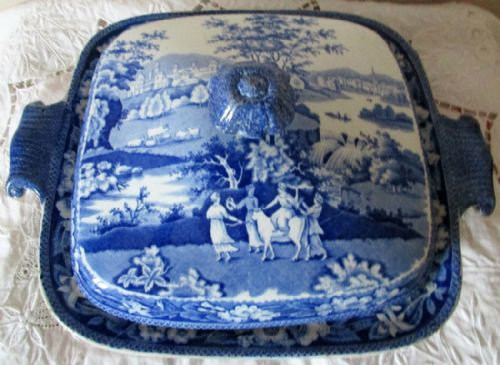
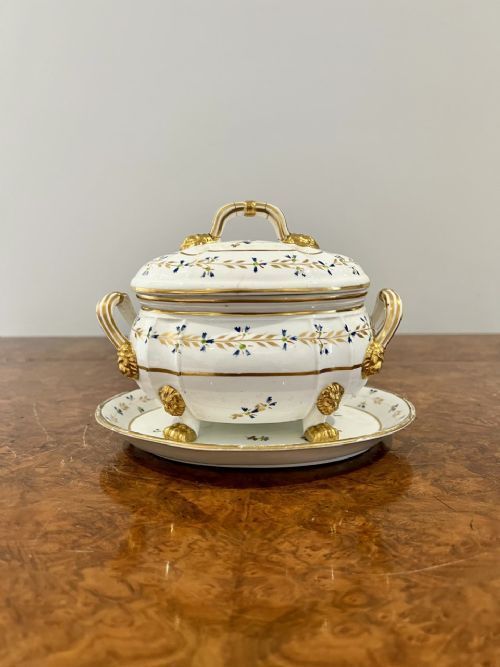
Blue and white transfer-printed pottery dominates the selection, depicting scenic patterns like rural landscapes, castles, and exotic motifs. Alongside these transferware pieces, buyers encounter richly decorated porcelain and robust ironstone bodies bearing Chinoiserie or Imari designs.
How They Were Made
Potters utilised durable earthenware and dense ironstone bodies to withstand daily culinary use, glazing the surfaces to create a smooth, waterproof finish. Porcelain versions received finer paste preparations, allowing for delicate potting and translucent walls.
Decoration relied heavily on blue and white transfer printing, a technique where engraved copper plates transferred intricate scenic patterns onto the ceramic surface before glazing. Artisans also applied hand-painted enamels and gold leaf accents, particularly on porcelain pieces from factories like Worcester and Coalport.
Blue and white transfer print patterns include rural scenery, castles, and exotic animals.
What Varies in Quality
The sophistication of the painted or printed ornament determines much of the distinction between pieces, with crisp, detailed transfer work and careful hand-gilding sitting at the upper end. Elaborate moulded handles, pedestals, and matching covers integrated into the design signify greater ambition from the maker.
The choice of material also sets the standard, as refined porcelain and patent ironstone demonstrate higher technical mastery than standard earthenware. Completeness of the set, including original lids and associated ladles, elevates the integrity of the surviving serveware.
Spode·James Wallace and Co·Mason·J and R Clews·John Rogers and Son·John and Richard Riley·Coalport·Crown Derby·Flight Barr and Barr·Chamberlain Worcester·Copeland and Garrett·Turner
The Antique English Vegetable Tureen Glossary
- Ironstone
- A dense, durable type of earthenware patented to resist chipping and heavy wear at the dining table. It provided a sturdy canvas for colourful enamel and transfer-printed decorations.
- Transferware
- Pottery decorated by applying a printed design from an engraved copper plate onto the ceramic body using tissue paper. This technique allowed for consistent reproduction of complex pictorial scenes.
- Imari
- A decorative style inspired by Japanese exports, characteristically employing iron red, cobalt blue, and gilt highlights. English factories adopted this palette extensively during the Regency period.
- Sauce Tureen
- A smaller vessel equipped with a cover and handles, designed specifically for holding gravies, sauces, or condiments at the table. They often sat on matching fixed or separate stands.
- Felspar Porcelain
- A modified porcelain body incorporating feldspar into the paste, developed by nineteenth-century English potteries to increase strength and whiteness.
Antique English Vegetable Tureen: Frequently Asked Questions
How were vegetable tureens used?
These lidded vessels held cooked vegetables at the centre of the dining table, keeping the contents warm between servings.
Servants brought them to the table as part of large course arrangements before individual plating became standard.
How do I care for antique pottery?
Wash these pieces gently by hand using warm water and mild soap, avoiding harsh scrubbing or dishwashers.
Keep them away from sudden temperature extremes to protect the historic glaze and delicate painted details.
Can I use them for serving food?
While structurally sound, antique ceramics often feature crazing in the glaze that can absorb liquids or stains over time.
Many collectors prefer to use them for dry presentation or display rather than active dining service.
How do I distinguish ironstone from porcelain?
Ironstone presents an opaque, heavy, and robust body designed for durability during heavy kitchen use.
Porcelain feels lighter, exhibits greater refinement, and often allows light to pass through thin sections of the wall.
What does transfer printing look like?
Transfer printing displays fine, monochromatic lines forming repeating pictorial scenes across the ceramic surface.
Under close inspection, the pattern reveals tiny stippled dots or fine lines characteristic of engraved copper plates.