


Blue White Transferware Tureen
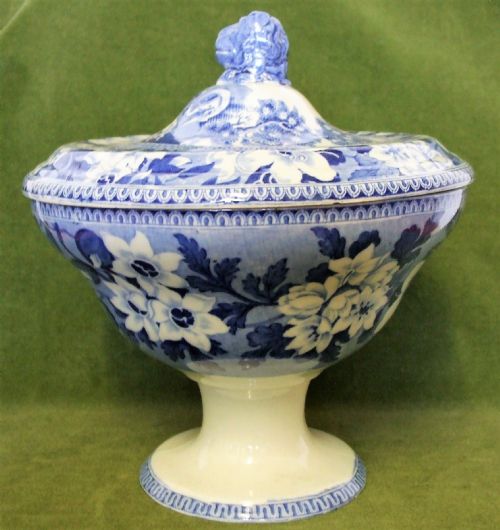
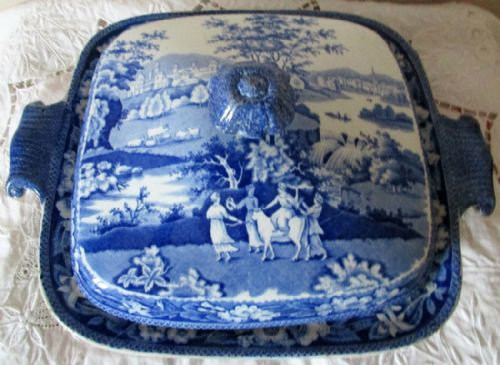
These blue white transferware tureen examples bring printed pictorial scenes to the dining table in durable earthenware.
Blue White Transferware Tureen
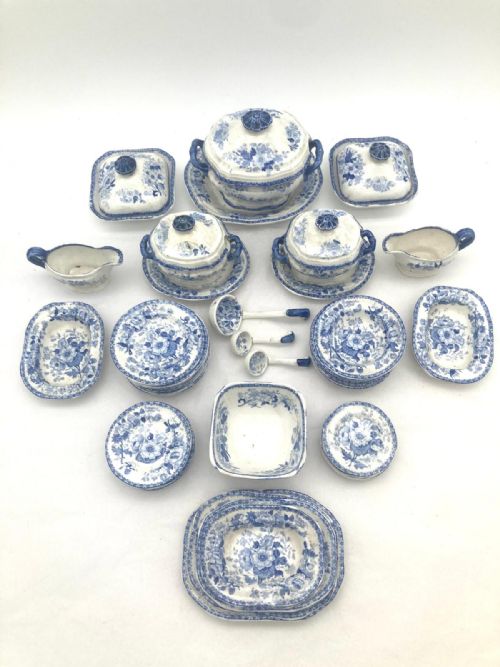
When you search for a blue white transferware tureen, you encounter serving vessels created during the Georgian and Victorian eras. These pieces range from large vegetable tureens and soup vessels down to miniature child service items and sauce tureens with stands.
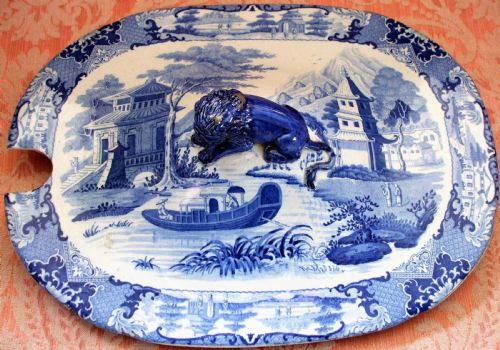
The objects on this page typically feature printed scenes transferred onto earthenware, pearlware, or porcelain surfaces. Maker output spans notable Staffordshire potteries, producing named patterns such as Canton River Scene, Elephant, and Castle.
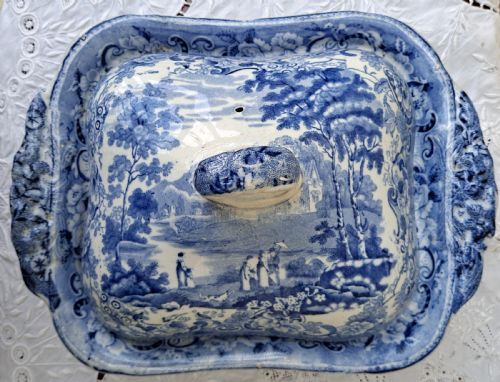
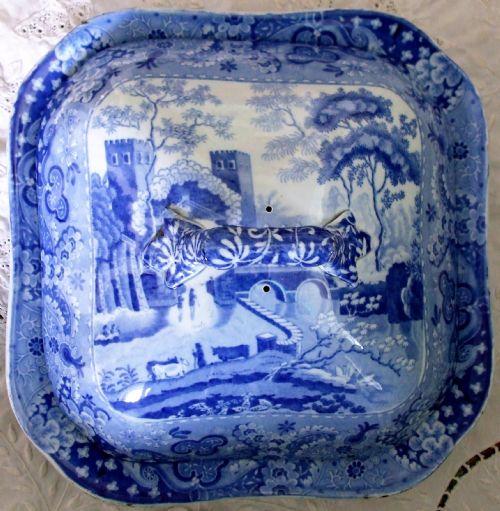
Forms include complete lidded vessels with matching stands, standalone vegetable tureens, and associated ladles or footed bowls. The aesthetic unites domestic utility with landscape and architectural decoration executed in deep cobalt tones.
Materials and production methods
Potters formed these items using earthenware, pearlware, and ceramic bodies shaped to traditional table service requirements. Artisans applied designs to the clay body using copper plate transfer printing before glazing and firing the ware.
Lead glaze and clear gloss formulations sealed the printed cobalt pigment onto the ceramic surface. Guild techniques ensured the blue transfer design adhered evenly across curved tureen bodies, handles, and matching covers.
Listings feature earthenware and pearlware ceramic bodies decorated with nineteenth century blue and white transfer printed motifs.
Assessing quality in transferware
The crispness of the transfer print defines the visual standard of a tureen, separating clear pictorial definition from blurred or smudged ink application. Well executed pieces maintain sharp architectural lines and distinct foliage details across the entire curved surface.
The integration of matching components dictates desirability among collectors. Examples retaining their original covers, underplates, and complementary ladles demonstrate superior preservation compared to single tureen bodies.
Robert Hamilton·James Wallace & Co·J. & R. Clews·John Rogers & Son·John and Richard Riley·Spode·Doulton Burslem·Wedgwood·Ridgways·Copeland and Garrett
The Blue White Transferware Tureen Glossary
- Transferware
- Pottery decorated by transferring a printed design from an engraved copper plate onto the ceramic body via tissue paper. This technique allowed intricate pictorial scenes to be replicated rapidly.
- Pearlware
- A refined earthenware developed by Josiah Wedgwood featuring a bluish glaze that masked the natural yellowish tint of the clay body. It serves as a precursor to later Victorian ceramic bodies.
- Flow blue
- A style of transfer printing where cobalt oxide vaporised during the kiln firing to bleed intentionally into the surrounding white glaze. This created a hazy, ethereal effect popular on mid nineteenth century vessels.
- Sauce tureen
- A miniature serving vessel designed specifically for gravies or sauces, often accompanied by an attached or separate stand. These pieces mirror the form of larger soup and vegetable tureens on a reduced scale.
- Tureen cover
- The matching lid designed to fit snugly over the top rim of a tureen body. Covers frequently feature modelled handles, animal motifs, or finials matching the decorative theme of the base.
Blue White Transferware Tureen: Frequently Asked Questions
What is a blue white transferware tureen used for?
These vessels served soups, vegetables, and sauces at formal dining tables throughout the nineteenth century. Their deep bowls held heated contents while the matching lids helped retain temperature during meals.
Today, collectors utilise these items as decorative centrepieces or display them within cabinets. Their pictorial scenes offer a glimpse into nineteenth century dining customs and landscape aesthetics.
How do I date a transferware tureen?
Dating relies on identifying maker marks, ceramic bodies, and pattern names recorded in historical registry archives. Early examples often utilise pearlware bodies, whereas later Victorian pieces employ heavier earthenware.
Stylistic cues such as border designs and glaze characteristics also help narrow the production window. Comparing pieces to documented factory output confirms their approximate era of manufacture.
What causes flow blue blurring?
Flow blue occurs when chemical additives or volatile chlorides are introduced intentionally into the kiln atmosphere during firing. This vaporisation causes the cobalt pigment to bleed softly into the white glaze.
The resulting hazy aesthetic was a deliberate stylistic choice rather than a firing accident. Potters embraced this technique to soften harsh printed outlines.
Are miniature tureens functional?
Miniature tureens formed part of child service sets intended for juvenile dining or nursery use. Despite their smaller scale, makers constructed them using the exact same ceramic and transfer printing techniques as full sized tableware.
Contemporary collectors prize these petite items for their delicate proportions and scarcity. They represent a specialised subset of nineteenth century ceramic production.