
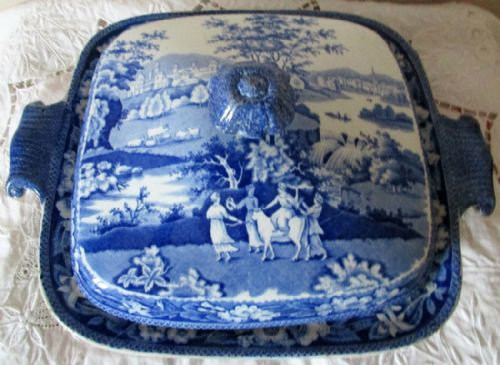


English Pottery Covered Dish
An english pottery covered dish brings the weight of the Georgian and Victorian table into a modern room.
English Pottery Covered Dish
An english pottery covered dish encompasses utilitarian vessels created to hold food or small objects on the dining table or sideboard. The selection spans distinct forms from the Georgian and Victorian periods, including vegetable tureens, soup tureens, cheese domes, and small trinket boxes.
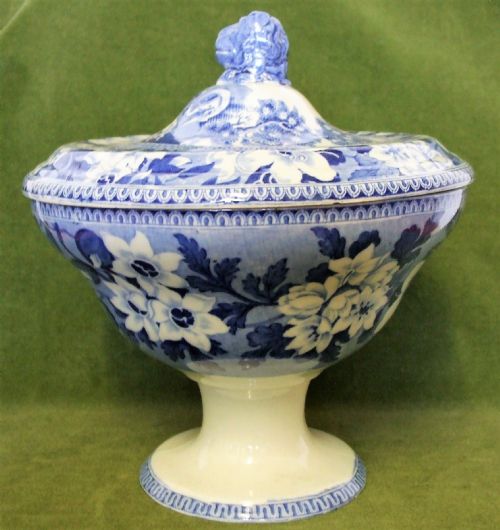
Buyers will most frequently encounter transfer-printed vegetable tureens and large cheese domes dating from the nineteenth century. These vessels demonstrate the domestic ambitions of their eras, serving functional roles in communal dining before retiring to decorative duties.
How they were made
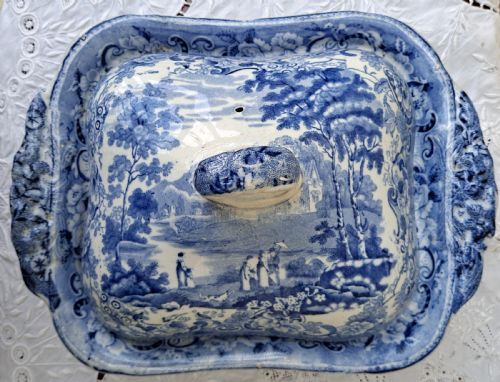
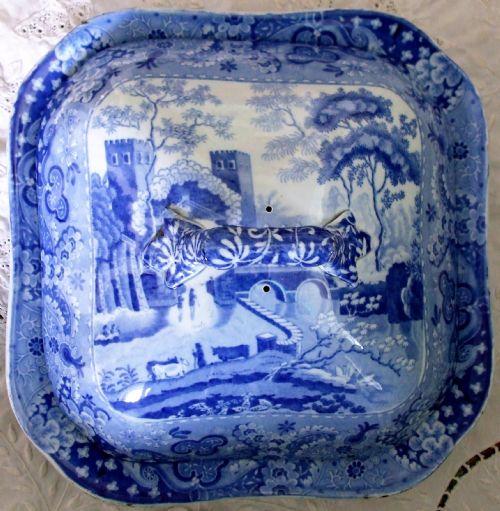
Potters shaped these vessels from ironstone, earthenware, and stoneware, applying lead glazes and specialised blue and white transfer prints. The transfer printing technique allowed potters to transfer detailed pictorial scenes, such as the Castle or Elephant patterns, directly onto the ceramic surface before glazing and firing.
Makers also utilised moulded construction for three-dimensional decorative forms, producing specialised items like cabbage tureens and jasperware patch boxes. These techniques required precise kiln temperature control to achieve the uniform white ironstone bodies and vivid blue transfer designs seen across the inventory.
Potters shaped nineteenth-century serving vessels to resemble ribbed cabbages, bringing botanical humour directly to the formal Victorian dining table.
What varies in quality
The clarity and crispness of the blue and white transfer print distinguish finer examples from standard production pieces. A well-pulled print retains sharp edges along architectural lines and landscape details without blurring into the surrounding glaze.
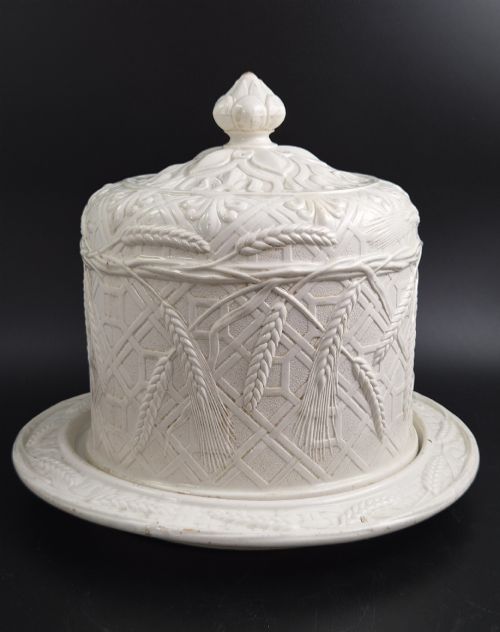
Moulding definition in relief work, such as the wheat and lattice motifs on cheese domes or the surface texture of vegetable tureens, dictates the refinement of the piece. Stronger definition indicates superior mould preparation during the manufacturing process.
James Wallace & Co.·J. & R. Clews·John Rogers & Son·John and Richard Riley·Wedgwood
The English Pottery Covered Dish Glossary
- Ironstone
- A heavy, durable type of earthenware patented in the nineteenth century. It resists chipping and provided a dense, white body well suited for large domestic serving vessels.
- Transfer print
- A method of decorating ceramics by applying an engraved copperplate design onto tissue paper and pressing it onto the biscuit ware. This technique enabled the mass production of intricate pictorial scenes.
- Jasperware
- A fine-grained, unglazed vitrified stoneware developed by Wedgwood, typically featuring white classical reliefs against a coloured background. It appears on small decorative items like patch boxes.
- Tureen
- A deep covered bowl designed for serving soups, sauces, or vegetables at the table. These vessels often include matching stands or ladles.
- Lead glaze
- A glossy coating containing lead oxide applied to pottery before firing to seal the porous ceramic body. It imparts a smooth, protective finish to the decorated surface.
English Pottery Covered Dish: Frequently Asked Questions
What were cheese domes used for?
Large ceramic domes kept hard cheeses fresh on the dining table by protecting them from air and insects. They sat upon matching ceramic stands that caught crumbs and supported the heavy cover.
Victorian households utilised these pieces during breakfast and after-dinner courses. Today, they function as striking display pieces on sideboards or kitchen counters.
How do I identify a Georgian tureen?
Georgian tureens typically feature hand-painted or transfer-printed scenes in deep blue, with classic architectural or exotic animal themes. The ceramic bodies tend to be slightly heavier earthenware.
These pieces reflect the dining fashions of the late eighteenth and early nineteenth centuries. Their forms are often more robust and rounded than later Victorian equivalents.
Are these dishes safe for food?
While these vessels were originally made for culinary use, antique ceramics of this age require careful consideration. Historic glazes can contain trace materials that react to acidic foods.
Most collectors choose to exhibit them as decorative objects rather than using them for daily dining. Gentle hand washing is essential if they are used for serving.
What is blue and white transfer ware?
Transfer printing involved etching a detailed picture onto a copper plate, inking it, and transferring the impression onto paper. The paper was then pressed onto the pottery body to apply the pattern before glazing.
This innovation allowed potteries to produce consistent, detailed landscape and historical scenes efficiently. It remains one of the most recognizable aesthetics of nineteenth-century ceramics.