

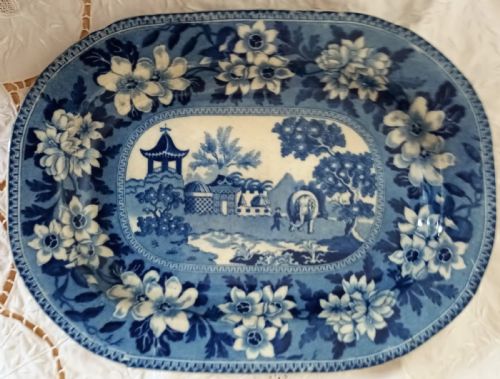


Staffordshire Blue Transfer Plate
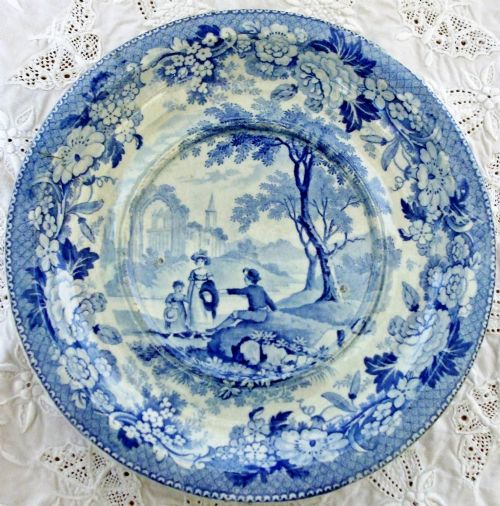
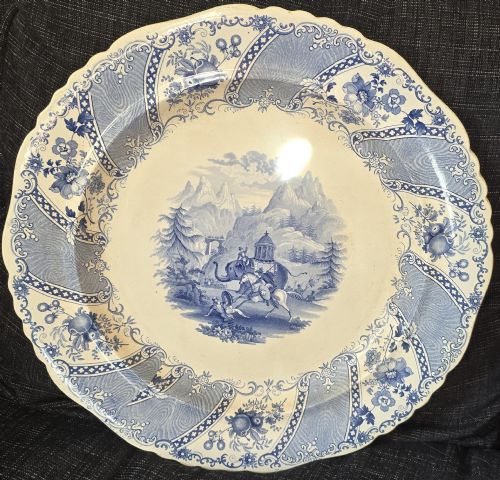
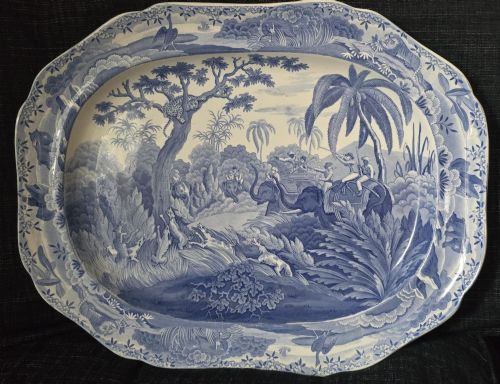
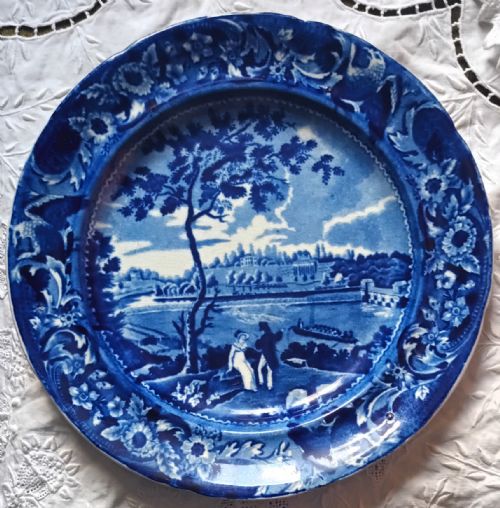
A Staffordshire blue transfer plate brings nineteenth-century British commerce and topographical storytelling straight to the dining table.
Staffordshire Blue Transfer Plate
When you examine a Staffordshire blue transfer plate, you are looking at utilitarian earthenware decorated with copper-plate engravings applied under the glaze. These pieces range from standard tea plates to large serving platters made for nineteenth-century households.
The objects on this page span the Georgian, Regency and Victorian periods, covering styles from classical British topographical views to Victorian Chinoiserie. You will most frequently meet round plates and large meat platters decorated in deep cobalt blue.
Makers such as Spode, William Smith and Stubbs produced these wares using earthenware bodies finished with lead glazes. The designs capture everything from exotic animal scenes to American landmarks like Fair Mount near Philadelphia.
Materials and methods
Potters formed these items using earthenware and pearlware bodies, which were then fired before receiving their printed decoration. The characteristic blue colour comes from cobalt pigment applied via a tissue paper transfer pulled from an engraved copper plate.
Following the transfer printing process, pieces received a transparent lead glaze to fix the pigment and protect the ceramic surface during a subsequent kiln firing. This technique allowed potteries to achieve fine pictorial detail on utilitarian plates and platters at scale.
Staffordshire Blue Transfer Plate Retail Price Guide 2026
Typical asking prices for staffordshire blue transfer plate among the pieces listed under this phrase on Sellingantiques today, from the lower quarter to the upper quarter. They describe what is for sale here now, not the wider market.
Object forms span tea plates, decorative plates, and large meat platters decorated with transfer-printed pictorial scenes.
Markers of quality
Quality in these ceramics rests primarily on the crispness of the transfer print and the depth of the cobalt pigment. A sharper copper-plate impression without smudging separates finer pictorial work from blurred production.
The choice of earthenware body also matters, with pearlware versions and well-potted meat platters demonstrating superior material refinement. Furthermore, named topographical or literary subjects executed by recorded potters command greater interest than anonymous patterns.
Spode·William Smith & Co·John Rogers & Son·Stubbs·William Adams·Brameld & Co
The Staffordshire Blue Transfer Plate Glossary
- Transferware
- Earthenware decorated by applying a printed design from an engraved copper plate onto the ceramic surface using tissue paper. This method enabled complex pictorial scenes to be replicated consistently.
- Pearlware
- A refined type of earthenware developed in the late eighteenth century featuring a subtle bluish glaze that pooled in crevices. It sits chronologically between creamware and standard white ironstone.
- Meat Platter
- A large serving dish shaped to hold joints of meat, frequently featuring a well and tree drainage system. These vessels formed central components of nineteenth-century dining services.
- Cobalt Pigment
- A metallic oxide used under the glaze to produce deep blue tones that withstood high kiln temperatures without fading. It remains the defining colour of these Staffordshire wares.
Staffordshire Blue Transfer Plate: Frequently Asked Questions
How do I date a Staffordshire plate?
Dating relies on combining style clues, such as Regency or early Victorian borders, with recorded working periods of known potters. Ceramic bodies also shift from pearlware to standard earthenware across the nineteenth century.
Examining the tone of the cobalt pigment and any impressed registry marks on the reverse helps narrow the decade of production.
Can I use these plates for dining?
These nineteenth-century ceramics are primarily intended for display and gentle collection rather than modern heavy use. The lead glazes and porous earthenware bodies require careful handling to preserve the historic surface.
Hand washing in lukewarm water without harsh detergents protects the transfer-printed design from modern chemical wear.
What is transfer printing?
Transfer printing is a technique where an engraved copper plate is inked with cobalt pigment and pressed onto tissue paper. This printed paper is then transferred onto the biscuit-fired ceramic body.
It revolutionised pottery production by allowing intricate pictorial scenes like landscapes and narrative patterns to be applied rapidly.
Why are some plates stamped with names?
Potters stamped or impressed their factory names and pattern titles onto the backs of plates to brand their output and aid buyers. Named patterns often commemorated historical events, distant lands or popular literary themes.
Stamps help collectors attribute anonymous items to specific Staffordshire workshops and potteries.