




Antique Blue Pottery Platter
When you search for an antique blue pottery platter, you are looking at centuries of domestic service and display through blue pigment on clay.
Antique Blue Pottery Platter
An antique blue pottery platter brings together serving dishes, chargers, and decorative plates spanning from the seventeenth century through to the twentieth century. These pieces encompass earthenware, pearlware, porcelain, and tin-glazed varieties created across England, Europe, and Asia.
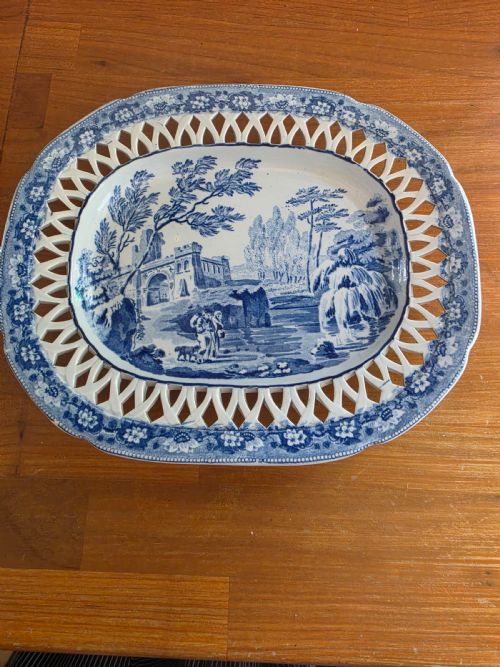
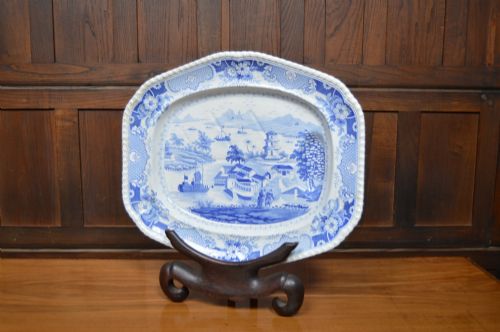
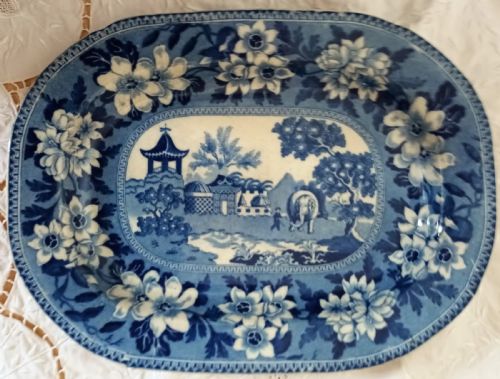
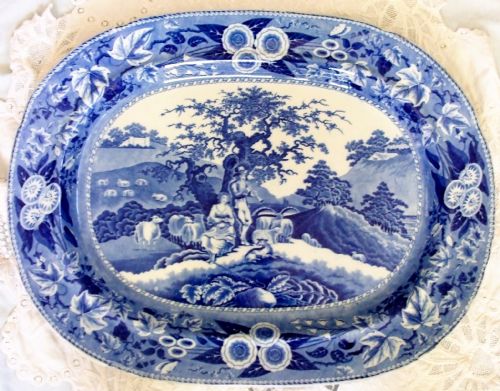
The most common examples encountered on this page originate in the Georgian and Victorian periods, often taking the form of large transfer-printed earthenware serving dishes. Makers utilised scenic patterns, botanical borders, and narrative motifs to decorate the surface for communal dining.
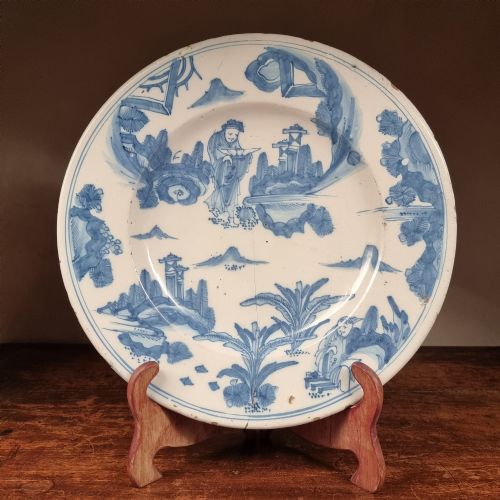
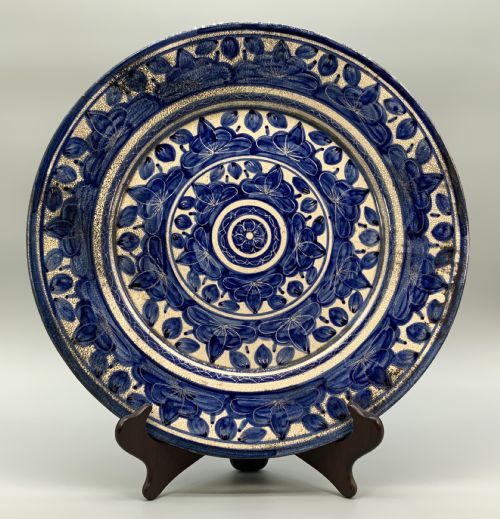
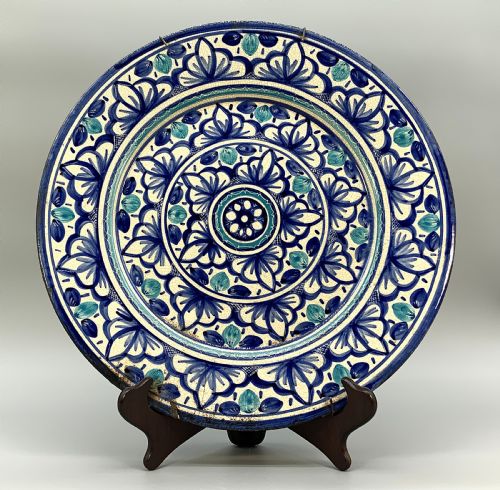
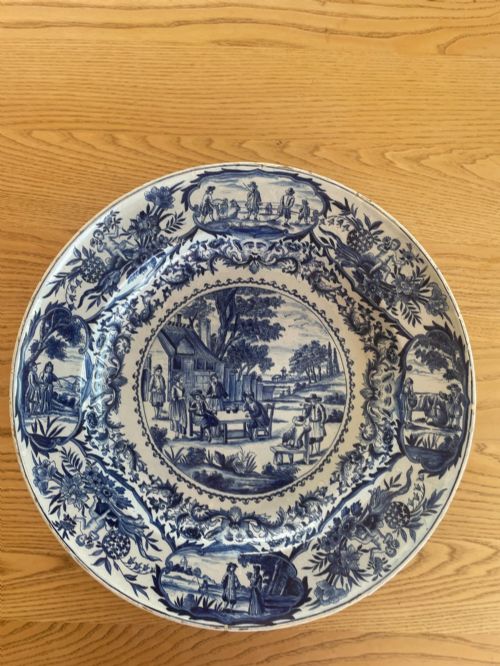
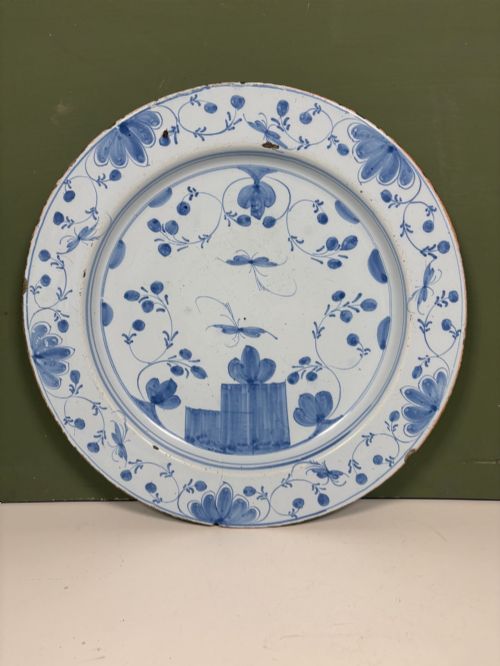
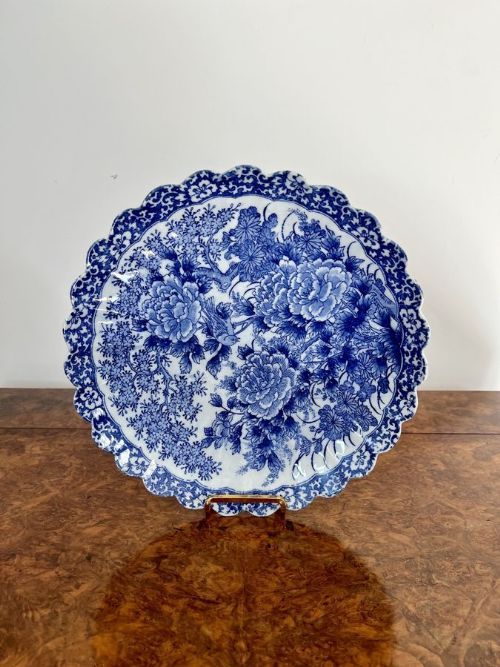
Beyond everyday table service, the category includes grand chargers designed for wall display or sideboard presentation. These larger circular vessels often display Dutch Delft, Moorish, or Japanese Imari influences alongside traditional British blue and white transferware.
How they were made
Potters shaped earthenware, stoneware, or pearlware bodies on wheels or in moulds before applying lead or tin glazes. Cobalt pigment provided the deep blue colour, either painted directly onto the raw glaze or transferred from engraved copper plates onto the biscuit ceramic body.
Firing took place in high-temperature kilns where the cobalt oxide fused with the glaze to create rich tonal variations. Transfer printing allowed intricate pictorial scenes, such as classical ruins and oriental landscapes, to be reproduced with precision across large meat plates and serving platters.
Listings feature earthenware, pearlware, and tin-glazed pottery spanning from seventeenth-century Delft to twentieth-century Moorish styles.
What varies in quality
The clarity of the transfer print and the depth of the cobalt pigment define the visual success of a piece. Finer examples exhibit sharp lines without blurring or pooling in the glaze, ensuring complex architectural and figurative scenes remain legible.
The weight and balance of the clay body, alongside the smoothness of the foot ring and glaze finish, separate standard utilitarian wares from superior exhibition pieces. Potteries achieved greater refinement through purer clay preparation and more controlled kiln temperatures.
Davenport·John Rogers And Son·Minton·John Ridgway·Caughley·Spode·Copeland And Garrett·Thomas Lakin·Doulton Burslem·Robert Hamilton Of Stoke
The Antique Blue Pottery Platter Glossary
- Transferware
- A pottery decoration technique where an engraved copper plate prints a design onto tissue paper, which is then transferred onto the unglazed or bisque ceramic surface before glazing and firing. This method revolutionised British pottery production by enabling detailed pictorial patterns.
- Charger
- A large decorative plate or serving dish intended primarily for display on a sideboard or wall rather than for everyday dining. These sizeable vessels often feature elaborate painted or printed decoration.
- Pearlware
- A refined form of earthenware developed by Josiah Wedgwood in the late eighteenth century, featuring a thin glaze with a slight bluish tinge that pooled in crevices to mimic Chinese export porcelain. It served as the primary canvas for many early blue and white printed patterns.
- Tin-Glazed Earthenware
- Pottery covered with a white tin-oxide glaze that provides an opaque surface for hand-painted cobalt decoration, commonly associated with Delftware production in England and the Netherlands. The technique yields a soft, absorbent finish with subtle surface undulations.
- Flow Blue
- A nineteenth-century transfer printing style where lime or ammonia chloride vapours were introduced into the kiln during firing, causing the cobalt blue pigment to bleed into the surrounding white glaze. This intentional blurring creates a soft, hazy aesthetic across the pattern.
Antique Blue Pottery Platter: Frequently Asked Questions
What is the difference between a platter and a charger?
Platters are oval or oblong vessels designed specifically for serving meat and large dishes at the dining table. Chargers are considerably larger and rounder, intended mainly for ceremonial display on sideboards or walls.
While both share similar blue and white decorative techniques, their historical usage dictated their distinct shapes and proportions.
How do I care for antique pottery platters?
These ceramic items require gentle hand washing in lukewarm water with mild soap when necessary. Dishwashers and harsh abrasives will damage the historic glaze and weaken the underlying earthenware body.
Display them securely on stable plate stands or wall hangers designed to support the substantial weight of large chargers.
How can I tell early transferware from later pieces?
Early pieces from the late eighteenth and early Georgian periods often utilise pearlware bodies with a faint bluish tint in the glaze pool. The cobalt blue on these early examples tends to be deep and soft, applied via hand-engraved copper plates.
Later Victorian iterations frequently display brighter white ceramic bodies and sharper, more mechanical print lines.
Were these blue platters used every day?
Large platters and chargers formed the centrepiece of formal Georgian and Victorian dining services. Utilitarian serving dishes saw regular service for heavy roasts and communal meals, leading to natural surface wear.
Conversely, large decorative chargers were often kept exclusively for display to showcase the household's refined taste.