



English Blue White Stoneware
These English blue white stoneware pieces bring distinctive nineteenth-century utility and neoclassical grace straight to the kitchen table or dresser.
English Blue White Stoneware
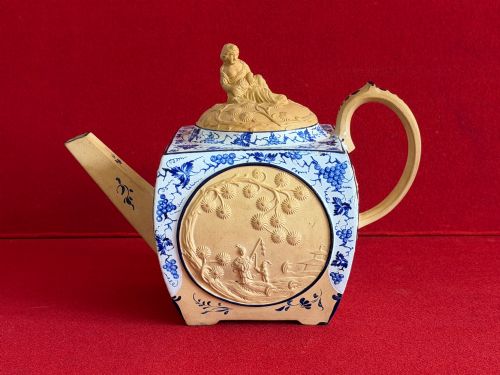
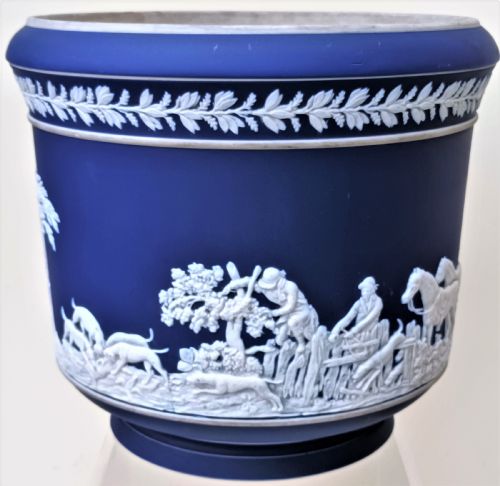
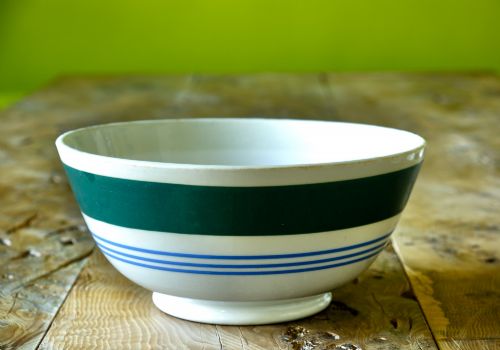
When you search for english blue white stoneware, you enter a diverse field of nineteenth-century ceramics spanning utilitarian kitchenwares and refined neoclassical display pieces. The selections here showcase robust mixing bowls, decorative plates, and substantial jugs alongside ornate jardinieres and biscuit barrels.
Most examples hail from the Victorian era, utilising durable stoneware bodies or specialised ceramic pastes finished in characteristic blue and white schemes. Forms range from rustic farmhouse banded bowls to intricate neoclassical jasperware items bearing classic sprigged reliefs.
The objects served varied domestic roles across the nineteenth and early twentieth centuries, functioning as everyday kitchen staples or formal tea service elements. Collectors encounter both utilitarian wares meant for active use and finely moulded ornamental items designed purely for visual display.
Materials and manufacture
Potters built these pieces using dense stoneware, earthenware, and specialised clay bodies that provided the necessary structural strength for everyday domestic tasks. Manufacturers applied distinctive blue glazes, enamel details, or contrasting white relief ornaments to create the characteristic visual depth.
Moulding and throwing techniques defined the shapes, allowing makers to produce everything from simple banded mixing bowls to intricate Victorian chinoiserie vessels. Surface decoration often involved applied stoneware reliefs or transfer printing methods to achieve detailed scenic patterns.
English Blue White Stoneware Retail Price Guide 2026
Typical asking prices for english blue white stoneware among the pieces listed under this phrase on Sellingantiques today, from the lower quarter to the upper quarter. They describe what is for sale here now, not the wider market.
Object forms vary widely across the inventory, ranging from utilitarian teapots and mixing bowls to decorative jardinieres and patch boxes.
Assessing quality
Quality reveals itself in the crispness of moulded reliefs and the precision of applied decorative elements across the ceramic body. Finer examples display sharp detailing on sprigged figures and smooth, even glaze distribution without surface distortion.
The prestige of the maker and the complexity of the pattern heavily influence the standing of each piece within its category. Simpler banded kitchenwares rely on robust build quality, whereas ornamental wares depend entirely on the delicacy of their modelled ornamentation.
William Adams And Sons·T G Green Pottery·Copeland Spode·John Ridgway·Mason S Ironstone·Wedgwood·J And R Clews
The English Blue White Stoneware Glossary
- Jasperware
- A fine-grained, unglazed stoneware developed in the eighteenth century, famous for its matte blue surfaces and contrasting white neoclassical reliefs.
- Jardiniere
- An ornamental ceramic pot or stand designed to hold large indoor plants or floral arrangements.
- Sprigged
- A decorative technique where individually moulded ceramic reliefs are applied to the surface of a wet clay body before firing.
- Banded ware
- Pottery decorated with concentric horizontal bands of coloured slip or glaze, commonly seen on utilitarian kitchen mixing bowls.
- Ironstone
- A heavy, durable type of earthenware patented in the nineteenth century to imitate porcelain while offering superior strength.
English Blue White Stoneware: Frequently Asked Questions
How are these pieces dated?
Dating relies on stylistic markers, impressed factory marks, and recorded ceramic bodies typical of nineteenth-century production methods. Examining the base of a vessel often reveals specific stamps or registration symbols.
Changes in glaze composition and decorative motifs also help narrow down the period of manufacture. Comparing pieces against documented archival examples provides further chronological clarity.
Can I use these bowls daily?
Many utilitarian items were built for active kitchen work, but antique status requires cautious handling during regular use. Stoneware and ironstone bodies remain robust, yet fragile handles or antique glazes demand care.
Hand washing preserves the surface finish and prevents modern detergents from damaging older ceramic materials. Displaying or light serving suits these items best.
Why are some items marked?
Maker marks identify the pottery responsible for shaping and firing the ceramic body, serving as a seal of commercial origin. These stamps range from impressed names to intricate printed backstamps.
Unmarked pieces still find attribution through characteristic clay bodies, glaze colours, and distinct moulding styles. Both marked and unmarked examples reflect the broader trends of their period.