



Nineteenth Century Transferware Ceramic
Nineteenth century transferware ceramic pieces bring pictorial history to the table through crisp printed scenes transferred onto earthenware and ironstone.
Nineteenth Century Transferware Ceramic
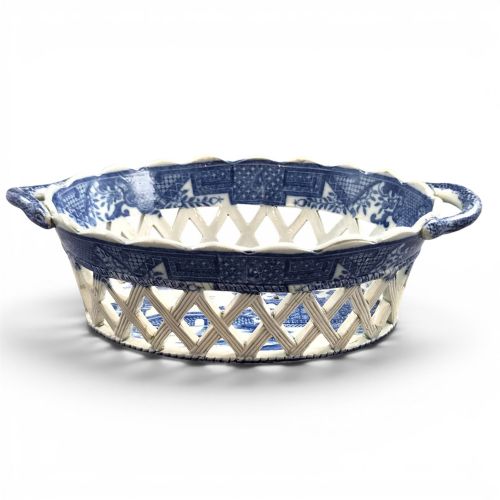
Nineteenth century transferware ceramic items span domestic table settings and decorative vessels produced across the Georgian, Regency, and Victorian eras. Plates, dishes, dinnerware, and serving pieces dominate the selection, alongside specialised forms such as footbaths, chestnut baskets, and children's mugs.
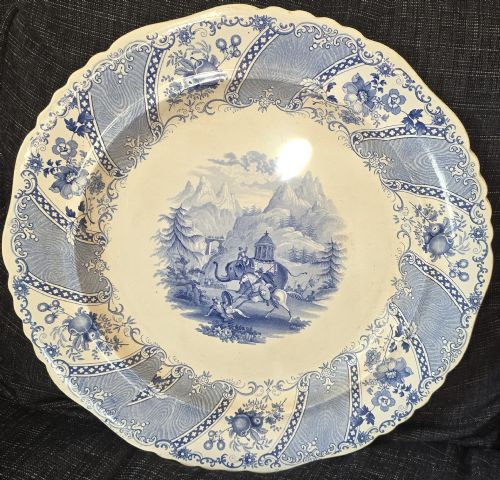
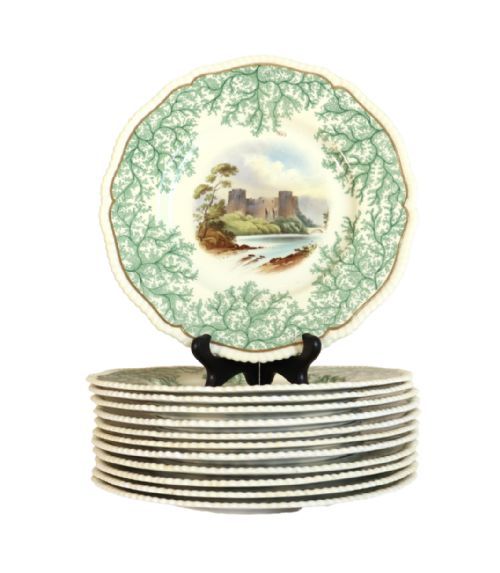
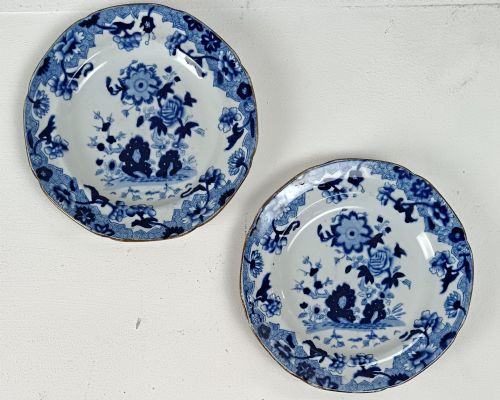
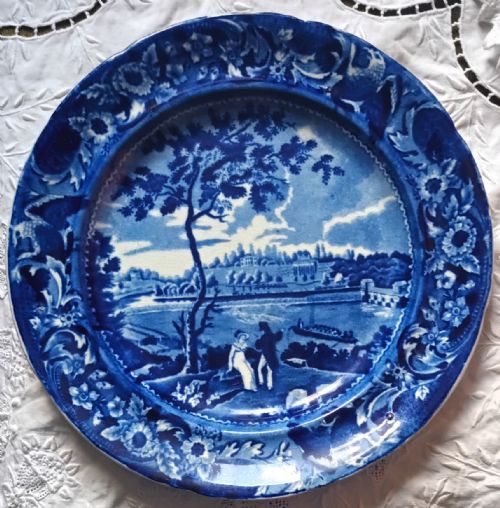
The aesthetic centres on detailed blue and white printed motifs, ranging from classical ruins and topographical landmarks to natural history subjects like seaweed and botanical studies. Collectors frequently encounter dinner plates and tea plates bearing named historical views or picturesque landscapes.
Dates stretch from the early decades through to the end of the century, capturing shifts in ceramic bodies from pearlware and creamware to robust ironstone and standard earthenware.
Materials and transfer printing techniques
Potters formed these pieces using earthenware, pearlware, creamware, and ironstone, applying a smooth glaze over the ceramic body to protect the porous clay underneath. Ironstone offered a heavier, more durable alternative for large serving vessels and footbaths, while pearlware provided a pale, slightly blue-tinted surface that complemented cobalt blue printing.
The decoration relies on transfer printing, a technique where an engraved copper plate applied ink to tissue paper, which was then pressed onto the unfired or biscuit ceramic. Artisans sometimes added hand-painted enamel highlights or lustre details over the printed outlines before the final kiln firing.
Children learned their letters from alphabet animal mugs featuring small beasts alongside printed alphabets.
Standards of execution and design
Quality reveals itself in the clarity and sharpness of the transfer print, where superior examples maintain crisp lines without blurring, smudging, or overlapping at the edges. The depth and richness of the cobalt blue or purple pigment also distinguish finer works from flatter, washed-out productions.
The modelling of the ceramic blank itself sets pieces apart, seen in reticulated basket weave, moulded border details like seaweed reliefs, and the overall weight and balance of hollowware such as jugs, tureens, and footbaths.
William Smith And Co·Spode·William Adams·Thomas Lakin·J And R Clews·John Rogers And Son·Wedgwood·Minton
The Nineteenth Century Transferware Ceramic Glossary
- Transferware
- Pottery decorated by applying a printed design from an engraved copper plate via tissue paper onto the ceramic surface.
- Pearlware
- An earthenware body developed by Josiah Wedgwood featuring a subtle blue-tinted glaze that whittled the appearance of creamware.
- Ironstone
- A dense, durable type of heavy earthenware patented in the nineteenth century to rival imported Chinese porcelain.
- Reticulated
- Decorated with an openwork net or trellis pattern, frequently seen on baskets and fine serving dishes.
- Lustre
- A metallic glaze finish applied to pottery to create an iridescent, shimmering sheen in copper, silver, or purple.
Nineteenth Century Transferware Ceramic: Frequently Asked Questions
How do I identify transferware periods?
Examining the underlying ceramic body provides the clearest chronological indicator. Pearlware and creamware typically point to the earlier decades of the nineteenth century, while heavy ironstone and standard earthenware frequently date from the Victorian era onward.
The style of the printed border and the registration marks stamped on the reverse also help narrow down the production decade.
Were these plates used daily?
Most dinner plates and tea plates served functional roles in nineteenth-century households for everyday dining and formal entertaining. Durable ironstone and earthenware bodies withstood regular washing and heavy use at the dining table.
Larger serving dishes, footbaths, and decorative chestnut baskets saw more specialised service during feasts and domestic upkeep.
What colours appear on these ceramics?
Blue and white dominates the palette, utilising deep cobalt shades transferred onto white or tinted ceramic bodies. Some pieces incorporate purple transfer decoration combined with lustre highlights or green botanical enamel details.
The monochrome blue print remained the standard aesthetic choice for topographical and narrative scenes throughout the period.
How should I display transferware?
Plates and serving dishes mount securely on walls using coated wire hangers or sit safely in plate racks to showcase their pictorial borders. Vases, jugs, and tureens look best displayed on sturdy sideboards or open shelving where their three-dimensional forms and printed details remain visible.
Keeping pieces away from direct, harsh sunlight preserves any delicate enamel highlights or lustre finishes.