



Staffordshire Animal Figurine
These staffordshire animal figurine pieces are charming ceramic domestic and exotic beasts that bring immense character to any mantelpiece.
Staffordshire Animal Figurine
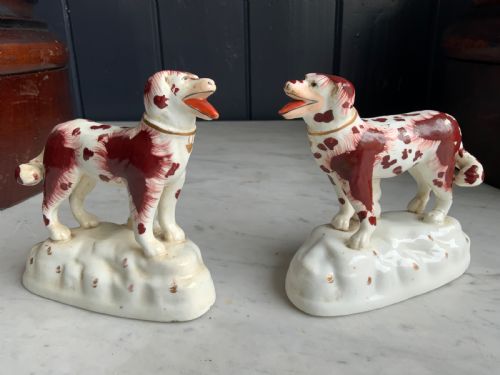
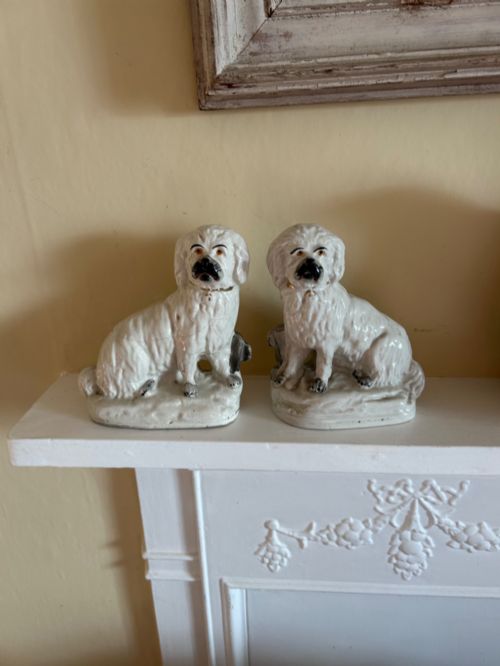
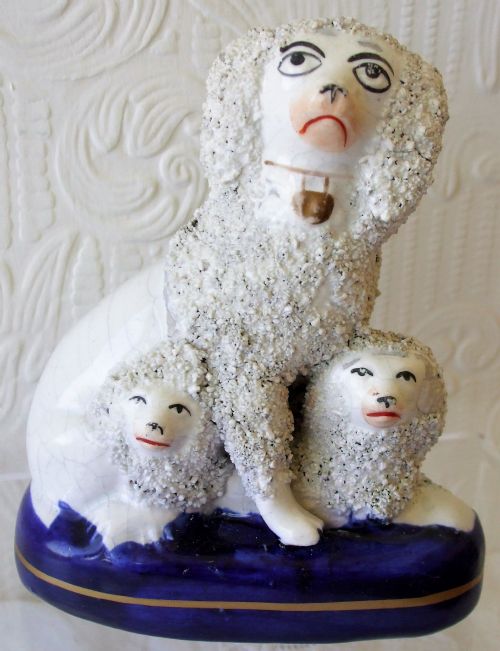
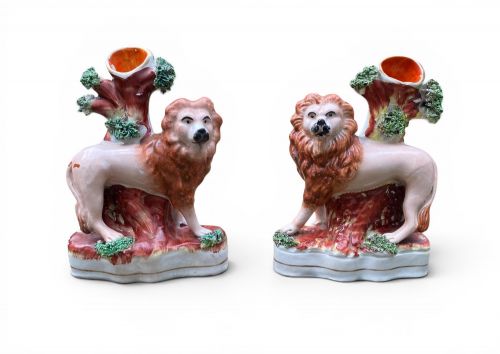
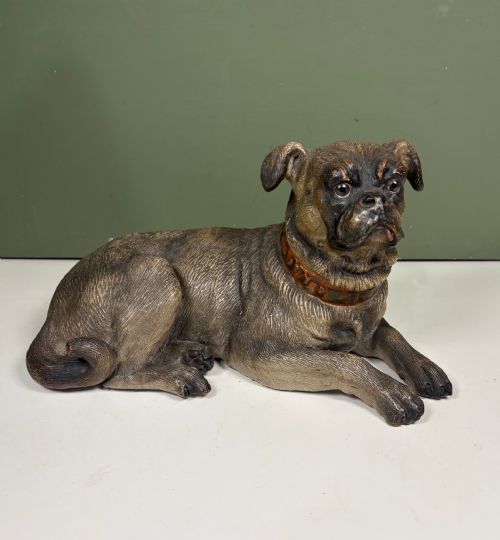
When searching for a staffordshire animal figurine, collectors encounter a delightful menagerie of dogs, lions, sheep, zebras, and cows produced across the nineteenth century. These objects served purely decorative purposes in period interiors, often modelled in pairs to flank a fireplace or adorn a shelf.
The pieces listed here span the Regency, Victorian, and late Victorian eras, capturing both standard Staffordshire potteries and distinct pearlware traditions. Common domestic subjects include pugs, poodles, spaniels, and hunting dogs alongside more exotic creatures like lions and zebras.
Materials and construction
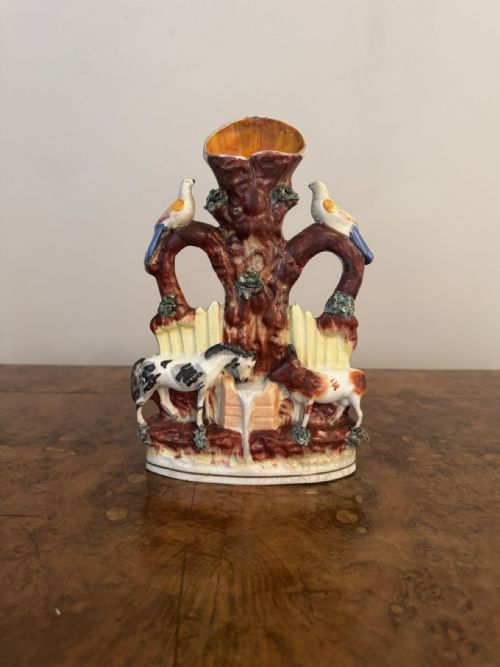
Certain models incorporate utilitarian functions alongside sculpture, such as spill vases designed to hold wooden matches on a hearth. Treacle glaze techniques appear frequently, imparting a deep, lustrous brown finish to the ceramic surface.
Listings feature earthenware and pearlware bodies finished with lead glaze, enamel, or treacle glaze across the nineteenth century.
Assessing quality in figures
Completeness as a matched pair heavily influences desirability, as does the survival of original gilding and minimal restoration to ears and limbs. The vibrancy of the underglaze colours remains a strong indicator of careful firing and preservation.
Walton·Wooley·Rockingham Pottery
The Staffordshire Animal Figurine Glossary
- Pearlware
- A refined earthenware developed with a bluish-white glaze that sits just beneath the transparent surface, popular before standard Victorian bodies dominated.
- Spill vase
- A hollow cylindrical ceramic vessel incorporated into the figurine design, intended to hold wooden spills for lighting fires and pipes.
- Treacle glaze
- A rich, dark brown translucent lead glaze heavily utilised on nineteenth-century pottery to create a glossy, monochromatic appearance.
- Enamel
- Opaque coloured glasses fused to the fired ceramic body during a secondary low-temperature kiln cycle to provide surface detail.
Staffordshire Animal Figurine: Frequently Asked Questions
How do I spot a reproduction?
Examine the base and interior for signs of genuine age, including crazing patterns, weight, and wear appropriate to the nineteenth century. Modern copies often feel lighter and lack the subtle hand-painted brushwork characteristic of period Staffordshire production.
Look closely at the glaze consistency and the colour palette, as modern chemical pigments differ noticeably from Victorian enamel recipes. Genuine examples show honest wear on the underside from decades of resting on wooden mantelpieces.
Why are most dogs found in pairs?
Victorian interior design favoured symmetry, particularly on either end of a mantelpiece or sideboard. Potters produced matching left and right facing figures specifically to satisfy this domestic arrangement.
Finding a surviving matched pair enhances the historical integrity of the display. Single dogs certainly exist, but pairs remain the traditional configuration.
What is a spill vase?
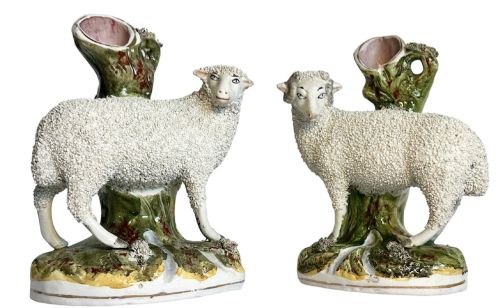
A spill vase combines a decorative animal figure with an open ceramic tube used to hold wooden tapers. Before matches were common, these spills transferred fire from the hearth to lamps and pipes.
They represent a clever union of practical household utility and popular ceramic sculpture. Collectors prize them for their dual functionality.