
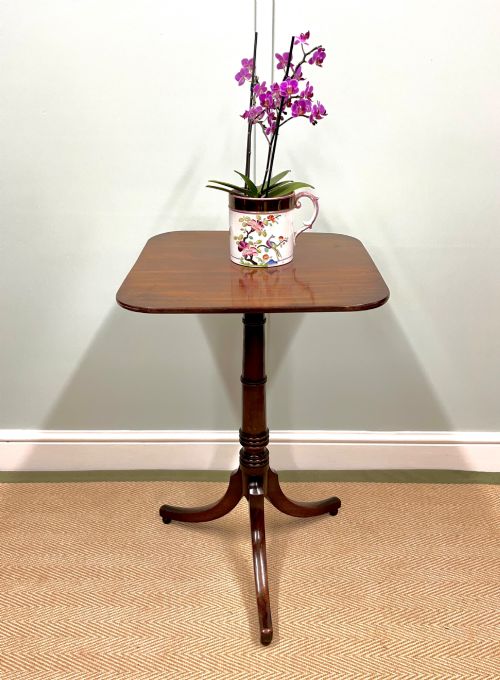
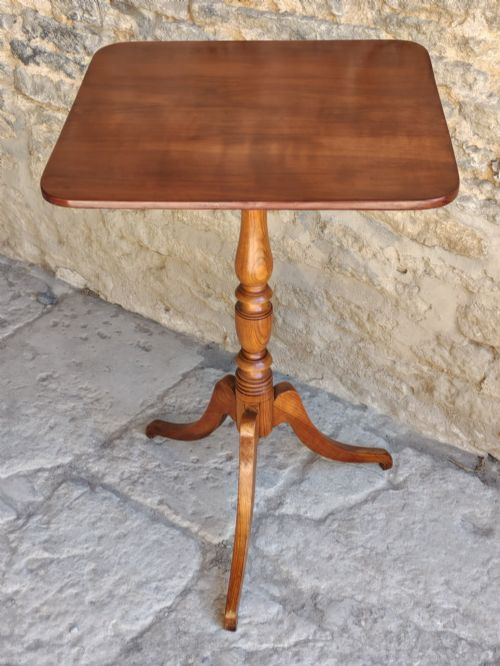
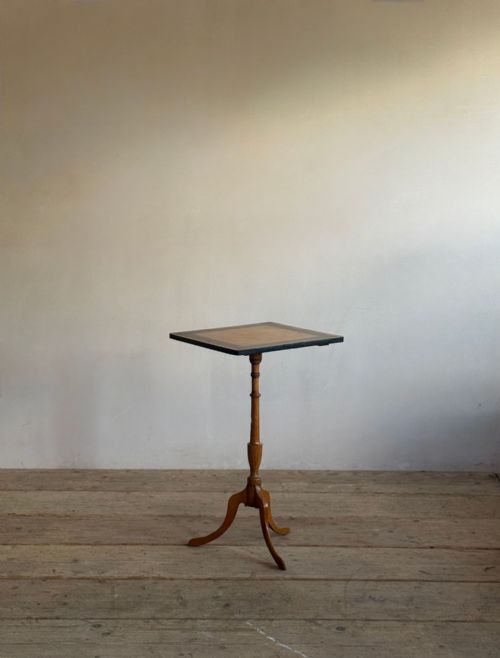


Square Top Tripod Table
A square top tripod table offers a neat, compact surface raised on three slim legs, prized for its practical versatility.
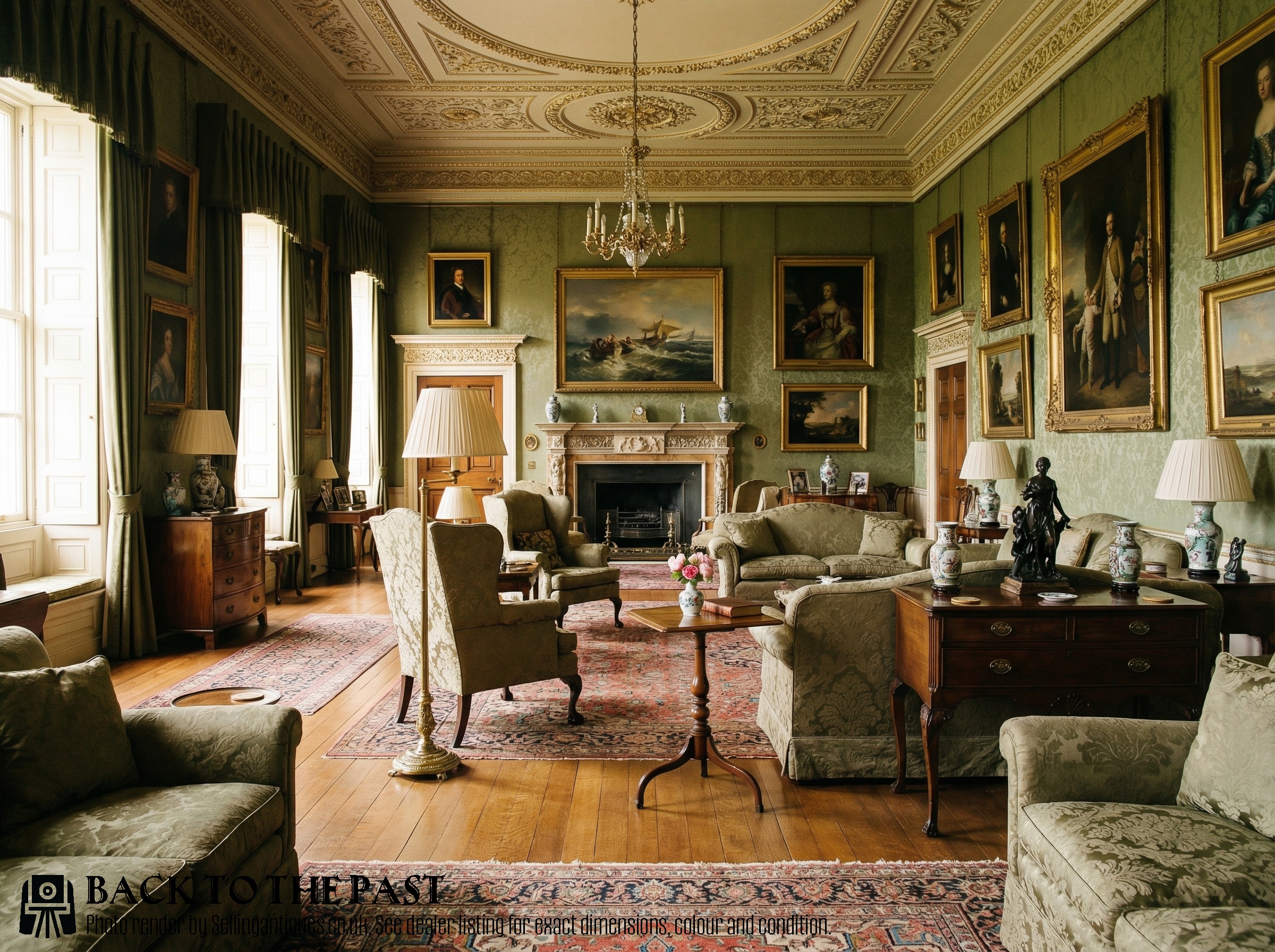
Square Top Tripod Table
A square top tripod table is a compact occasional piece designed to stand beside a chair or in a corner, featuring a square wooden top supported by a central pillar and three legs. You will regularly encounter mahogany examples alongside pieces formed from fruitwood, oak, walnut, and exotic timbers.
The selections span the Georgian, Regency, and Victorian eras, taking the form of wine tables, kettle stands, lamp tables, and tilt-top or snap-top variants. These tables serve as adaptable side surfaces while showcasing the distinct cabinet-making traditions of the eighteenth and nineteenth centuries.
Materials and construction
Cabinet-makers relied heavily on dense timbers like mahogany, walnut, and rosewood, as well as native varieties including oak, fruitwood, yew, and alder root. Timber selection dictated how smoothly the square top could be planed and whether the grain could be highlighted with a polished finish.
Makers integrated clever mechanical solutions, incorporating tilt-top mechanisms, snap-top catches, or boxed drawers beneath the surface. The central column was turned on a lathe and joined firmly to three splayed legs, frequently terminating in pad feet or brass fittings.
Several tables include clever snap-top catches so they could fold flat and hug the parlor wall like obedient wooden ghosts.
Assessing the craftsmanship
Quality rests in the choice of timber for the square top, whether a single solid plank or figured veneer, and how securely it meets the central pillar. Superior examples maintain rigid stability across the three legs without wobble in the tilt or snap mechanism.
Refinement appears in the turning of the pedestal column and the neat execution of details such as gallery edges, penwork decoration, or brass accents. The balance of proportions between the square top and the splayed base separates standard utility furniture from finer parlor pieces.
The Square Top Tripod Table Glossary
- Tilt-top table
- A table with a hinged top that can be tilted vertically when not in use to save floor space. This mechanism relies on a delicate catch beneath the square top.
- Snap top
- A specialised spring catch mechanism that locks a tilted table top securely into the horizontal position. It allows the surface to remain stable during daily use.
- Tripod base
- A support structure consisting of three splayed legs radiating from a central turned pillar. This design ensures the table remains balanced on uneven historical floors.
- Gallery top
- A raised rim or border fitted around the perimeter of the table surface. This feature prevents small items like wine glasses or kettles from sliding off.
- Pad foot
- A rounded foot carved at the base of each leg where it meets the floor. It distributes weight evenly and marks many Georgian furniture designs.
Square Top Tripod Table: Frequently Asked Questions
What is a square top tripod table used for?
These tables function as versatile occasional surfaces for holding lamps, tea equipment, or wine glasses beside seating. Their compact footprint allows them to fit easily into corners or smaller rooms.
Historically, specific variants served as kettle stands or bedside tables. Today, they remain practical furniture pieces that suit modern living spaces.
How do I spot a tilt top mechanism?
Look underneath the square wooden surface for a wooden block or catch mechanism attached to the central pillar. This allows the top to pivot upright on hinges.
When lowered, a small brass or wooden latch locks the surface flat. This clever engineering saved valuable floor space in period homes.
Are these tables sturdy?
A well-constructed tripod table relies on three splayed legs to distribute weight evenly across the floor. The central pillar joins the base and top securely to prevent excessive movement.
While the three-legged design is inherently stable on level ground, older tilt mechanisms can develop slight play over centuries of use.
How do I tell Georgian tables from Victorian ones?
Georgian examples often feature simpler, elegant mahogany or oak construction with clean lines and classic pad feet. They frequently include tilt-top or snap-top functions for daily convenience.
Victorian pieces tend to introduce heavier proportions, exotic woods like palm wood or burr yew, and ornate surface decorations such as penwork or distinct edge profiles.