



Square Brass Dial Clock
These square brass dial clock examples combine mechanical precision with rich timber cases, offering a tangible link to centuries of domestic timekeeping.
Square Brass Dial Clock
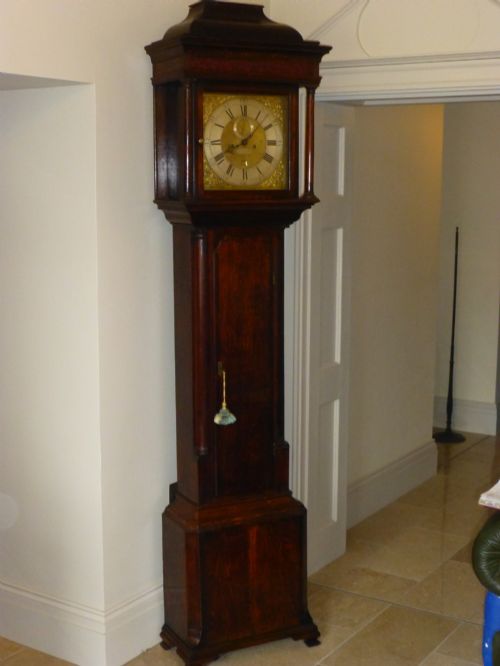
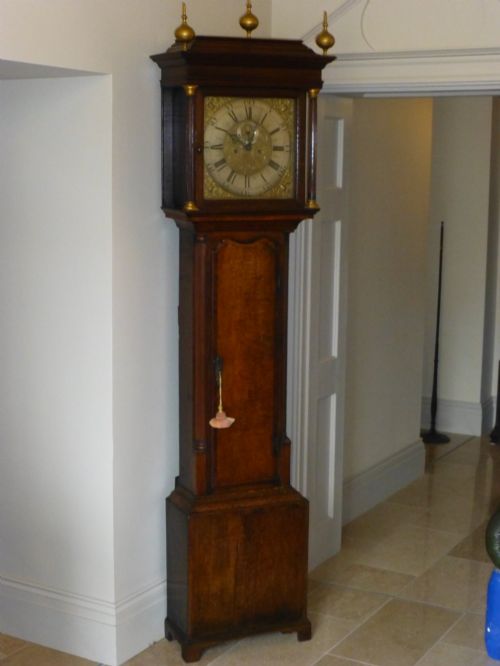
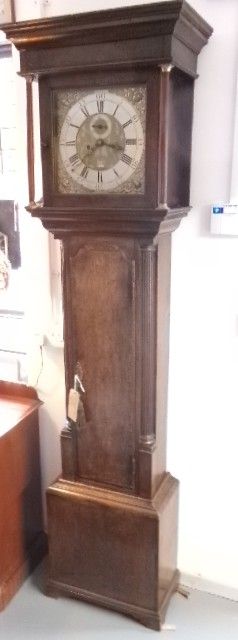
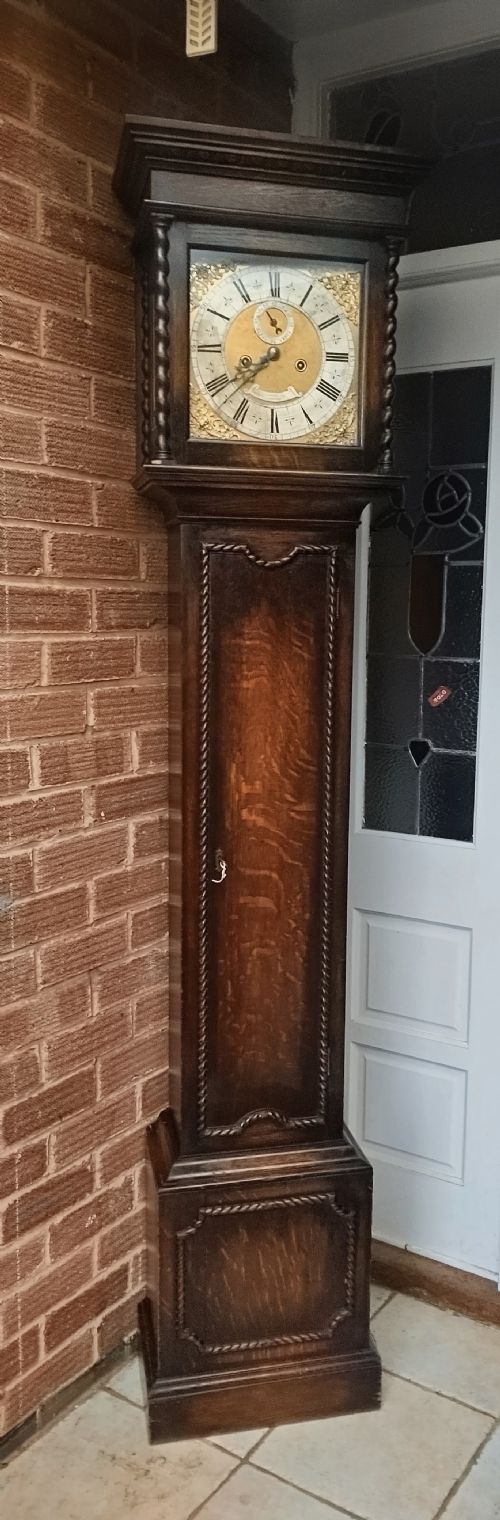
When you search for a square brass dial clock, you are looking at timepieces that span from the seventeenth century through to the twentieth century. The selection ranges from grand longcase clocks housed in oak, walnut, or mahogany to smaller desk, mantel, and strut clocks.
Longcase clocks dominate the older periods, frequently featuring thirty-hour or eight-day movements. Mantel and desk variants appear in later twentieth-century designs, alongside specialised Atmos and single fusee models.
Origins stretch across English provincial towns and London workshops, incorporating traditional English, Georgian, and later revival styles. Each piece demonstrates how domestic timekeeping evolved from weighty tallcase installations to compact desk accessories.
Assessing quality in square brass dials
Quality rests in the crispness of the engraved brass dial work and the depth of patination on the wooden case. Finer longcase examples display carefully selected timber veneers, such as burr walnut or figured mahogany, matched across the door and trunk.
The sophistication of the movement and the reputation of the maker distinguish superior pieces from standard workshop output. Original components, legible maker signatures on the dial, and well-proportioned case mouldings elevate the standing of a clock.
Square Brass Dial Clock Retail Price Guide 2026
Typical asking prices for square brass dial clock among the pieces listed under this phrase on Sellingantiques today, from the lower quarter to the upper quarter. They describe what is for sale here now, not the wider market.
A tiny cherub keeps permanent watch over the seconds.
Richard Corless of Stockport·Smith of Chester·Fisher Of Preston·John Rainsford·Elliott of London·John Drew·Henry Berkeley·Jaeger Le Coultre·Ed Hemmins of Bicester·Daniel Lawrence
The Square Brass Dial Clock Glossary
- Fusee
- A conical pulley used in spring-driven clocks to maintain an even pull as the mainspring unwinds. This mechanism helps the clock keep more accurate time throughout its running cycle.
- Longcase clock
- A tall freestanding weight-driven clock enclosed in a wooden case, commonly known as a grandfather clock. These housing structures protect the pendulum and weights while serving as prominent household furniture.
- Strut clock
- A portable timepiece supported by a hinged prop or stand at the back. They are typically designed for placement on desks, tables, or mantelpieces rather than hanging on a wall.
- Single fusee
- A movement utilising one fusee cone to regulate the power delivered from the mainspring. It represents a standard method of achieving reliable timekeeping in bracket and mantel clocks.
- Ormolu
- Finely ground high-carat gold applied in a mercury amalgam to a bronze base. This technique produces a rich metallic surface finish seen on decorative clock mounts and garnitures.
Square Brass Dial Clock: Frequently Asked Questions
How do I wind an eight-day longcase clock?
You wind the clock by inserting a crank key into the winding holes on the dial face and turning it slowly until the weights reach their upper limit. Care must be taken not to overwind the movement.
Ensure the weights are allowed to descend fully before the next winding cycle. Maintaining a regular winding schedule helps preserve the tension on the lines and keeps the mechanism functioning smoothly.
What is the difference between thirty-hour and eight-day movements?
A thirty-hour movement requires winding once a day and typically uses a simpler gear train driven by single or paired weights. These were common in regional provincial clocks.
An eight-day movement needs attention only once a week and incorporates more complex gearing to manage the extended power reserve. They are usually found in larger longcase and bracket clocks.
How do I identify a seventeenth-century clock case?
Seventeenth-century cases often feature solid timber construction, panelled ebony, or early walnut veneers with simpler, robust proportions. The joinery reflects the hand-working techniques of the period.
Details such as distinctively moulded hoods, smaller dial apertures, and early signature engraving on the brass face help confirm the age of the piece.
Where should I place a longcase clock in my home?
Position the clock against a stable, interior wall away from direct sunlight and strong drafts. Fluctuations in temperature and humidity can affect the wooden case and the expansion of internal metal parts.
Ensure the floor is level so the pendulum swings evenly and the escapement ticks with a regular, balanced beat.
How do I clean a brass clock dial?
Dust the brass dial gently with a soft, dry brush or microfibre cloth to remove surface particles. Avoid chemical polishes, as they can strip the aged patination and damage delicate engraved lettering.
If deeper cleaning is required, consult a professional horologist to prevent scratching the metal or disturbing the surrounding bezel and hands.