



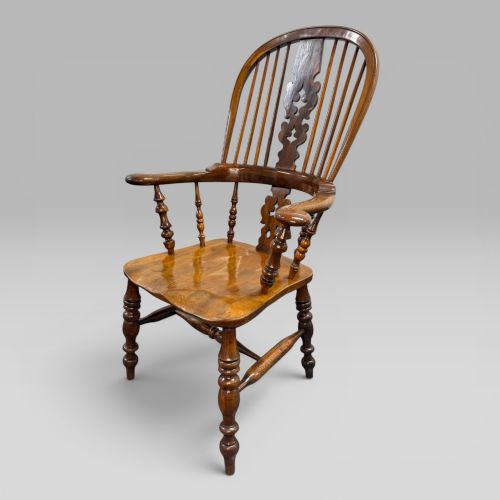
Splat Back Windsor Chair
When you search for a splat back windsor chair, you are stepping into a rich tradition of vernacular seating shaped by generations of English village carpenters.
Splat Back Windsor Chair
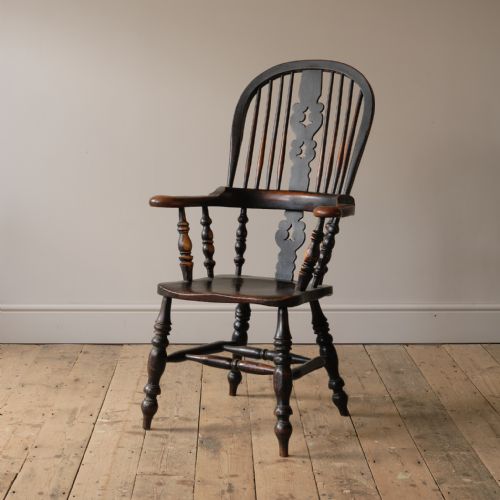
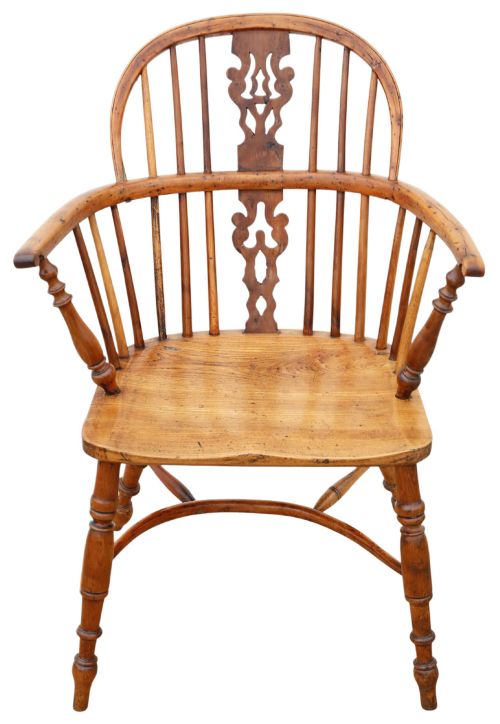
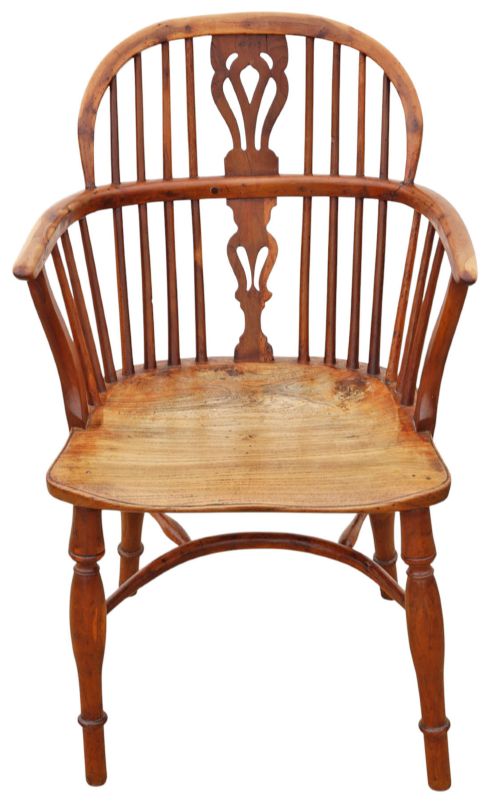
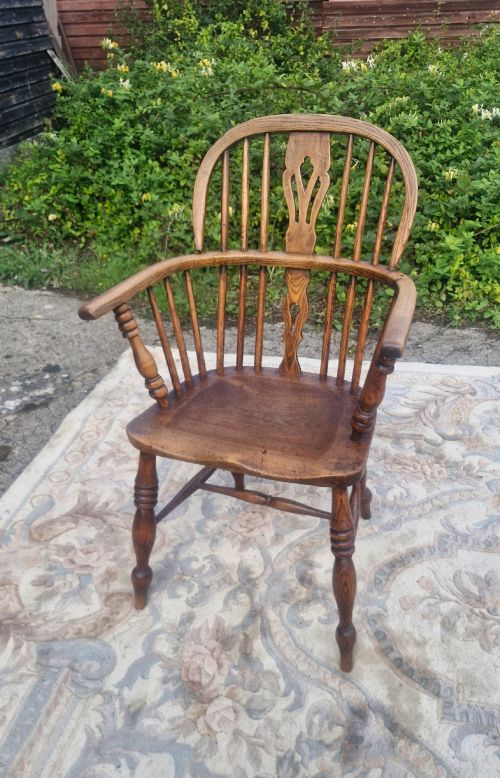
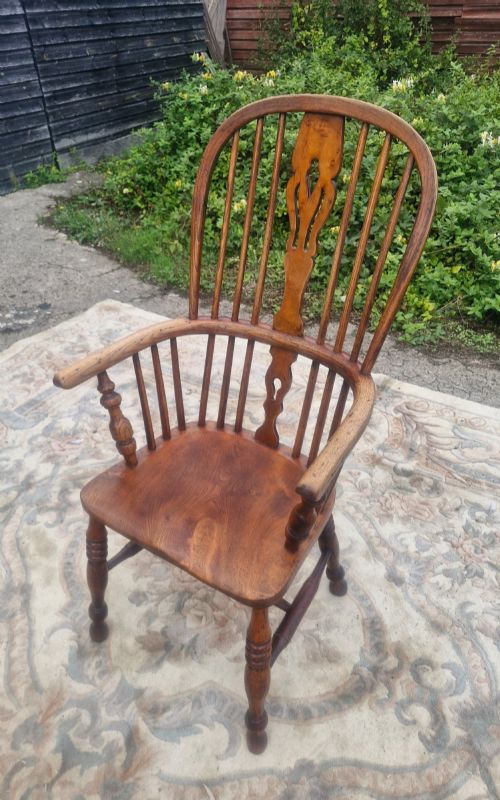
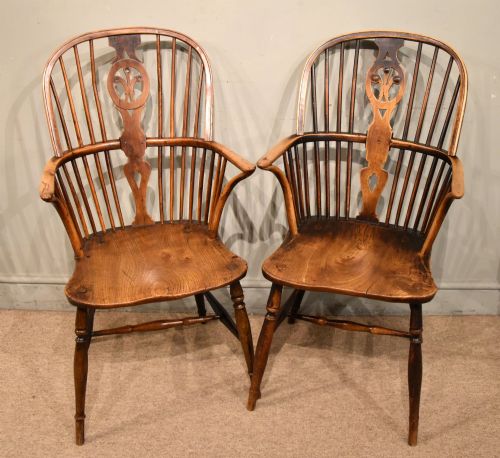
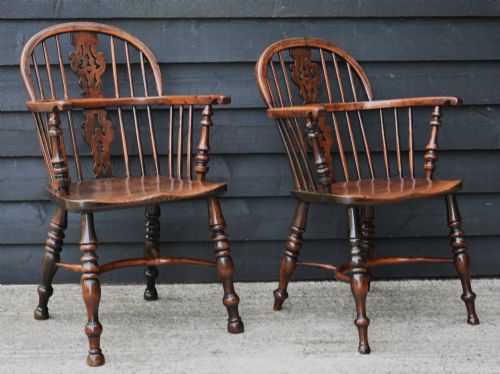
A splat back windsor chair is a robust form of wooden seating where the legs and back are inserted directly into a solid sculpted seat rather than into a separate frame. When exploring this phrase, buyers encounter pieces originating from domestic farmhouses, country houses, and provincial workshops spanning the eighteenth, nineteenth, and early twentieth centuries.
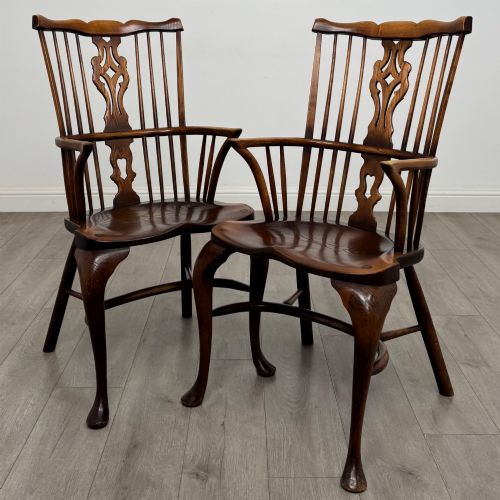
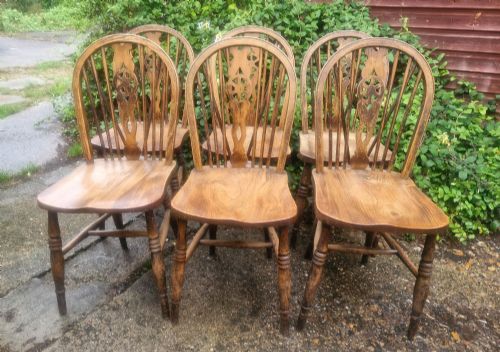
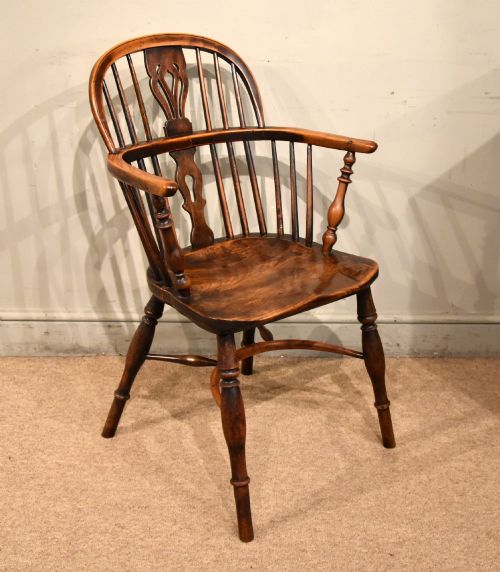
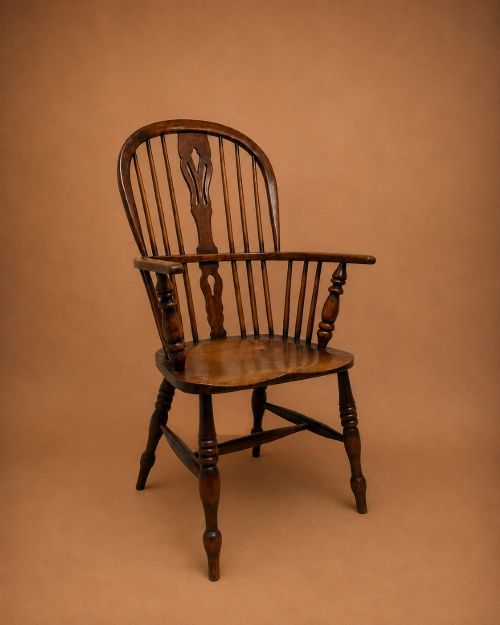
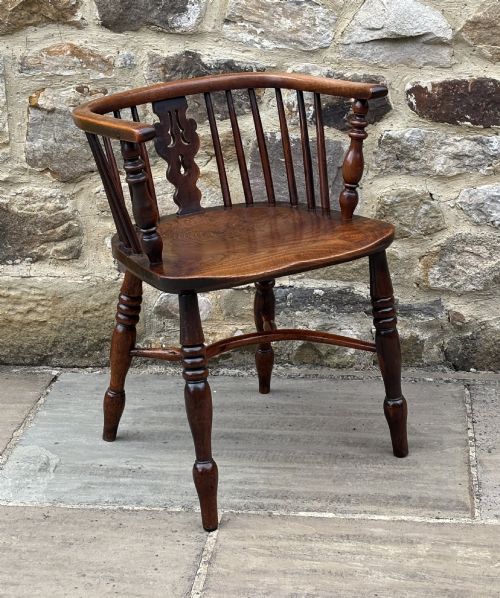
The defining characteristic of these examples is the central vertical slat, or splat, set within the wooden framework of the back. This central splat is frequently flanked by traditional spindles or integrated into high-back, low-back, wheel-back, or arch-back architectural formats.
Examples on this page draw from established English country vernacular styles, particularly regional variations associated with rural districts such as Lincolnshire and Nottinghamshire. Armchairs and occasional dining chairs predominate, often constructed as individual carvers or matched pairs intended for domestic hearths and dining spaces.
Materials and Methods
The construction of these seats relies upon a combination of contrasting timbers selected for specific structural duties. Elm is typically utilised for the solid, dished saddle seat due to its interlocking grain which resists splitting under weight, while ash, beech, or yew provide the tensile strength required for turned legs, spindles, and steam-bent hoops.
Makers employed traditional greenwood carpentry and bodging techniques, turning components on pole lathes in woodland clearings before assembling them with wedge-secured tenon joints. Parts were held rigidly together without metal fixings by driving hardwood wedges into the tops of legs and uprights projecting through the seat.
Several country armchairs retain small ink stains and worn armrests from centuries of letter-writing beside the hearth.
Markers of Quality
Quality in these rural seats is determined by the depth and comfort of the saddle-shaped seat carving and the careful selection of timber figure. Yew wood examples with rich grain patterns command particular appreciation, whereas plainer woods display simpler utility.
Proportion and structural integrity separate standard utility seating from finer examples. Well-turned legs, balanced arm scrolls, and the retention of original crinoline stretchers indicate superior craftsmanship from provincial workshops.
Benjamin Gilling·Gabbitass Workshop
The Splat Back Windsor Chair Glossary
- Splat
- The central vertical wooden board fitted into the backrest of a chair. It often takes a pierced, vase, or fiddle shape.
- Stretcher
- The horizontal wooden rod connecting the legs to add structural rigidity. Crinoline stretchers curve outward beneath the seat.
- Spindle
- A slender turned rod forming part of the backrest or arm supports. Spindles are driven directly into bored holes in the seat.
- Hoop Back
- A continuous steam-bent wooden bow forming the upper backrest and arm rail. This curved member frames the internal splats and spindles.
- Comb Back
- A low or high back design where the top rail resembles the teeth of a comb. Vertical spindles rise from a horizontal arm rail to meet this top member.
Splat Back Windsor Chair: Frequently Asked Questions
What is a splat back windsor chair?
A splat back windsor chair is a traditional wooden seat featuring a solid sculpted timber saddle base and a central vertical slat within the backrest. The uprights and legs are tenoned directly into the seat.
These pieces developed through English country vernacular traditions, utilising contrasting woods like elm for the seat and yew or ash for the turned supports.
How were these chairs used historically?
These pieces served as durable seating around farmhouse hearths, in kitchens, and throughout country house libraries and dining rooms. Their robust construction suited daily domestic service.
The inclusion of arms made them comfortable carver chairs for the head of a table or a fireside corner.
How do I care for antique elm and yew?
Maintain these wooden surfaces by applying traditional beeswax periodically to nourish the dry timber and preserve the natural grain. Avoid placing them near direct heat sources or in fluctuating humidity.
Gentle dusting with a soft cloth prevents accumulation without harming the historic polish.
How can I tell the period of a windsor?
Dating relies upon observing construction traits, timber selection, and tool marks left on the underside of the saddle seat. Earlier eighteenth-century examples often display simpler comb backs, while nineteenth-century versions incorporate wheel motifs or elaborate splats.
Regional differences in leg turning and stretcher arrangements also assist in placing pieces within the Georgian or Victorian eras.