




Rustic Kitchen Armchair
A rustic kitchen armchair is a sturdy country seat built for daily use, combining traditional Windsor forms with honest utilitarian woods.
Rustic Kitchen Armchair
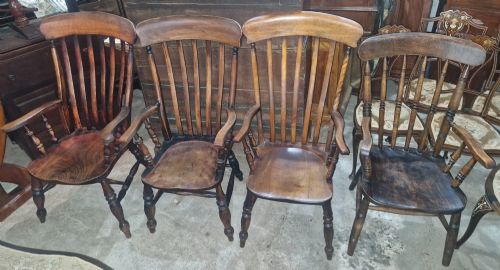
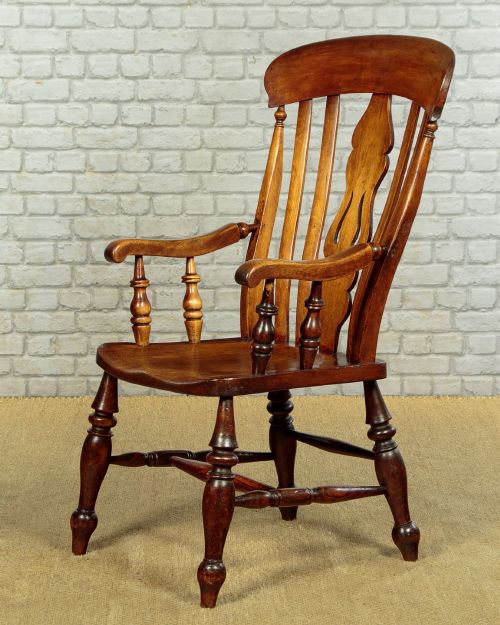
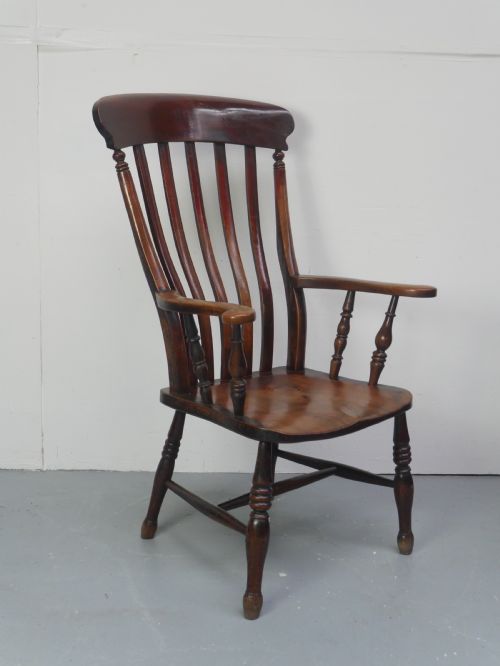
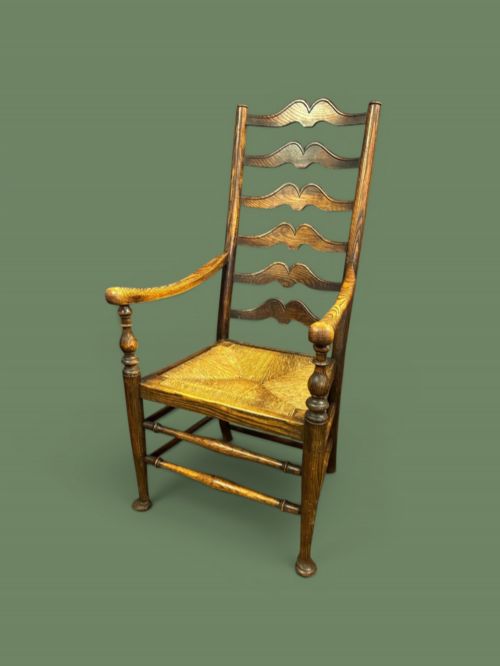
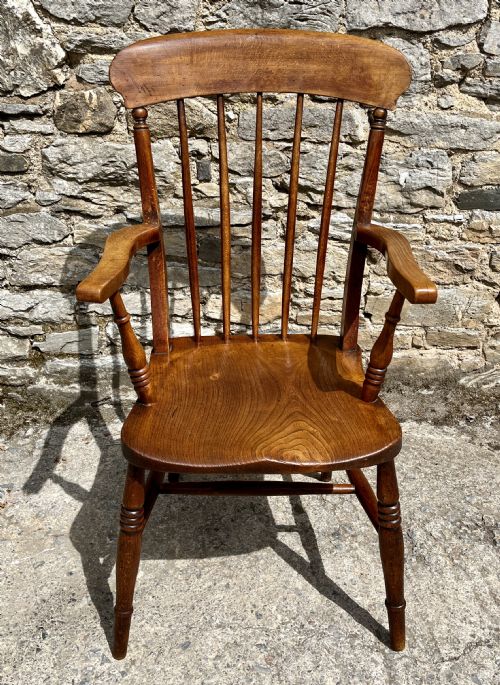
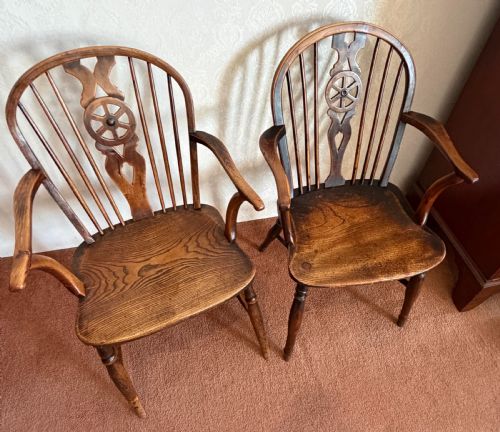
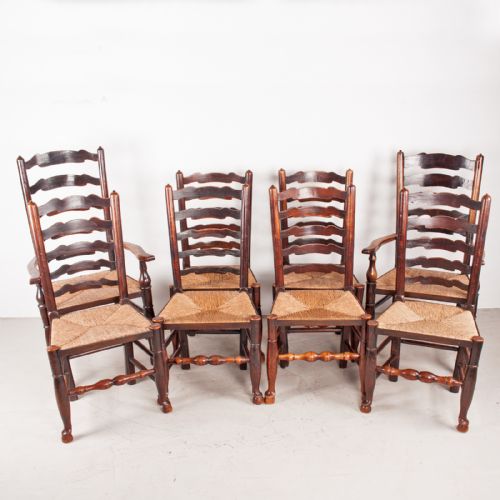
When you search for a rustic kitchen armchair, you encounter robust domestic seating produced across the nineteenth and early twentieth centuries. These pieces emerge from English country and farmhouse traditions, taking the form of Windsor carvers, lath backs, and spindle backs intended for heavy dining and kitchen use.
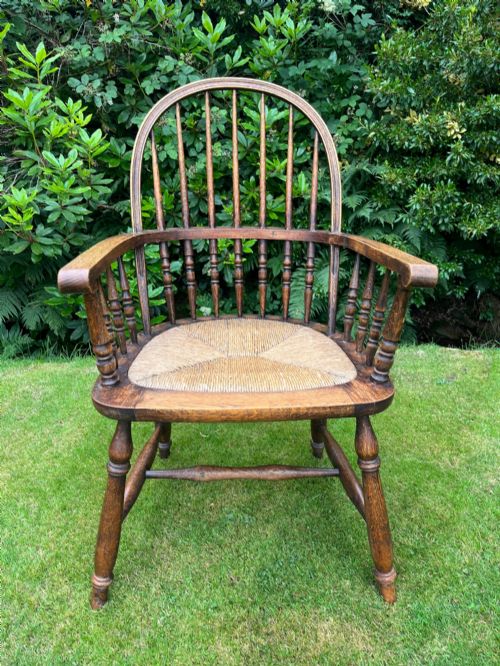
The versions most common on this page date from the Victorian era up to the nineteen-twenties. They span straightforward elm and ash constructions, often featuring rushed seats or turned components suited to vernacular domestic interiors.
Materials and Construction
Maker traditions relied on combining strong native timbers to withstand daily strain. Elm frequently formed the scooped solid seats, paired with turned ash or beech for spindles and legs, while oak and cane appeared in specific regional vernacular designs.
Joinery methods utilised traditional wedged tenons and steam-bent hoops. Seats were bored directly to receive the upright legs and back spindles without complex metal fixings.
Listings demonstrate a strong prevalence of nineteenth-century elm and ash timbers utilised across English country Windsor and ladderback chair forms.
Assessment of Quality
Quality rests upon timber selection and the integrity of the original construction. Chairs fashioned from thick, well-figured elm seats and sound ash turnings demonstrate superior local craftsmanship compared to later utility replacements.
Proportion and structural balance dictate the finer examples. The sweep of a hoop back or the depth of a carved armrest reveals the maker's eye within vernacular country furniture.
The Rustic Kitchen Armchair Glossary
- Windsor chair
- A wooden chair built with a solid saddle-shaped seat into which the back-rest and legs are dowelled directly. This form developed deep roots in English country vernacular making.
- Rush seat
- A woven seating surface made from dried marsh rushes twisted around a wooden frame. It provides a flexible and traditional platform for country dining chairs.
- Lath back
- A chair back featuring a wide central wooden splat or lath flanked by vertical spindles. It offers robust support for kitchen seating.
- Carver
- A traditional term for an armchair, typically designed to match a set of smaller side chairs intended around a dining table.
- Spindle back
- A chair back constructed from multiple slender turned vertical wooden rods. These components distribute weight evenly across the curved hoop.
Rustic Kitchen Armchair: Frequently Asked Questions
How do I date a kitchen armchair?
Dating relies on observing construction methods, timber choice, and wear patterns across the seat and undercarriage. Nineteenth-century examples often display hand-turned components and heavier elm boards.
Later pieces from the early twentieth century shift towards standardised turnings and machine-sawn elements while retaining traditional vernacular silhouettes.
Are these chairs comfortable for daily use?
These chairs were built for utility in busy domestic kitchens and farmhouses, prioritising sturdy upright support. The sculpted wooden saddles distribute weight effectively for seated tasks.
Adding a loose pad or cushion can soften the solid timber seat for extended dining use.
Can I mix these armchairs with modern tables?
The honest timber tones and simple vernacular lines pair well with contemporary or reclaimed dining surfaces. Their neutral organic materials integrate easily into varied interior schemes.
Placing a single carver at the head of a table creates a strong focal point in a modern room.