




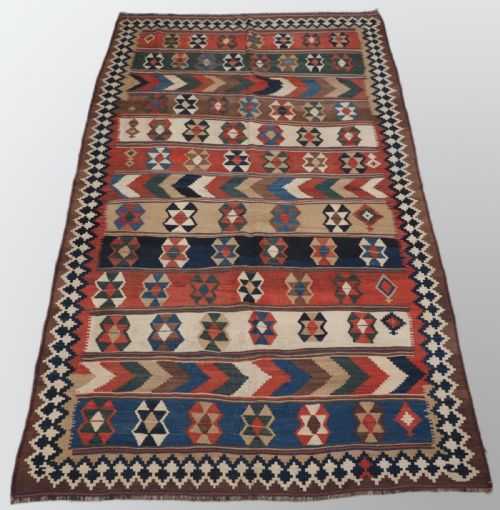
South Persian Kilim
These south persian kilim pieces bring nomadic flatweave artistry into modern rooms through rich tribal patterns and historic wool work.
South Persian Kilim
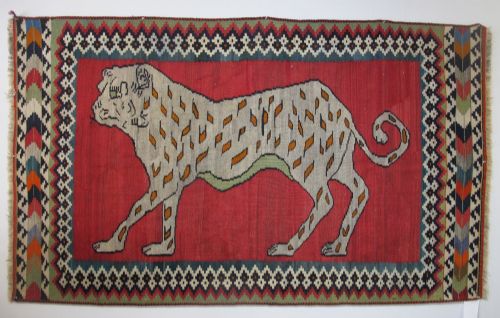
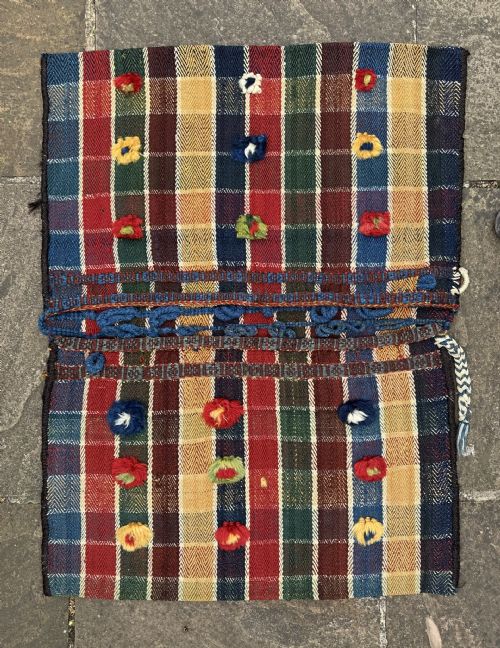
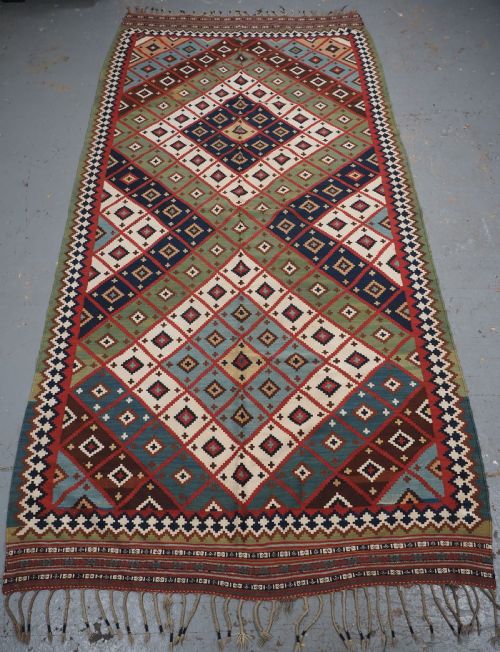
A south persian kilim represents the flatwoven textile tradition of nomadic and tribal confederacies working across Fars and Kerman provinces. When you search for this phrase, you encounter utilitarian rugs, salt-bags, bread sofreh cloths, and saddle-bags produced by groups such as the Qashqa'i and Afshar. These items served practical functions in nomadic daily life before entering the collector market.
The pieces appearing on this page span the late nineteenth century into the early twentieth century, specifically from the 1870s through the 1920s. Most examples originate from Qashqa'i tribes and related tribal groups in south-west Persia. You will find both full-size area rugs and smaller utilitarian woven objects bearing traditional banded or pictorial designs.
Materials and Construction
Weaving relies upon hand-spun wool and standard wool yarns combined with cotton foundations, worked on portable horizontal looms set up in nomadic camps. The makers utilised natural dyes derived from local plants and minerals to colour the fleece before weaving geometric and tribal motifs. Slit-weave construction creates the characteristic flat surface without pile.
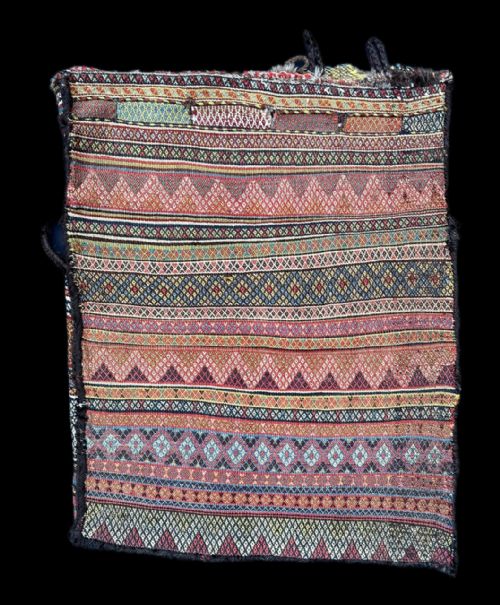
Specialised forms like the soumak technique appear alongside standard kilim interlacing, producing textured structural variations across bags and covers. The integration of hand-spun wool gives these textiles a supple handle and distinct tactile quality that changes subtly across different tribal workshops.
Listings feature wool, cotton, and natural dyes across Qashqa'i and Afshar tribal traditions dating from 1870 to 1920.
Judging Quality and Execution
Quality rests upon the fineness of the weave, the crispness of the geometric drawing, and the depth achieved by natural dyes. Tightly beatenweft rows and balanced proportions distinguish the finer tribal pieces from standard utilitarian outputs.
The preservation of original finishes, such as side cordings and starting ends, elevates an example. Pieces displaying harmonious colour palettes and sophisticated tribal iconography command greater attention from experienced collectors.
The South Persian Kilim Glossary
- Kilim
- A flatwoven, pileless textile produced by interlocking coloured weft threads over a warp foundation. This technique allows for sharp geometric patterns and lightweight construction suited to nomadic transport.
- Sofreh
- A flatwoven cloth traditionally used for spreading meals or handling bread preparation within nomadic households. These functional textiles frequently display sophisticated tribal layouts and symbolic borders.
- Soumak
- A supplementary weft wrapping technique that produces a textured surface resembling embroidery on the reverse side. It adds durability and structural weight to storage bags and rugs.
- Tayefeh
- A specific sub-tribe or clan within a larger nomadic confederacy such as the Qashqa'i. Identifying the tayefeh helps localise the specific design vocabulary of a weaving.
South Persian Kilim: Frequently Asked Questions
What is a south persian kilim?
It is a pileless flatwoven textile made by nomadic and tribal groups in the Fars and Kerman regions of Persia.
These pieces include floor rugs, storage bags, and eating cloths created for daily nomadic life.
How were these tribal textiles used?
Nomads utilised these flatweaves as floor coverings, animal transport bags, wall hangings, and dining spreads.
Items like bread sofrehs and salt-bags fulfilled specific domestic and ceremonial functions within the camp.
How do I date an antique kilim?
Dating relies upon structural analysis, wool characteristics, dye palettes, and documented tribal design markers from the late nineteenth and early twentieth centuries.
Natural dye variations and hand-spun wool consistency provide reliable indicators for pieces originating between the 1870s and 1920s.
How do I care for a flatweave rug?
Protect antique wool textiles by placing them out of direct sunlight and using breathable underlays on floors.
Gentle vacuuming without a rotating brush roll maintains the flat surface without stressing the historic fibres.