




Qashqai Flatweave Rug
These Qashqai flatweave rug pieces are South Persian tribal textiles woven with wool and natural dyes.
Qashqai Flatweave Rug
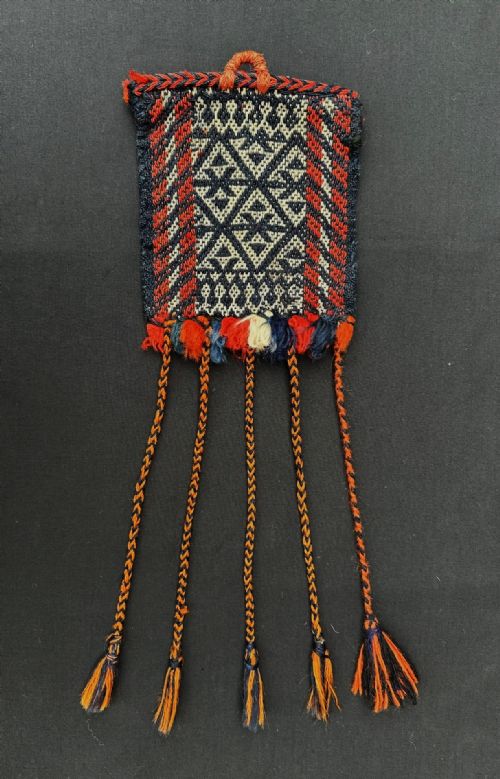
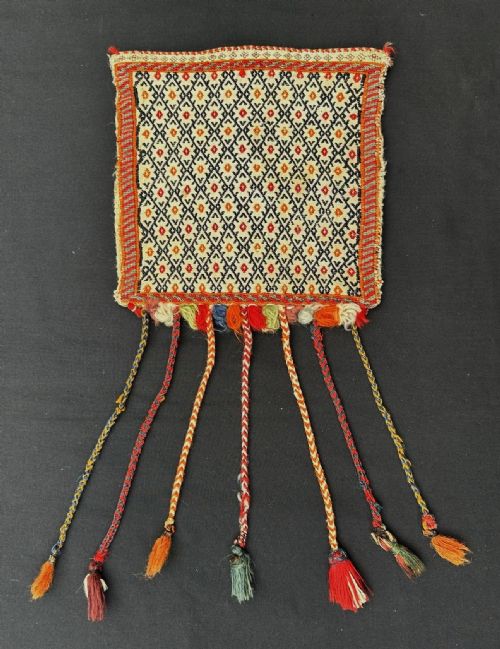
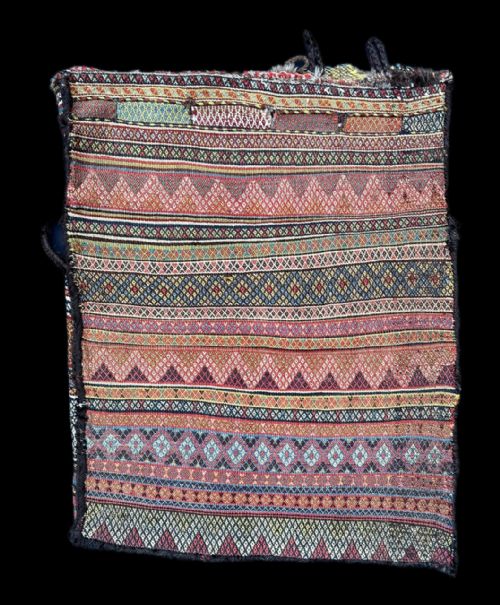
A qashqai flatweave rug brings together nomadic textiles from the Fars Province of South-West Persia, created by tribal groups and confederacies such as the Shekarlu and Darrehshuri. You will frequently encounter kilims alongside utilitarian forms like storage bags, salt bags, vanity bags, water-pipe bags, and moj bedspreads.
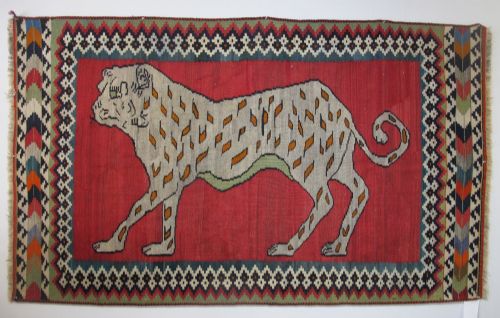
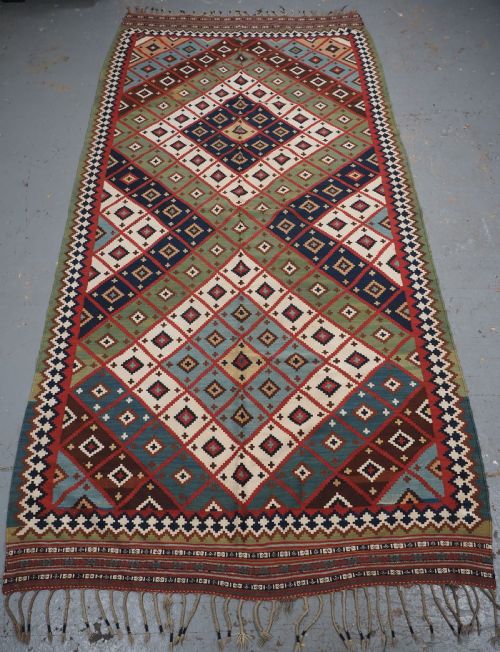
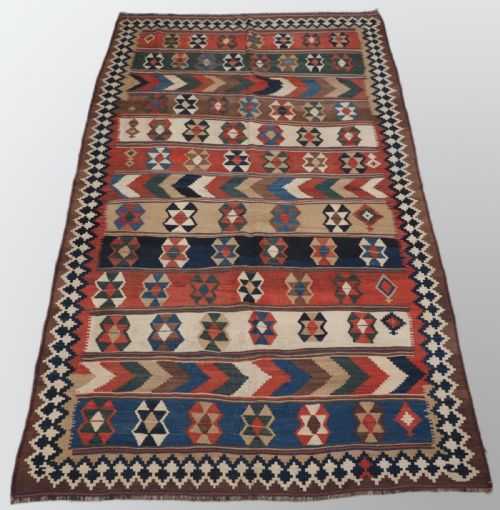
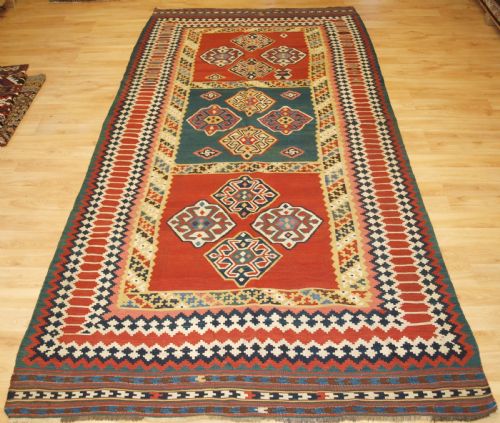
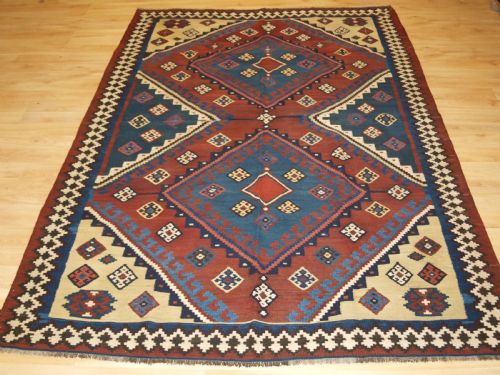
The objects span the late nineteenth and early twentieth centuries, specifically noting years across 1870, 1880, 1890, 1900, and 1920. Pieces display distinct design frameworks including banded patterns, compartment layouts, eye dazzler motifs, diamond medallions, and figurative subjects like lions.
Textiles from this tradition reflect the pastoral heritage of the Qashqai nomads, translated into flatwoven structures rather than knotted pile carpets. Every piece originates from South Persia, carrying the specific geographic and tribal attribution of the Fars region.
Materials and construction
Construction relies upon wool and hand-spun wool, frequently paired with cotton foundations or details, handled by nomadic weavers using traditional flatweave techniques. The absence of pile creates a smooth, durable textile surface where pattern emerges directly from the interlacing of warp and weft threads.
Colour comes from natural dyes, which impart the characteristic tones found across nineteenth and early twentieth century tribal pieces from the region. These plant and mineral colourants interact with hand-spun wool to produce the varied hues visible in banded, compartment, and diamond medallion designs.
Nomadic weavers packed everything into bags, even their spoons and water-pipes.
Evaluating quality in flatweaves
Quality rests upon the fineness of the weave and the precision with which intricate designs like eye dazzlers or compartment layouts are executed by the nomad weaver. Tighter handling of hand-spun wool yields a crisper geometric definition across diamond medallions and banded rows.
The depth and subtlety of natural dyes create a visual richness that separates standard examples from superior artistic achievements. Well-preserved textiles retain structural integrity in their flatweave construction while displaying harmonious colour relationships across the field.
The Qashqai Flatweave Rug Glossary
- Kilim
- A flatwoven textile produced without a pile, forming the primary structural type for many tribal rugs and bags. These pieces rely on tightly packed weft threads concealing the warps.
- Moj
- A traditional woven cover or bedspread originating from Persian nomadic groups. This specific form showcases large-scale geometric patterning characteristic of the region.
- Tayefeh
- A sub-tribe or clan within a larger tribal confederacy, such as the Shekarlu or Darrehshuri groups of the Qashqai. Attributions to these specific divisions appear in detailed tribal provenance.
- Fars Province
- The traditional territory in South-West Persia where Qashqai nomads weave their textiles. This geographic centre defines the origin of these tribal rugs and utility bags.
- Natural Dyes
- Colourants derived from plants, insects, and minerals rather than synthetic compounds. They provide the varied palette seen in nineteenth-century Persian flatweaves.
Qashqai Flatweave Rug: Frequently Asked Questions
What is a qashqai flatweave rug?
A qashqai flatweave rug is a pileless textile woven by nomadic tribes in the Fars Province of South-West Persia. These pieces include utilitarian items like storage and salt bags alongside larger kilims.
The tradition spans the late nineteenth and early twentieth centuries, utilising hand-spun wool and natural dyes. Designs feature geometric motifs such as diamond medallions, banded rows, and compartment layouts.
How were tribal bags used?
Nomadic families utilised woven bags for domestic storage, transporting salt, vanity items, spoons, and water-pipes during seasonal migrations. They served practical daily functions within the tent household.
Each bag type was constructed with flatweave techniques suited to daily handling and suspension within the nomadic encampment.
How do I date these textiles?
Dating relies on stylistic analysis, material indicators like hand-spun wool, and traditional natural dye palettes characteristic of the late nineteenth and early twentieth centuries. Pieces often point to specific decades between 1870 and 1920.
Documentation of tribal confederacies and specific tayefeh groups also helps contextualise the period of production within South-West Persia.
Where were they made?
These textiles originate exclusively from the Fars Province in South-West Persia, the historical territory of the Qashqai confederacy. Weavers belonged to specific sub-tribes and nomadic groups operating within this region.
Geographic attribution is often preserved through the specific structural methods and regional wool characteristics native to South Persia.
What designs are typical?
Typical designs include banded patterns, compartment layouts, and bold geometric eye dazzler motifs. Diamond medallions and figurative elements such as lion depictions also appear.
These patterns are executed through flatweaving, where the interaction of coloured weft threads creates sharp, graphic geometries across the textile surface.