
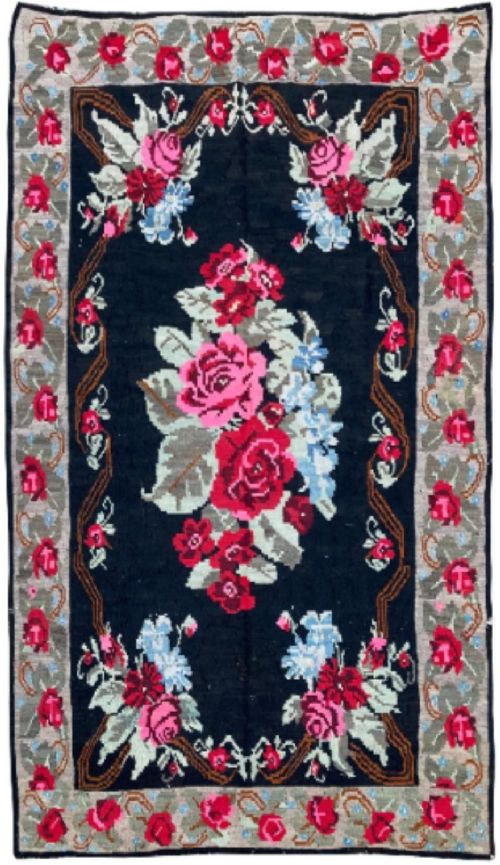
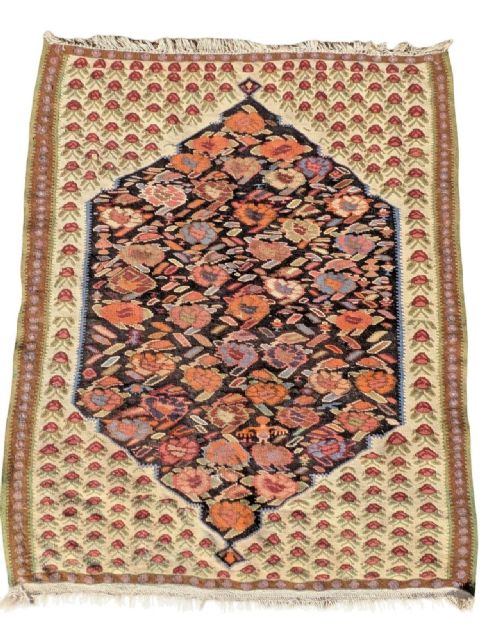
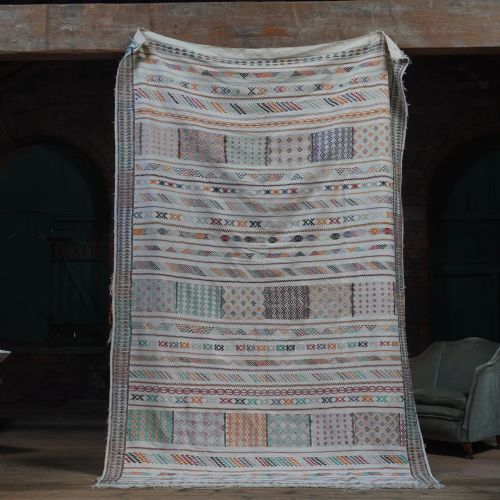
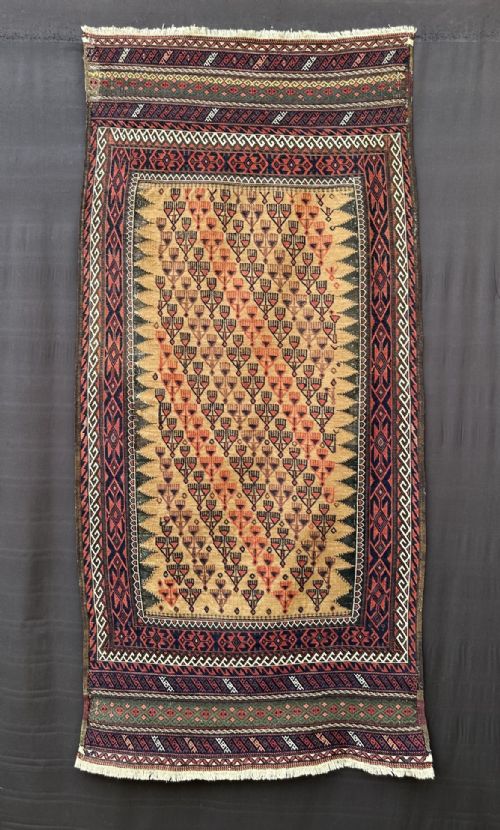


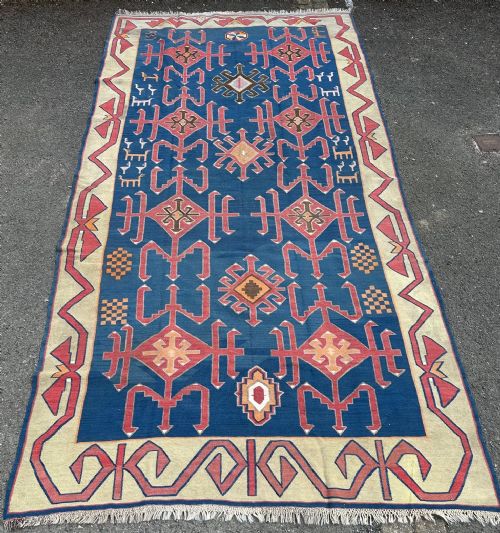


Vintage Kilim Runner
When you search for a vintage kilim runner, you discover flat-woven textiles carrying tribal patterns across floors and walls with enduring character.
Vintage Kilim Runner
A vintage kilim runner brings flat-woven tribal geometry into narrow spaces, hallways and corridors through traditional formats created by nomadic and village weavers. These pieces originate from diverse cultural regions including Persia, Turkey, the Caucasus, and Central Asia, spanning the nineteenth and early twentieth centuries.
The selection here includes long formats alongside broader flatweaves, Sofreh bread cloths, and tent bands, reflecting utilitarian village and tribal items adapted for modern interiors. Makers across Anatolia, the Caucasus, and Central Asia produced these textiles using regional motifs that distinguish one tribal weaving group from another.
Materials and construction methods
Weavers relied primarily on hand-spun wool and cotton foundations, often incorporating natural dyes to achieve rich, enduring colour palettes. Certain regional pieces utilise alternative fibres such as camel hair, sabra cactus silk, or split animal hair to form intricate slit-weave structures.
The flat-weave technique involves interlocking or slit-tapestry methods where weft threads wrap tightly around warp threads without creating a piled surface. Multi-strip construction appears in larger Central Asian panels, where narrow vertical segments are joined to form a cohesive textile.
Regional styles represented include Persian Tribal, Caucasian, Anatolian Tribal, and Central Asian variations.
Factors of quality and execution
Execution depends heavily on the tightness of the weave and the precision of the geometric design, where finer handling yields sharper pattern delineation. Superior examples display masterful handling of natural dye saturation, resulting in harmonious fading and depth across the field.
Structural integrity relies on the quality of the wool and the soundness of the selvedges, which determine how well a flatweave withstands foot traffic. Pieces exhibiting complex tribal iconography and careful structural joins demonstrate greater technical mastery by the weaver.
The Vintage Kilim Runner Glossary
- Kilim
- A flat-woven carpet or rug produced without a pile by tightly interweaving warp and weft strands. This technique creates a lightweight textile suitable for floors, wall hangings, and covers.
- Sofreh
- A utilitarian cloth used traditionally for spreading meals or storing bread within nomadic households. These items frequently display distinctive tribal borders and central field arrangements.
- Warp
- The stationary vertical threads stretched upon a loom that provide the foundational structure for the textile. Weft threads pass over and under these parallel tensioned lines.
- Weft
- The horizontal threads passed through the warp to build up the pattern and colour of the weave. In flatweaves, these threads carry the visible design elements.
- Slit-weave
- A tapestry technique where the weft turns back around the warp without interlocking with adjacent colour areas, creating a small vertical slit in the fabric. This method defines sharp geometric outlines in tribal rugs.
Vintage Kilim Runner: Frequently Asked Questions
Where should I place a vintage kilim runner?
These narrow flatweaves suit hallways, corridors, staircases, and kitchens where a low profile assists door clearance and movement. Their durable wool construction handles everyday foot traffic while adding warmth and pattern to transitional spaces.
Positioning them away from direct, harsh sunlight preserves the natural dyes used in their creation. Underlay helps secure the flat textile firmly to hard flooring surfaces.
How do I clean a flat-woven runner?
Gentle regular vacuuming without a rotating brush roll removes surface dust and debris from the weave. Professional textile cleaning is recommended for deeper maintenance to protect natural wool fibres and traditional dyes.
Avoid soaking or machine washing antique flatweaves, as excess moisture weakens old structural foundations. Spot cleaning requires mild solutions tested cautiously on inconspicuous areas first.
How can I tell tribal regions apart?
Design geometry, border structures, and palette choices often point directly to specific weaving groups or geographic regions. Caucasian pieces frequently employ bold, rectilinear medallions, whereas Anatolian examples lean towards warm terracotta tones and stylized floral motifs.
Central Asian and Persian tribal works exhibit distinct abrash colour variations and unique symbolic markers. Comparing structural banding and wool preparation helps confirm the likely origin of the textile.
Are these textiles durable for daily use?
The dense flat-weave construction provides notable strength, making these rugs resilient against regular household activity. Wool possesses natural lanolin that resists dirt and repels moisture effectively.
Using an appropriate rug pad underneath reduces friction against hard floors and extends the operational lifespan of the textile. Rotating the piece periodically ensures even wear across high-traffic areas.