


Multicolour Kilim Rug
A multicolour kilim rug brings flatweave textile artistry into a room, offering geometric patterns and vibrant historical character.
Multicolour Kilim Rug
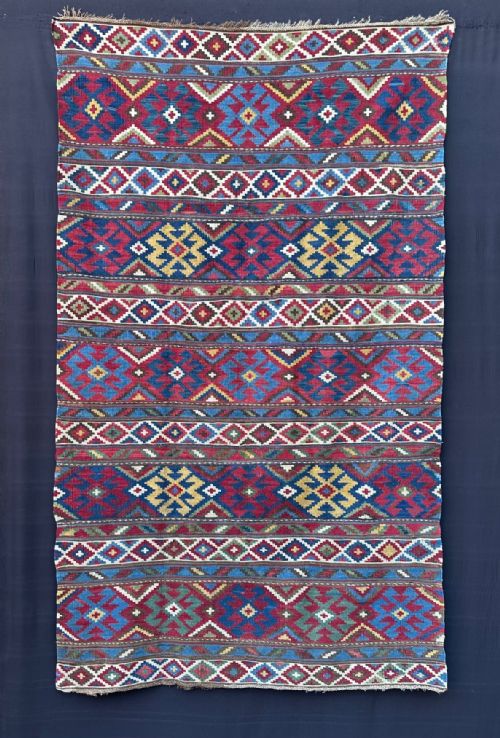
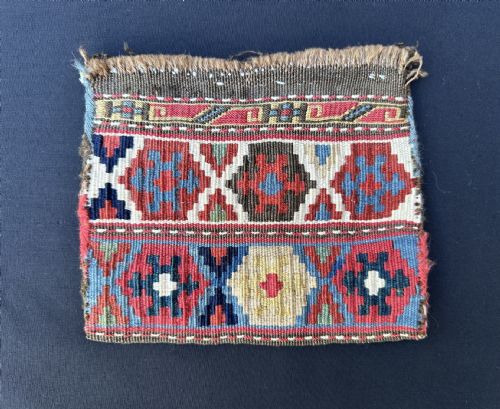
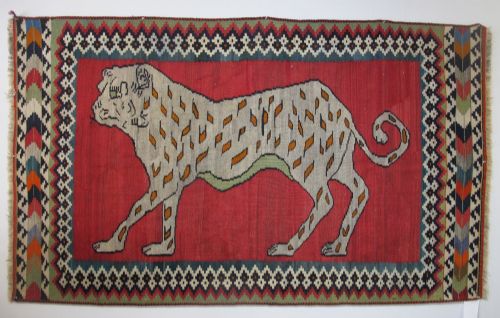
A multicolour kilim rug represents flatwoven textile traditions originating from Anatolian, Persian, Caucasian, and Central Asian regions, alongside Balkan traditions. These pieces appear as full room-sized carpets, runners, smaller scatter rugs, cushion covers, and vanity bags. Buyers encounter works attributed to tribal groups such as the Qashqai, Shahsevan, and Uzbek peoples, spanning periods from the mid-nineteenth century through the early twentieth century.
The aesthetic relies on flat surfaces without a pile, created by tightly interweaving warp and weft threads to form crisp geometric boundaries. Many examples display banded layouts, bold graphic compositions, or specific regional formats like prayer kilims and finger kelims. The palette spans varied hues achieved through traditional dyeing methods, bringing distinct regional character to domestic spaces.
Materials and construction
Makers constructed these flatweaves predominantly using wool and cotton foundations, occasionally incorporating camel hair for specific grounds or textural variation. Natural dyes provided the colour palette across Anatolian, Persian, and Central Asian workshops.
Weavers utilised slit-tapery techniques, where individual colour blocks meet along warp threads without interlocking, creating characteristic vertical slits. Some textiles combine weaving with embroidery, particularly in pieces from Uzbek or Bessarabian traditions.
The listings span eight distinct decades between the eighteen-fifties and the nineteen-thirties, showcasing wool, cotton, and camel hair constructions.
Assessing quality and execution
Quality rests upon the tightness of the weave, the precision of the geometric lines, and the clarity of the natural dyes. Denser foundations ensure longevity and hold structural integrity across generations of use.
Artistic expression distinguishes finer examples, visible in balanced proportions, sophisticated colour placement, and unusual regional motifs that depart from standard village output.
The Multicolour Kilim Rug Glossary
- Kilim
- A flatwoven textile produced without a pile by tightly interweaving the horizontal weft threads over the vertical warp threads. This technique creates a lightweight fabric with identical patterns visible on both sides.
- Warp
- The stationary vertical threads stretched onto the loom before weaving begins. The weft threads pass over and under these foundational lines.
- Weft
- The horizontal threads passed through the warp to create the pattern and colour blocks of the textile. In kilims, these threads form the visible design.
- Natural Dyes
- Colourants derived from plant, insect, and mineral sources prior to the widespread adoption of synthetic alternatives. They produce softer, more complex hues that age gracefully over time.
- Slit-tapestry
- A weaving technique where the weft threads return at the edge of a colour area rather than looping around a shared warp thread. This method creates small vertical slits between distinct colour blocks.
Multicolour Kilim Rug: Frequently Asked Questions
How do I care for a kilim rug?
Vacuum gently without using a rotating brush roll to prevent snagging the flatwoven threads. Rotate the textile periodically to ensure even wear across high-traffic areas.
Professional cleaning tailored to antique flatweaves maintains the integrity of the natural dyes and wool fibres. Avoid excessive moisture and direct sunlight to preserve the original palette.
Can I place a kilim in a hallway?
Runner formats and long flatweaves suit corridors and narrow spaces well, provided you use an appropriate underlay. The flat structure prevents doors from catching while adding warmth to transitional zones.
Because these textiles lack a pile, they handle foot traffic efficiently when supported by a quality non-slip pad. Ensure the placement avoids continuous dampness.
How are different regional styles distinguished?
Anatolian and Caucasian pieces often feature bold geometric medallions and strict tribal borders. Persian and Central Asian examples frequently employ intricate banded layouts and specific colour combinations.
Examining the weave density, structural materials like camel hair or cotton, and traditional motifs helps attribute pieces to specific groups such as the Qashqai or Shahsevan.
Are these textiles fragile?
Antique flatweaves constructed from wool and cotton possess robust durability when used with care. The tight interweaving provides structural strength despite the lack of a pile.
Historical examples from the nineteenth and early twentieth centuries benefit from mindful placement away from heavy furniture legs or excessive moisture. Proper underlays distribute weight evenly across the weave.