
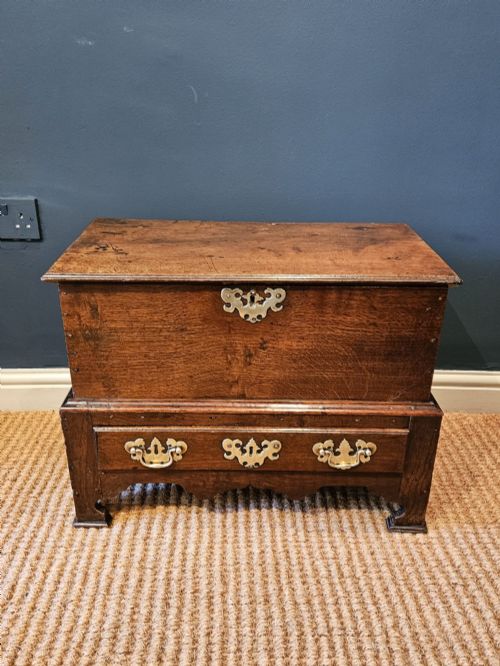


Small Welsh Blanket Chest
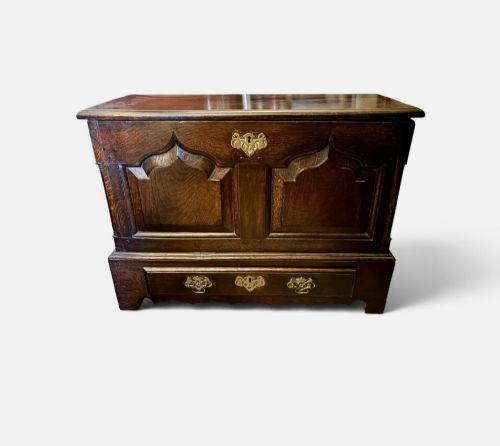
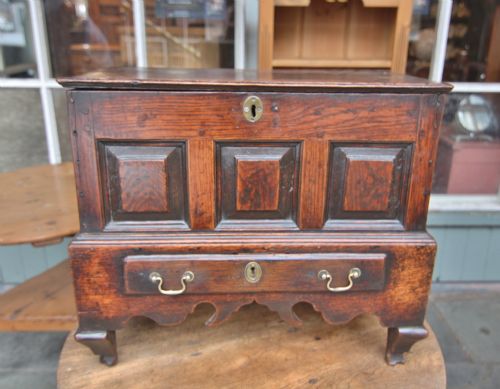
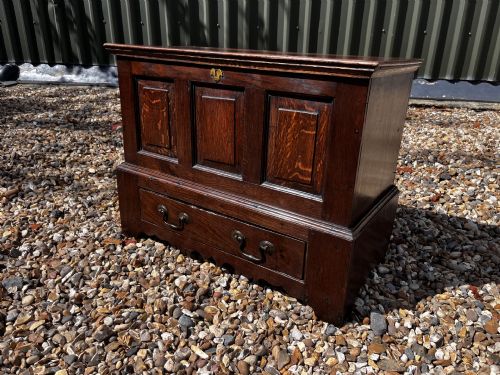
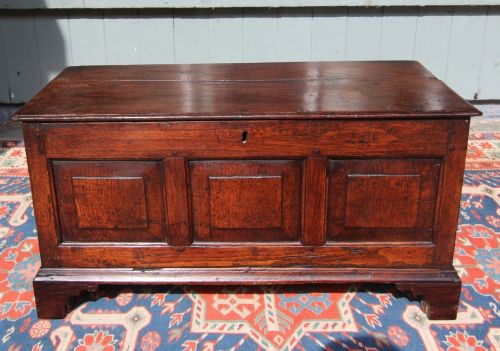
A small welsh blanket chest is a miniature domestic coffer designed for precious linens, most commonly found here in robust local oak.
Small Welsh Blanket Chest
A small welsh blanket chest, known locally as a coffer bach, represents a traditional form of miniature furniture made in Wales from the seventeenth century onwards. These compact pieces served domestic storage needs for household linen, valuables, or small garments within rural homes.
The pieces appearing on this page span several centuries, reaching from sixteenth century Elizabethan examples through Georgian vernacular styles to nineteenth century pine storage boxes. Oak dominates the selection, frequently taking the form of a scaled-down coffer resting on bracket or turned feet.
How They Were Made
Local cabinetmakers constructed these chests predominantly from solid oak, sometimes utilising pine or fruitwood for secondary elements and inlay. Carpenters employed traditional joinery techniques, combining panelled construction with pegged joints and sometimes incorporating timber inlay or painted finishes.
Hardware details typically include brass or iron hinges, locks, and escutcheons secured to the timber body. Surfaces might feature carved decoration in Elizabethan styles or display original paintwork from later nineteenth century examples.
Listings span periods from the 16th century to the 19th century, featuring oak, pine, painted wood, and timber inlay.
What Varies in Quality
Construction methods and timber selection drive the distinction between standard vernacular pieces and finer regional work. Early seventeenth century examples display deliberate hand-carving and careful jointing, whereas later nineteenth century pine boxes rely on simpler utilitarian assembly.
The survival of original surface finishes, feet, and iron or brass hardware substantially influences the character of each piece. Proportion and scale also differ, ranging from tiny miniature coffers to larger artisan storage boxes.
The Small Welsh Blanket Chest Glossary
- Coffer bach
- A traditional small Welsh chest or miniature coffer. These pieces were historically used to store household linen or important documents.
- Vernacular
- Domestic objects built by local craftspeople using regional traditions rather than metropolitan academic designs. This style prioritises practical utility and local material availability.
- Inlay
- A decorative technique where contrasting timbers are inserted into recessed cavities on the surface. This adornment appears on select eighteenth century boxes.
- Escutcheon
- A protective brass or iron plate surrounding a keyhole. It prevents the timber from wearing around the lock mechanism.
Small Welsh Blanket Chest: Frequently Asked Questions
What were small welsh blanket chests used for?
These miniature chests held precious household items, personal linens, or important family documents. Their compact scale allowed families to keep valuables secure and portable within the home.
Craftspeople built them to mirror larger storage furniture on a domestic scale. They sat upon tables or benches in daily living spaces.
How old are these small chests?
The pieces span from the sixteenth century through the Georgian era into the nineteenth century. Oak examples from the seventeen and eighteen hundreds form the core of the selection.
Earlier items display Elizabethan carved details, while later nineteenth century examples often utilise pine or painted wood surfaces.
Are these chests made of solid oak?
Oak is the predominant timber seen across the selection, complemented by occasional pine, painted wood, and fruitwood inlay. Local makers relied on native woods available in their immediate regions.
Iron and brass components like hinges and locks complete the construction of these traditional storage boxes.
What styles do these chests follow?
The pieces reflect Welsh vernacular, Georgian regional, and Elizabethan styles. Local craftspeople adapted metropolitan furniture fashions to suit rural Welsh traditions.
This results in distinct regional characteristics, including turned feet, small proportions, and occasional inlaid decoration.