
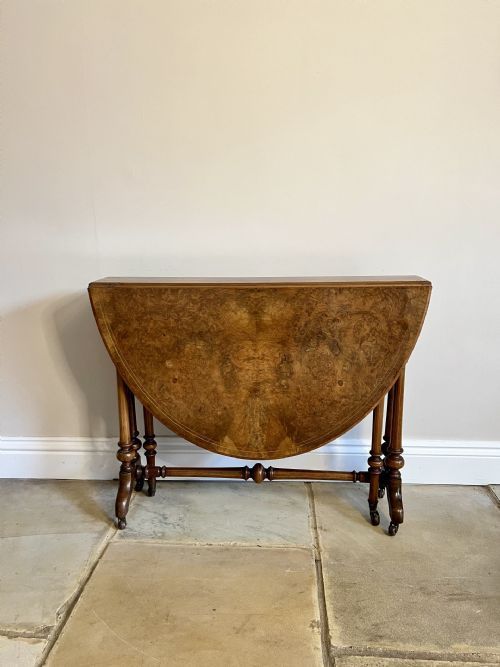


Small Walnut Gateleg Table
A small walnut gateleg table brings compact folding timber and rich figured grain to narrow spaces.
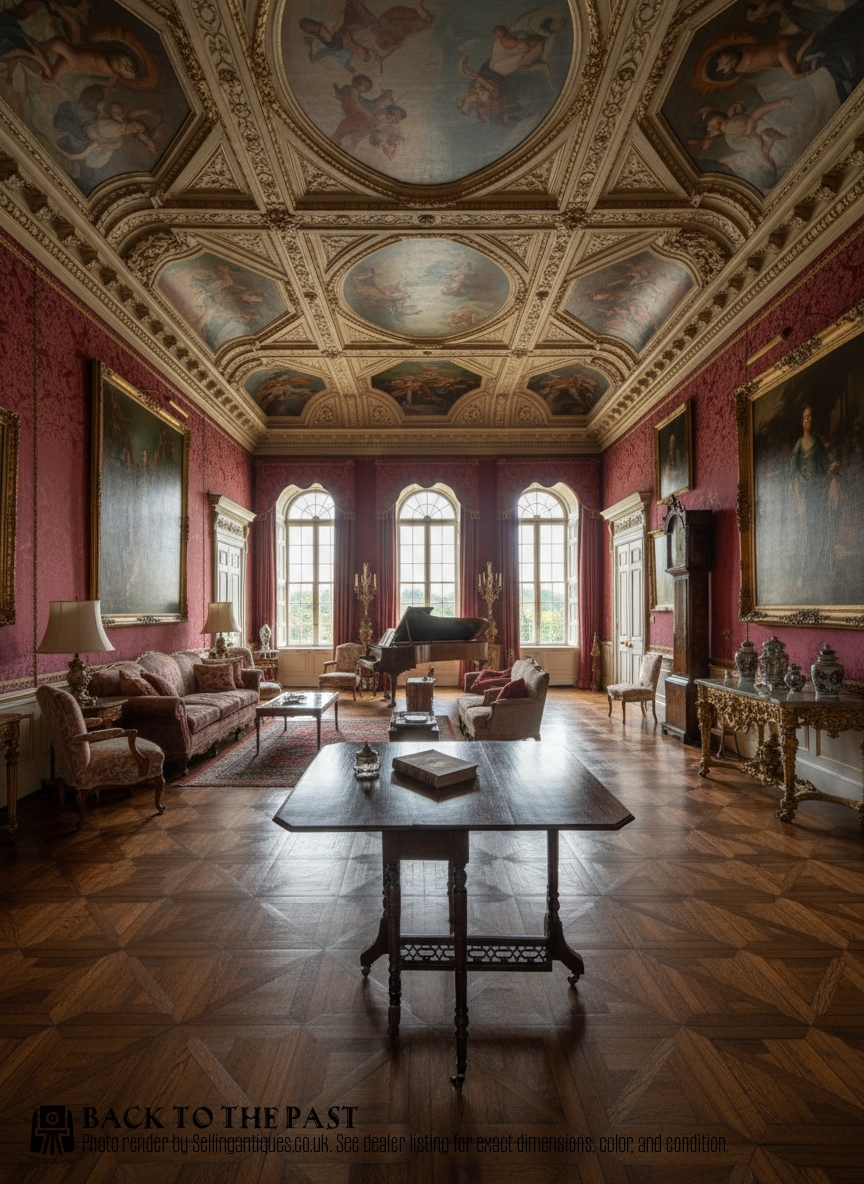
Small Walnut Gateleg Table
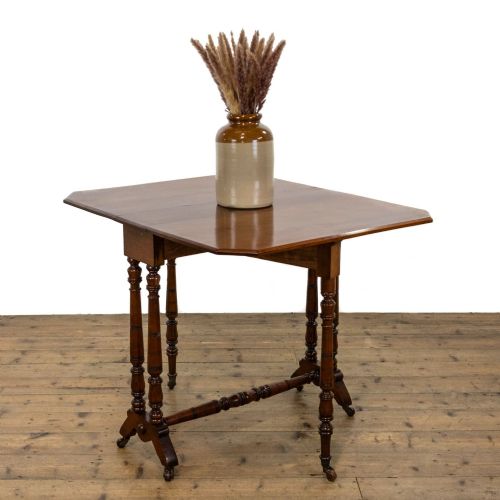
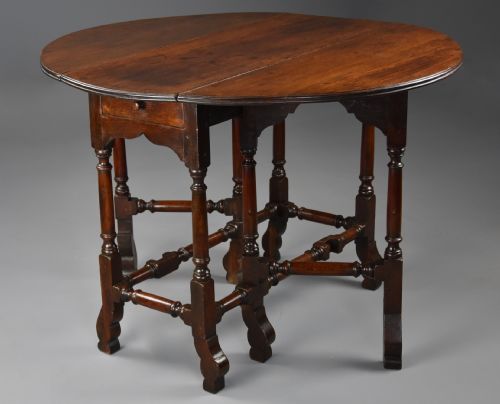
When you search for a small walnut gateleg table, you find a collection of drop-leaf and Sutherland tables originating mainly from the Victorian era and the eighteenth century. These pieces employ hinged flaps supported by swing legs to expand a compact surface into a larger dining or occasional table.
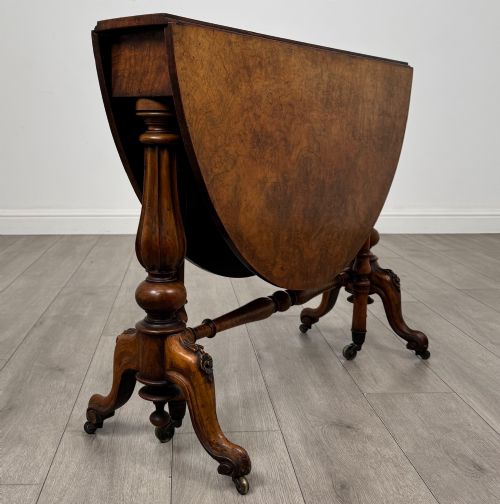
The versions most common on this page are Victorian Sutherland tables rendered in burr walnut, alongside earlier red walnut gateleg examples. They function as occasional, coffee, or side tables that fold flat against a wall when floor space is at a premium.

What varies in quality
The distinction between tiers rests upon the choice of timber and the complexity of the grain matching across the hinged leaves. Burr walnut sections with deep, swirling figures demand superior sawing skill compared to plain timber boards.
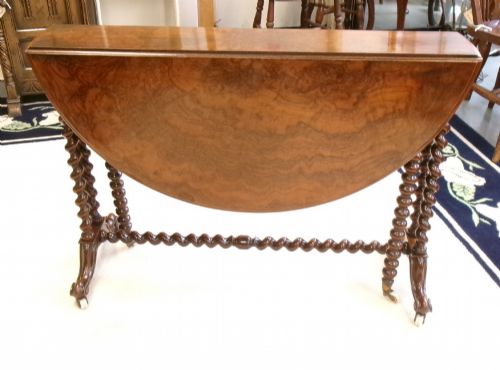
Construction rigidity also dictates standard, as sturdy gate pivots and tight hinge fittings keep the folding leaves level under weight. Crispness in turned leg details, such as barley-twist or bobbin profiles, separates standard production from finer workshops.
Listings span the seventeenth century through the Victorian period, utilising solid walnut, burr walnut veneers, brass, and ceramic.
The Small Walnut Gateleg Table Glossary
- Gateleg table
- A table with hinged leaves supported by one or more legs that swing outward like a gate. This design allows the surface area to expand or contract as needed.
- Sutherland table
- A narrow style of drop-leaf table featuring exceptionally slender legs and leaves that drop almost vertically. It was patented in the nineteenth century and suits placement against walls.
- Burr walnut
- A prized wood veneer harvested from walnut tree growths, characterised by swirling knot clusters. It creates a highly decorative surface pattern on tabletops.
- Red walnut
- A dense timber variety with warm reddish brown tones utilised in earlier seventeenth and eighteenth-century furniture. It provides robust structural strength for load-bearing legs.
Small Walnut Gateleg Table: Frequently Asked Questions
How do I use a gateleg table daily?
Keep the leaves dropped against the sides to use the piece as a narrow console or side table in a hallway or living room.
Swing the gate legs outward and raise the leaves whenever you need an extra surface for dining or writing.
What is a Sutherland table?
A Sutherland table is a specific form of gateleg table designed to fold into an extremely narrow footprint when not in use.
The leaves drop down nearly to the floor, supported by pivoting legs connected near the centre of the base.
How do I identify burr walnut?
Burr walnut displays distinctive, swirling grain patterns filled with small circular knot clusters rather than straight timber lines.
Cabinet makers used this figured wood as a decorative veneer on the main top panels of Victorian tables.
Are these tables sturdy enough for dining?
These tables provide stable surfaces for meals once the swing legs are locked into their proper weight-bearing positions.
Avoid placing excessive downward force on the extreme outer edges of the raised leaves to protect the internal hinges.