





Burr Walnut Flap Table
A burr walnut flap table brings rich grain and practical folding leaves into a room, spanning Georgian to Edwardian periods.

Burr Walnut Flap Table
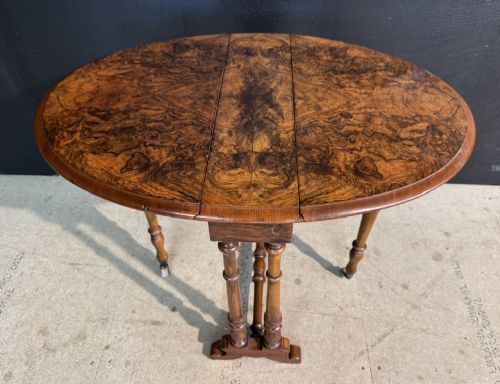
A burr walnut flap table combines the striking, swirling patterns of burr timber with folding leaves designed to save space when not in use. These pieces appear most frequently as Victorian Sutherland tables, alongside occasional, sofa, games, and bedside variations.
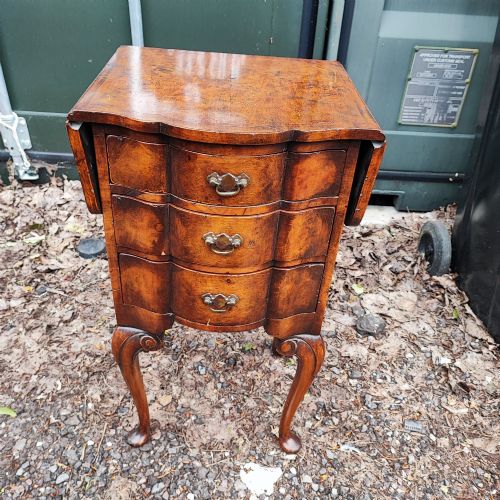
Makers shaped these items across the Georgian, Victorian, and Edwardian eras, as well as the 1920s revival period. Buyers encounter forms ranging from miniature Sutherland tables to larger pedestal card tables and drop leaf dining designs.
The core material throughout these listings is walnut, frequently enhanced by burr veneers that create distinctive figuring on the tabletops. Secondary woods include mahogany and other hardwoods, sometimes paired with brass and ceramic components.
How they were made
Cabinet makers sliced highly figured burr walnut veneers from knotty tree growths and applied them carefully to stable hardwood carcases. This technique displayed the rich, organic grain patterns prominently across the folding flaps and main tabletops.
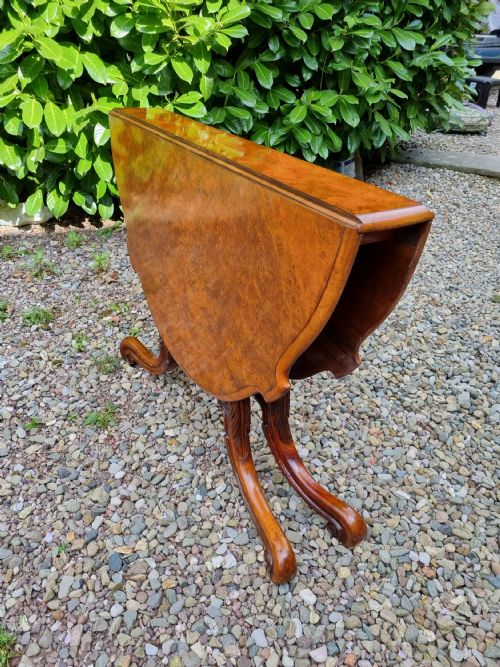
Makers constructed drop leaf and flap mechanisms using hinged wooden leaves supported by swinging legs or gatelegs. They incorporated brass and ceramic elements in fittings, castors, and handles to ensure smooth operation of the moving leaves.
Burr Walnut Flap Table Retail Price Guide 2026
Typical asking prices for burr walnut flap table among the pieces listed under this phrase on Sellingantiques today, from the lower quarter to the upper quarter. They describe what is for sale here now, not the wider market.
Listings feature burr walnut tables across the Georgian, Victorian, Edwardian, and 1920s periods, incorporating brass, ceramic, and inlaid wood details.
What varies in quality
The visual impact of the burr walnut veneer dictates much of the distinction between pieces, with densely figured and symmetrically matched grain commanding attention. The crispness of the carving on supports and the integrity of the folding mechanism further separate standard examples from finer works.
Proportion and scale also define the standing of a table, as miniaturisation or particularly slender framing requires high joinery skill. The survival of original surfaces and matching timber tones across the flaps and main top preserves the intended aesthetic harmony.
The Burr Walnut Flap Table Glossary
- Burr walnut
- A wood veneer taken from the warted growths on walnut trees. It creates complex, swirling grain patterns highly valued in fine cabinet making.
- Sutherland table
- A narrow drop leaf table with folding leaves that drop almost vertically. The legs swing out to support the extended flaps.
- Drop flap table
- A table featuring hinged leaves that raise to expand the surface area. It provides adaptable surface space in compact rooms.
- Sofa table
- A rectangular occasional table traditionally placed in front of a sofa. It typically incorporates small drop flaps on either end.
Burr Walnut Flap Table: Frequently Asked Questions
What is a burr walnut flap table?
A burr walnut flap table is a piece of antique furniture featuring folding leaves and decorative burl wood veneers. These tables span several eras, including the Georgian, Victorian, and Edwardian periods.
They serve as adaptable furnishings, functioning as occasional, games, bedside, or tea tables depending on their specific form and size.
How do you use a Sutherland table?
A Sutherland table operates by lifting its narrow drop leaves into a horizontal position. Hinged gatelegs swing outward from the centre frame to support each leaf.
When not in use, the leaves drop down vertically and the legs fold back inward, allowing the table to rest flat against a wall or in a tight space.
How do I date a walnut flap table?
Dating a walnut flap table involves examining the construction methods, hardware, and stylistic details. Georgian and Victorian examples often display hand-cut joinery, solid timber framing, and specific leg turnings characteristic of their decade of manufacture.
Revival pieces from the 1920s or Edwardian era reflect later interpretations of Queen Anne styles, often utilising different finishing techniques and modern internal fixings.
Where should I place a flap table?
A flap table suits rooms where surface space needs to change throughout the day. Placed beside a sofa, against a hallway wall, or as a bedside cabinet, the folding leaves allow the piece to occupy minimal space when closed.
Opening the flaps provides extra room for lamps, books, or drinks when entertaining guests.