


Small Turkish Area Rug
A small turkish area rug brings the rich floor textiles of Anatolia into a room, offering warm geometric patterns and tactile wool beneath your feet.
Small Turkish Area Rug
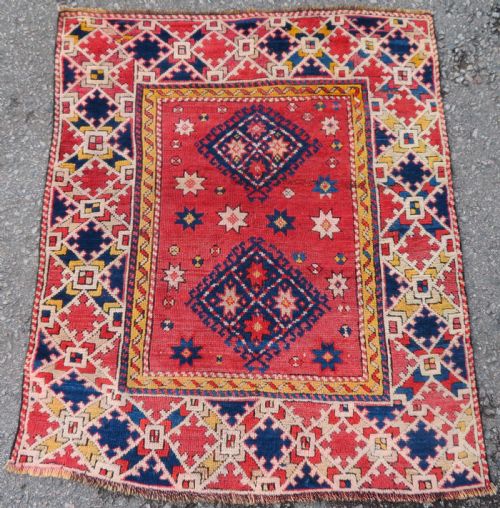
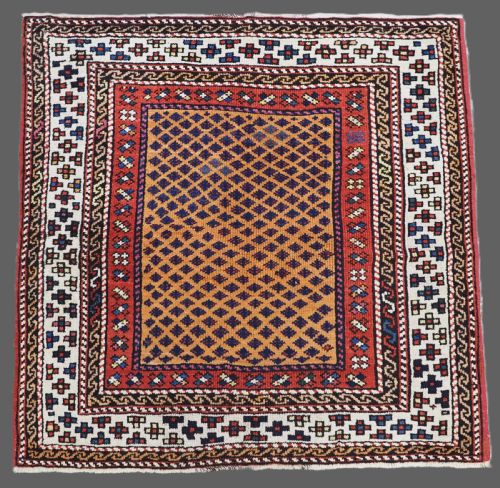
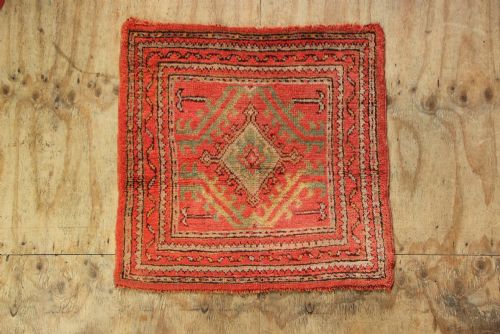
When searching for a small turkish area rug, collectors encounter centuries-old village and town woven textiles originating from regions like Bergama, Oushak, Konya, and Kirsehir. These pieces range from square formats to elongated formats, frequently displaying regional village motifs, prayer niches, or central medallions.
The most common examples on this page are nineteenth-century and early twentieth-century village floor coverings, often woven by Kurdish, Yuruk, or local Anatolian makers. They appear in formats suited to smaller floor spaces, hearths, or accent placements.
Regional styles dictate much of what is seen, spanning Anatolian tribal patterns to Ottoman court influences adapted by village weavers. Each origin brings distinct colour palettes and border arrangements that identify the weaving centre.
Materials and construction
These floor textiles rely primarily on wool, cotton, and occasional silk, often spun by hand to create the foundational warps, wefts, and dense pile. Natural dyes yield the saturated reds, blues, and yellows that soften gracefully over generations of use.
Weavers knotted the pile by hand onto sturdy vertical looms, integrating cotton foundations for rigidity or retaining all-wool structures typical of older tribal nomad pieces. Selvedges and ends are often finished with supplementary wool wrapping to protect the edges from fraying.
Many village weavers tucked tiny protective amulets or accidental asymmetry into the borders to ward off the evil eye.
Qualities of the weave
Quality rests in the handling of the wool, the clarity of the dye work, and the precision of the knotting across the field. Superior examples display high knot density that allows intricate geometry to remain crisp and legible.
The integrity of the original pile and the stability of the foundation determine the durability of the piece for daily placement. Artistry in the asymmetrical placement of tribal motifs separates standard village production from master weaver outputs.
The Small Turkish Area Rug Glossary
- Prayer rug
- A textile featuring a distinct Mihrab or arch design indicating the direction of Mecca, traditionally used for daily devotions. These pieces often include lamps or hand motifs within the niche.
- Medallion
- A central ornamental design motif placed in the middle of the rug field, anchoring the surrounding geometric or floral patterns. They range from bold star shapes to intricate multi-lobed medallions.
- Warp
- The vertical threads stretched tightly on the loom before knotting begins, forming the skeletal foundation of the textile. Fringe ends typically consist of these exposed warp threads.
- Weft
- The horizontal threads passed back and forth between warp threads after each row of knots to bind the structure securely. In many village rugs, these wefts are dyed in cheerful secondary tones.
- Pile
- The upright cut ends of the knotted yarn that form the usable surface of the rug. Pile height varies depending on whether the piece originates from a mountain nomadic tribe or a lowland town workshop.
Small Turkish Area Rug: Frequently Asked Questions
Where were these rugs made?
These textiles were woven across various provinces of Anatolia, encompassing specific towns and nomadic tribal regions such as Bergama, Oushak, Konya, Kirsehir, and Milas.
Each weaving district developed a distinct visual vocabulary, utilising particular colour combinations, border guards, and medallion layouts passed down through generations.
How do I care for an old wool rug?
Gentle, regular vacuuming without a rotating brush roll helps remove grit from the wool pile without damaging the antique foundation threads.
Professional specialist cleaning is recommended for washing, and keeping the textile away from prolonged direct sunlight preserves the natural dye colours.
What is a mihrab design?
A mihrab is the arched architectural niche depicted on prayer rugs, symbolising the direction of prayer towards Mecca.
Weavers often filled this triangular or domed space with stylized floral stems, hanging mosque lamps, or repeating border bands.
How can I tell a village rug from a town rug?
Village rugs tend to feature bolder, more geometric motifs, thicker hand-spun wool, and charming irregularities in symmetry due to being woven on portable household looms.
Town carpets from centres like Oushak often display finer, more fluid floral compositions executed on larger stationary workshop looms.