
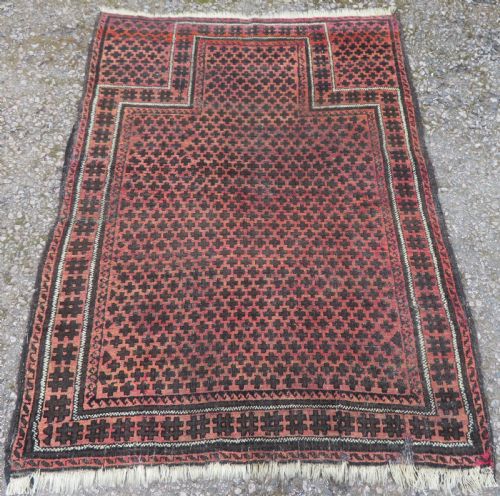


Small Tribal Woven Mat
When you search for a small tribal woven mat, you encounter hand-knotted village and nomad textiles carrying centuries of regional weaving heritage.
Small Tribal Woven Mat
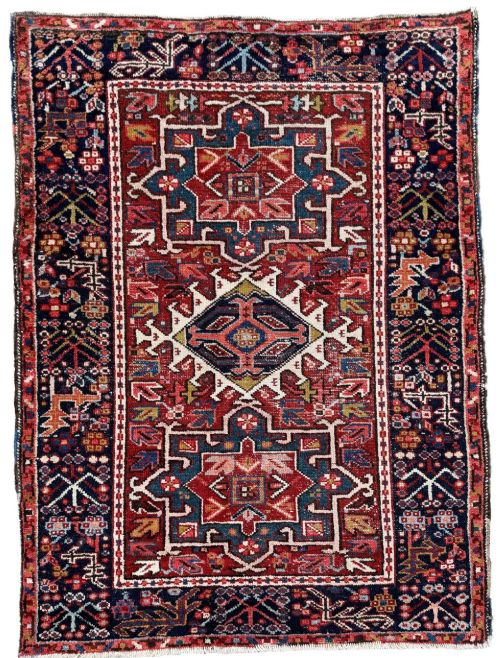
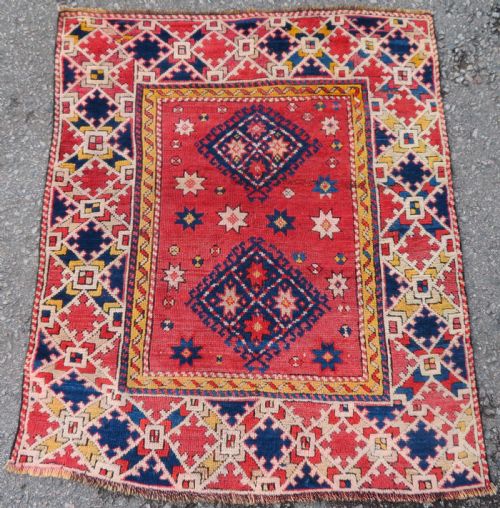
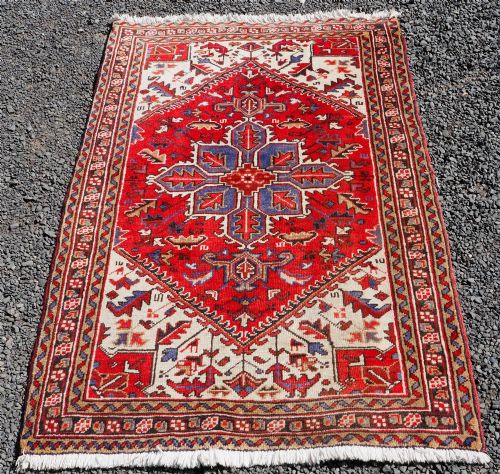
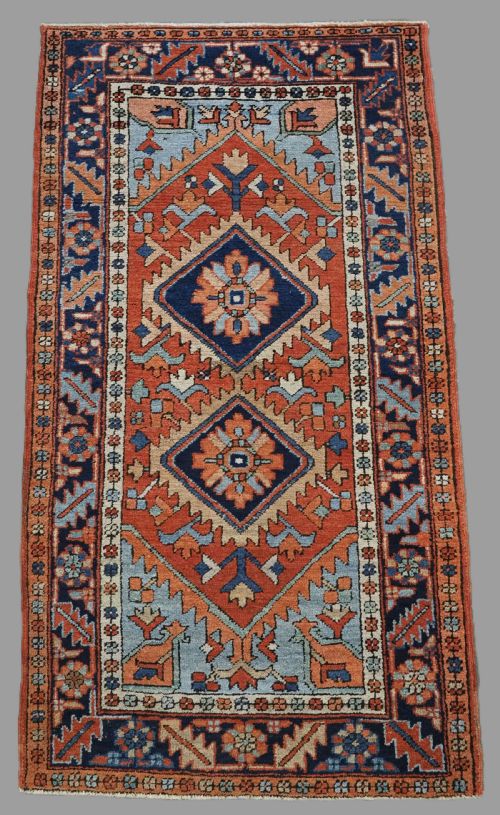
A small tribal woven mat encompasses portable floor coverings, prayer rugs, and utilitarian bags made by nomadic and village communities across Persia, Anatolia, Central Asia, and the Caucasus. These compact pieces served practical purposes in tents and village houses, functioning as personal prayer spaces or storage containers.
The most common versions met on this page include Baluch prayer rugs, Yomut and Tekke Turkmen torbas, and Afshar or Luri saddlebag faces dating from the nineteenth and early twentieth centuries. Such formats reflect the portable lifestyles of their makers, who needed items that could be easily rolled up and transported during seasonal migrations.
Makers drew upon deeply ingrained tribal motifs, incorporating geometric guls, tree of life patterns, and prayer mihrabs into the composition. These designs often identify the specific village or tribe responsible for the weaving, providing a visual record of regional traditions.
Materials and Construction Techniques
Weavers relied primarily on hand-spun wool for the pile and foundation, occasionally incorporating camel hair for natural light-toned fields and durability. This wool was worked by hand into sturdy structures that could withstand the demands of daily nomadic life.
Colour was achieved through natural dyes derived from plants and minerals, creating rich, varied tones that mellow gracefully over decades. These organic colorants interact uniquely with hand-spun fibres, producing subtle abrash variations within the individual fields.
Some weavers incorporated spontaneous camel hair fields to naturally defy uniform dye batches.
Differentiating Quality in Weavings
Quality rests in the handling of the wool, the precision of the knotting, and the depth of the natural palette. Finer examples display tight, secure foundations and supple handles that demonstrate expert material selection by the weaver.
Visual balance also dictates the upper tier of these pieces, where traditional motifs are proportioned harmoniously across the available space. Secondary details, such as well-executed border guards and intact original selvedges, further distinguish superior examples from standard utilitarian work.
The Small Tribal Woven Mat Glossary
- Torba
- A small Turkmen storage bag face traditionally used inside a tent for domestic organisation. These pieces often feature prominent gul motifs arranged across the field.
- Prayer rug
- A textile featuring a central mihrab arch design intended to direct the placement of the head during daily worship. These formats were woven by village and nomadic groups alike.
- Saddlebag face
- The decorative front section of a larger animal transport bag, salvaged after the backing wore away. They survive as compact rugs displaying intricate medallion or tile designs.
- Abrash
- A natural variation in colour tone caused by changes in dye batches or wool supplies during the weaving process. This characteristic is prized for adding visual depth to the field.
- Gul
- A repeating primary medallion or octagonal motif characteristic of Turkmen and Central Asian tribal weaving. Each pattern typically identifies a specific clan or tribal lineage.
Small Tribal Woven Mat: Frequently Asked Questions
How were these mats used?
Nomadic communities utilised these small textiles for multiple daily purposes inside tents, ranging from sitting areas to designated spaces for prayer. Many examples started as functional storage bags carried on pack animals before being separated from their original wool backs.
Over time, people also placed them near entrances or used them as portable ground covers during travel. Their modest dimensions made them versatile furnishings that adapted easily to changing household needs.
How do I live with a tribal mat?
These textiles suit low-traffic areas where their structures can be appreciated without sustaining heavy abrasion. Placing them on breathable underlays helps keep them stable on smooth flooring.
Keep them away from direct, prolonged sunlight to protect the natural dyes from fading over the years. Gentle vacuuming without a beater bar removes trapped dust while preserving the hand-spun wool pile.
How do I tell different tribal designs apart?
Distinctions rely on specific repeating motifs, such as the octagonal guls found on Turkmen torbas or the prayer arches typical of Baluch and Anatolian village pieces. Colour palettes and wool textures also provide clues to geographic origins, as different regions utilised distinct local dye plants.
Examining the edge finishes and structural foundations helps narrow down whether a piece originated in Persia, the Caucasus, or Central Asia.
What is a bag face?
A bag face is the decorative front panel of a utility pouch once used by nomads for carrying household goods on camels or horses. When the plain wool backs wore out through friction, the sturdy pile fronts were often trimmed and preserved as small mats.
These fragments retain the most intricate weaving and design work of the original containers, making them popular among collectors today.