
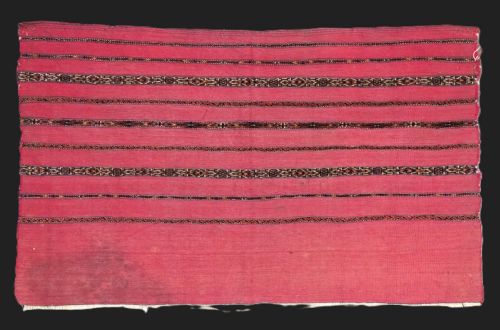


Antique Chuval Bag Face
An antique chuval bag face is a tribal tent hanging woven by Central Asian nomads, prized for its intricate geometric medallions and rich madder-red tones.
Antique Chuval Bag Face
An antique chuval bag face represents the front panel of a large nomadic tent storage sack used by Turkmen tribes for bedding and household goods. These tribal textiles primarily emerge from the nineteenth century, spanning from the middle decades through to around 1900. The format is typically rectangular, designed to hang inside a felt yurt or tent.
The dominant subtype encountered on this page is the Tekke Turkmen chuval face, often distinguished by repetitive guls such as the primary octagonal gul or borrowed Salor motifs. Pieces associated with the Ersari, Yomut, and Saryk tribes also appear, showcasing alternative medallion counts and distinctive lower elem panels. Occasional fragments and related torba or kap storage forms expand the selection.
Makers utilised wool foundations decorated with characteristic primary motifs, sometimes incorporating hanging loops or remaining fragments from older utility sacks. These woven faces served functional domestic roles within Central Asian tribal life before transitioning into collectible textile art. Today, collectors value them for their tribal iconography and deep historical resonance.
Materials and construction methods
Weavers constructed these tribal bags predominantly using wool for the pile and foundation, often supplemented by cotton and silk highlights to delineate specific design elements. Natural dyes provided the distinctive palette, dominated by rich madder reds alongside white and dark contrasts. This combination of materials ensured both structural durability for daily nomadic use and deep, saturated colour.
The textile construction relies on dense wool knotting attached to sturdy warp and weft threads, yielding a heavy, flat fabric capable of withstanding decades of tent life. Skilled hands knotted intricate geometric guls, border bands, and lower elem panels directly onto the loom with tight structural discipline. Finishing details occasionally included attached hanging loops or reinforced selvedges.
Listings feature Turkmen tribal bag faces spanning the mid-nineteenth century to the early twentieth century, utilising wool, cotton, and silk.
Determining quality in nomadic weaving
Quality rests upon knot density and the precision with which the guls and secondary motifs are drawn across the field. A very fine weave demonstrates exceptional control by the weaver, resulting in crisp geometric lines and a supple handle. Conversely, looser structures sacrifice graphic clarity but retain an earthy, rustic charm.
The palette and dye saturation further distinguish individual examples, as deep natural reds and sharply contrasted accents create visual depth. The presence of scarce medallion designs or unusual border configurations elevates a piece beyond standard tribal production. Integrity of the remaining face, free from excessive restoration, completes the assessment of a superior textile.
The Antique Chuval Bag Face Glossary
- Chuval
- A large nomadic storage bag used by Turkmen tribes for transporting and storing household bedding. These bags were central to domestic tent life.
- Gul
- A primary medallion or repeating octagonal motif used extensively in Turkmen carpet and textile design. Each tribal group typically employed its own distinct gul variation.
- Torba
- A smaller storage bag format utilised within the yurt, similar in construction to the chuval but generally wider than it is high.
- Salor
- A prominent Turkmen tribe whose distinctive turreted gul design was frequently adopted by neighbouring Tekke and Saryk weavers.
Antique Chuval Bag Face: Frequently Asked Questions
What is a chuval bag face?
A chuval bag face is the decorated front portion of a large nomadic storage sack originally woven for domestic use inside a Central Asian tent. Families utilised these durable bags to hold bedding, clothing, and household possessions.
Over time, collectors separated the decorative faces from their plain rear panels to preserve the intricate tribal weaving. These textile fragments now survive as wall art and collector pieces.
How were antique chuval faces used?
Nomadic tribes hung these storage sacks inside their felt tents, known as yurts, to keep personal belongings organised and off the earthen floor. The bags formed an essential part of the bride's dowry and interior furnishings.
Today, collectors mount these textile faces on walls or display them as flat carpets. Their robust wool construction allows them to endure as decorative interior objects.
How do I identify a Tekke chuval?
Tekke chuval faces typically display rows of repeating octagonal guls, often interspersed with minor secondary guls across a madder-red field. Many examples incorporate borrowed Salor motifs or distinctive banded border patterns.
Examining the weave reveals the dense wool knotting and specific structural traits characteristic of nineteenth-century Turkmen workshops. Comparing the medallion count helps differentiate Tekke work from Yomut or Ersari productions.
Are these textiles made with natural dyes?
Weavers relied on traditional natural dye sources, predominantly madder root, to achieve the deep reds seen across these tribal rugs and bag faces. These organic colourants produce rich, saturated tones that mellow gracefully over decades.
White cotton and occasional silk elements provide sharp contrast against the dark wool foundations. Natural dyes remain stable and retain their vibrancy across generations of use.