


Antique Turkmen Mafrash
These antique turkmen mafrash examples are tribal storage bags woven by nomadic communities across Central Asia.
Antique Turkmen Mafrash
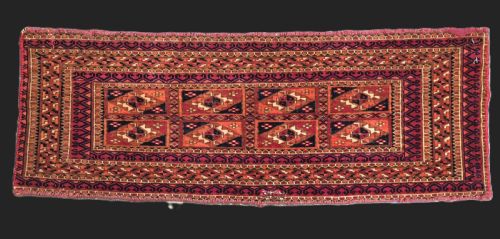
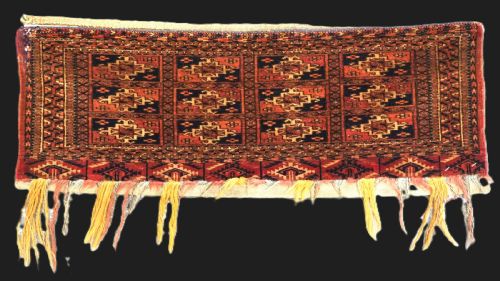
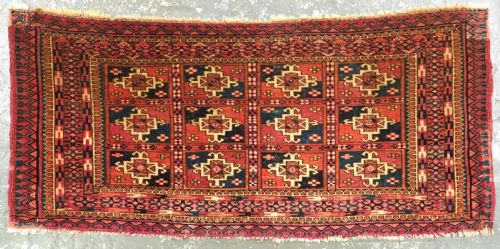
An antique turkmen mafrash is a rectangular bedding or storage bag produced by nomadic and tribal groups across Central Asia. These woven pieces served practical functions within portable dwellings before transitioning into decorative items for collectors of textile art.
The selections available here range from complete examples retaining their original plain weave backs to individual faces and surviving fragments. Tribal groupings such as the Tekke, Yomut, and Ersari account for the primary variations found within this category.
The chronology spans from the eighteenth century through to the early decades of the twentieth century. Dating relies upon structural evidence, wool quality, and the specific design vocabulary employed by the weavers.
Materials and construction methods
These textiles rely primarily on hand-spun wool combined with natural dyes to create durable surfaces. Certain pieces incorporate flatweave structures alongside piled sections, particularly in banded designs.
Linen occasionally appears in the construction of backing materials or structural supports. The integration of natural dyes ensures that colours age with particular depth across the surviving surface.
The listings encompass items spanning multiple centuries, featuring wool construction and natural dyes deployed across tribal rug bags and textile art.
Factors influencing quality and desirability
The survival of original structural elements, such as plain weave backs and complete side panels, distinguishes intact pieces from detached faces or fragments. Completeness preserves the original utility and architectural form of the bag.
Clarity of design and precision in tribal motifs dictate visual impact. Finer knotting density and sophisticated application of natural dyestuffs elevate certain examples above standard domestic production.
The Antique Turkmen Mafrash Glossary
- Mafrash
- A large rectangular storage bag utilised by nomadic tribes for bedding and household possessions. These objects form the primary focus of this collection.
- Torba
- A smaller storage bag closely related in structure and design to the mafrash. Often displayed interchangeably in historical classifications.
- Gul
- A primary medallion or octagonal gabled motif repeated across tribal carpets and bags. Each tribal group utilises distinct variations of this pattern.
- Flatweave
- A textile constructed without pile by interlacing warp and weft threads directly. This technique appears frequently in banded mafrash designs.
Antique Turkmen Mafrash: Frequently Asked Questions
What is a mafrash used for?
These woven rectangular containers served as practical storage sacks within nomadic tents. Families utilised them to transport and house bulky bedding, clothing, and domestic possessions during seasonal migrations.
Today, collectors appreciate them as textile art rather than utility items. They hang on walls or rest flat on surfaces to display traditional tribal patterns.
How do I identify a Yomut mafrash?
Yomut pieces often display distinct banded flatweave designs or specific Gül variations associated with the tribe. The structural proportions and palette separate them from Tekke or Ersari equivalents.
Examining the border arrangements and secondary motifs provides further clues to tribal attribution. Provenance and regional wool characteristics reinforce these stylistic indicators.
Are these pieces complete with backs?
Some surviving examples retain their original plain weave backs and structural sides. Others survive purely as individual decorative faces or small fragments.
Listings specify whether a piece is complete or presented as a face. Both complete bags and single panels hold distinct appeal for textile historians.
How old are these textile bags?
The pieces span from the eighteenth century through to the early twentieth century. Dating depends on material analysis, dye characteristics, and structural wear patterns.
Nineteenth-century examples dominate the material record, reflecting active nomadic production periods. Earlier eighteenth-century fragments represent rarer survivals from regional oasis workshops.