
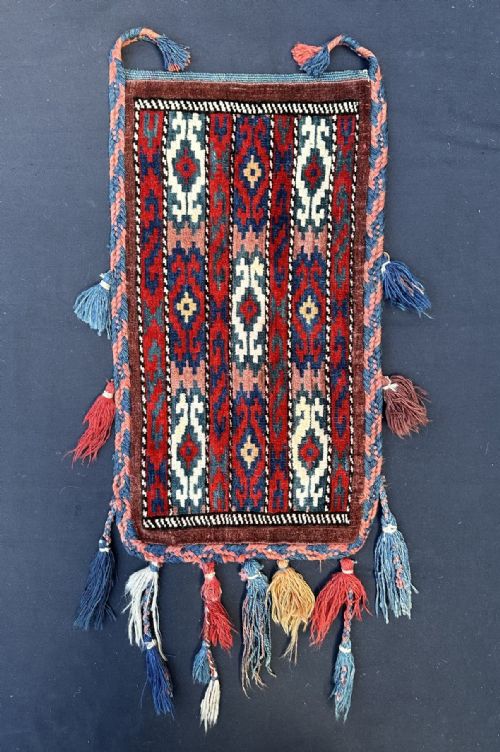
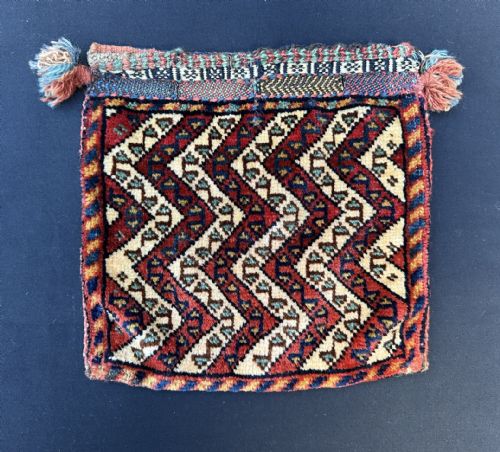
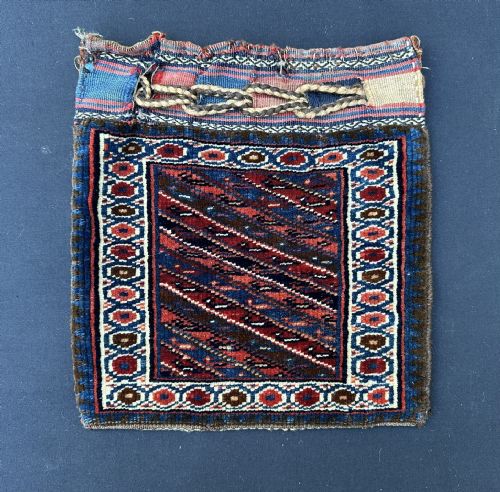

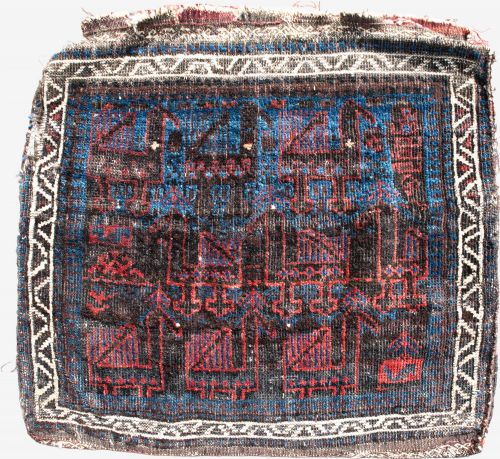
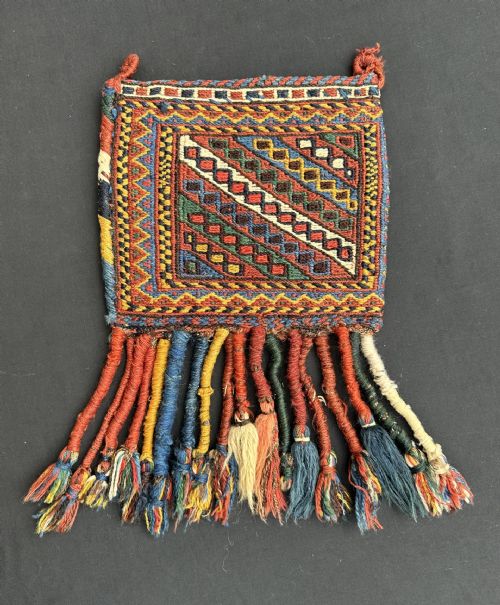

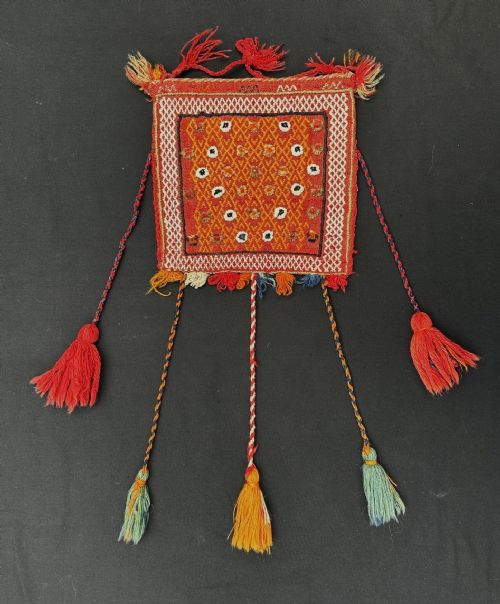


Handwoven Wool Pouch
These handwoven wool pouch examples are tribal and nomadic textiles made for daily use, offering rich woolwork and practical forms.

Handwoven Wool Pouch
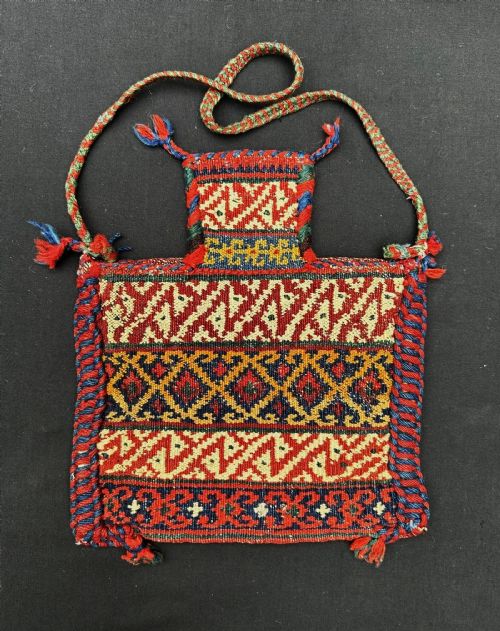
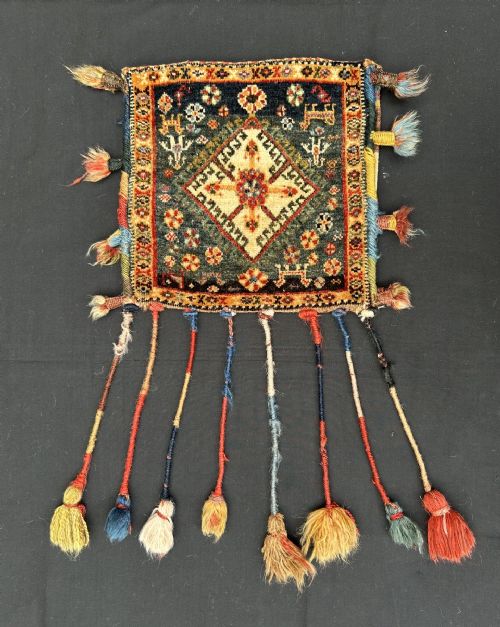
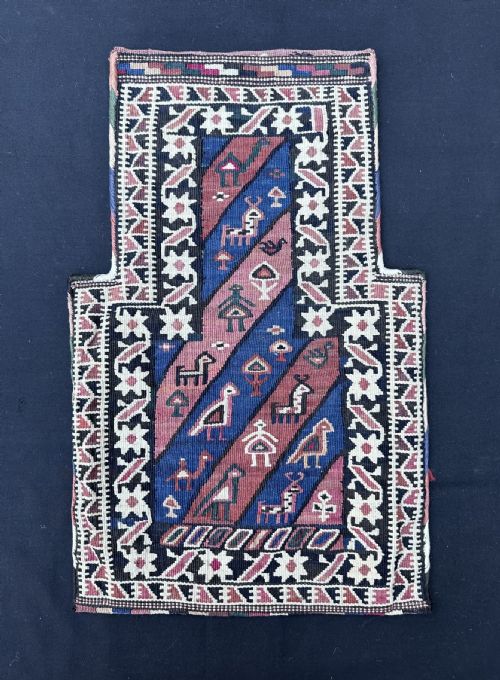
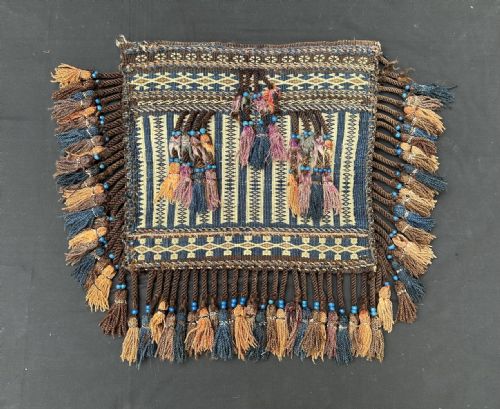
A handwoven wool pouch is a tribal textile created by nomadic and village weavers across Persia, Afghanistan, and Central Asia. Buyers searching this phrase encounter practical containers such as vanity bags, tobacco and pipe bags, salt bags, spindle bags, and storage pouches.
The selection on this page centres on pieces originating from tribal confederacies and regions like the Qashqa'i Confederacy, Afshar nomads, Baluch tribes, and Yomut Turkmen groups. These items span periods from the late nineteenth century into the early twentieth century.
Each form served a specific function within nomadic life, from holding salt and spindles to carrying personal vanity items. Their enduring appeal lies in the combination of structural weave and tribal design originating from distinct regional traditions.
What Varies in Quality
Quality rests upon the fineness of the knotting or weave density and the handling of the wool. Superior examples display tightly packed structures and precise geometric or figurative drawing.
The depth and brilliance of the natural dyes distinguish finer pieces from simpler work. Retention of original plain weave backs and complete structural integrity further elevate an individual textile.
Some salt bags feature narrow necks designed specifically to keep mountain goats from licking the contents.
The Handwoven Wool Pouch Glossary
- Chanteh
- A small personal bag or pouch produced by Persian nomads for carrying small belongings. These items often showcase the finest weaving of a tribal group.
- Torba
- A small storage bag produced by Turkmen tribes, frequently featuring guls and a plain weave back. They were utilised inside the yurt for household storage.
- Gul
- An octagonal medallion motif repeated across Turkmen tribal textiles. Each tribal subdivision employed distinct variations of these primary design elements.
Handwoven Wool Pouch: Frequently Asked Questions
What were these pouches used for?
Nomadic groups utilised these pouches to store personal items, salt, tobacco, pipes, or spinning tools during daily life and migration.
They functioned as portable containers that combined practical utility with traditional tribal artistry.
How do I tell different tribal styles apart?
Tribal attribution relies on specific structural characteristics, wool qualities, and characteristic colour palettes associated with particular regions.
For instance, Turkmen pieces often feature deep reds and geometric guls, while southern Persian works display varied animal and medallion motifs.
Are these textiles fragile to live with?
These historical wool pieces are surprisingly robust due to the dense natural materials and tight hand-weaving techniques employed by the makers.
They can be displayed on walls or placed gently on surfaces away from heavy foot traffic.
What period do these bags come from?
The pieces listed originate from the late nineteenth century through the early decades of the twentieth century.
This era represents a period when traditional nomadic weaving practices remained active across Central Asia and Persia.