




Fringed Tribal Textile
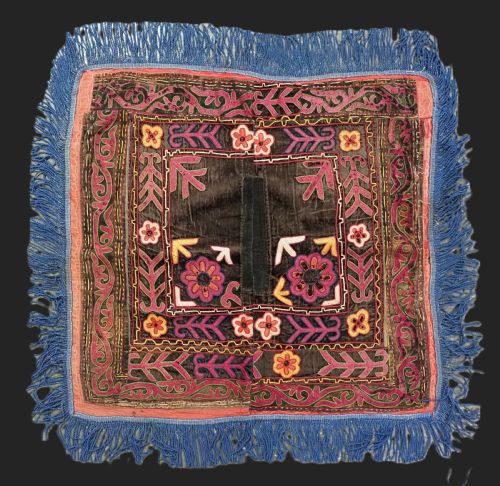
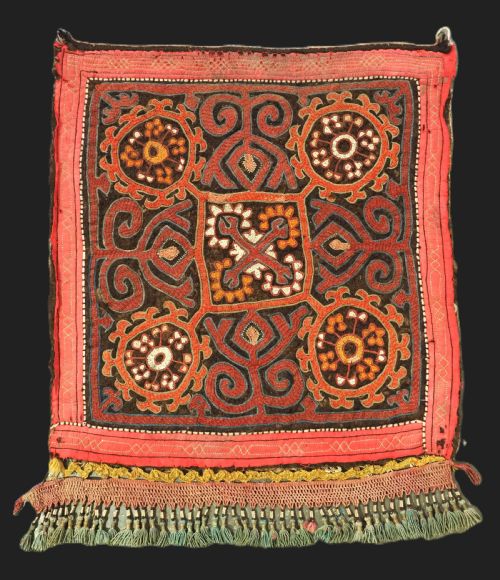
These pieces sold under the search phrase fringed tribal textile are hand-crafted nomadic trappings and embroideries created for domestic and ceremonial use.
Fringed Tribal Textile
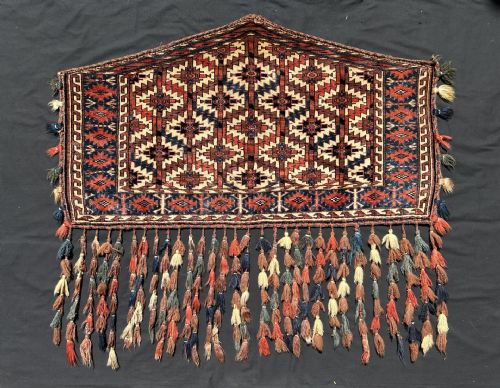
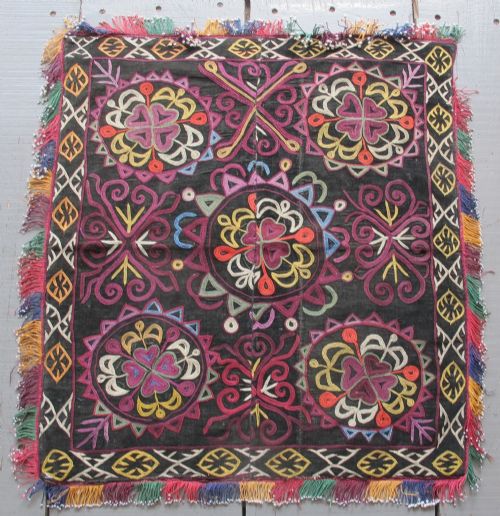
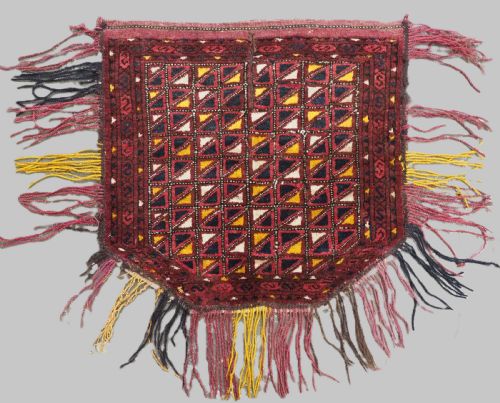
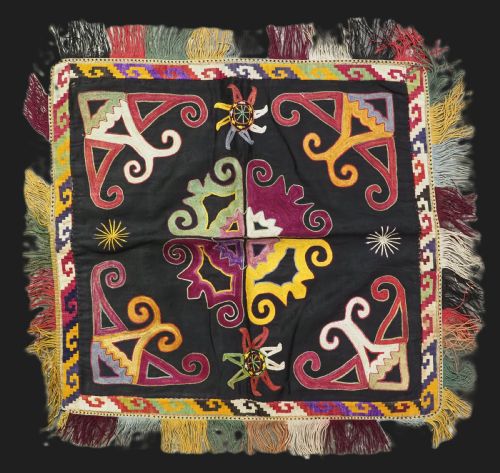
A fringed tribal textile brings together centuries of nomadic heritage from Central Asia and Persia. Buyers searching for a fringed tribal textile encounter specific functional forms such as wall hangings, saddle covers, horse headdresses, door portieres, and bags.
The selection on this page centres on pieces from regional groups including the Turkmen, Uzbek, Qashqai, and Kirghiz. These objects originate from nineteenth and early twentieth-century tribal cultures where textiles served both utilitarian and ceremonial purposes.
Items range from dowry embroideries and mirror covers to camel trappings and tent decorations. Each piece reflects the specific visual language of its maker and tribe.
Materials and construction
Makers utilised wool, cotton, and silk as the foundational textiles, often employing natural dyes to achieve deep red, ivory, and polychrome palettes. Felt and velvet also appear in specific panels and backings.
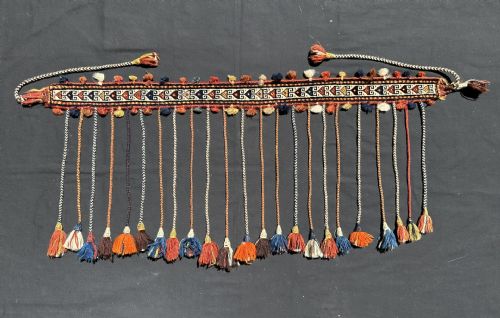
Surface decoration frequently involves intricate embroidery work, sometimes enhanced with applied fringe, tassels, glass beads, and cowrie shells. Structural techniques combine flat-weave construction with pile weaving and appliqué.
Listings feature items dated from the nineteenth and early twentieth centuries, spanning 1870 to 1930.
Assessing the pieces
Quality rests upon the fineness of the drawing and the clarity of the design structure. Stronger examples display precise execution in their motifs, whether handling geometric guls or curvilinear floral elements.
The vibrancy and condition of the natural dyes, alongside the preservation of original tassels, fringes, and plain-weave backs, distinguish superior survivals from heavily worn or altered fragments.
The Fringed Tribal Textile Glossary
- Ilgich
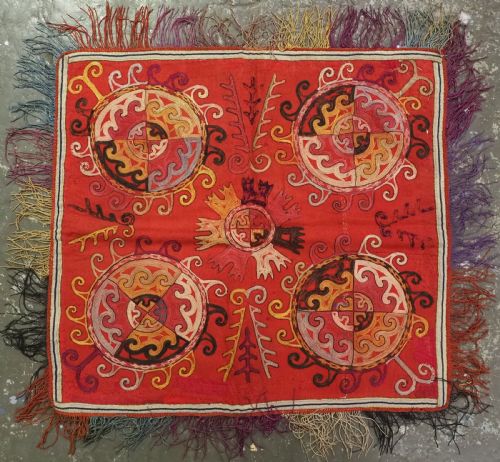
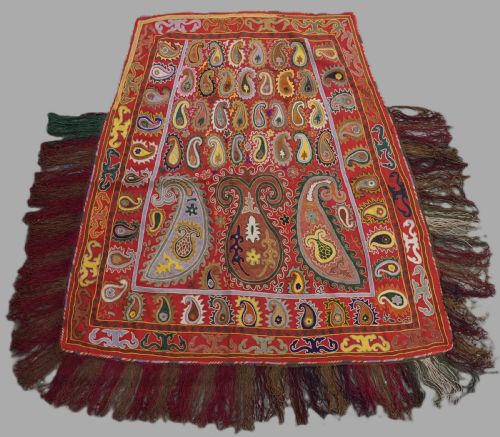
- An Uzbek dowry embroidery created for wall hanging use. These pieces often feature lively silk needlework on a cotton or wool ground.
- Torba
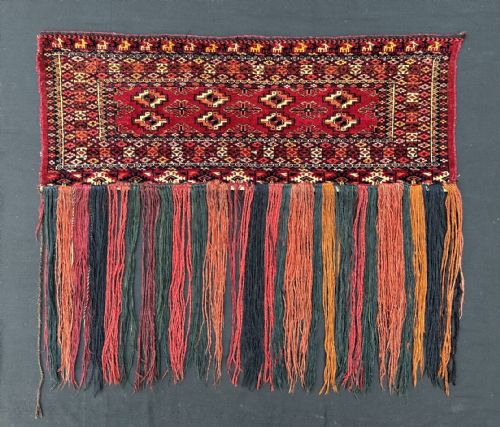
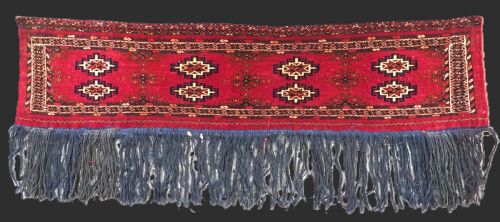
- A small Turkmen storage bag used within the nomadic tent. They frequently display characteristic gul medallions and complete woven backs.
- Asmalyk
- A large, pentagonal trapping produced by the Yomut and other Turkmen tribes. They were traditionally hung on the flanks of a bridal camel during wedding processions.
- Gul
- A medallion motif repeated across Turkmen carpets and trappings. The arrangement and drawing of these forms identify the specific tribe.
- Kapunuk
- A tent door hanging or portiere placed around the entrance of a yurt. These wide decorative bands welcomed visitors and marked the status of the household.
Fringed Tribal Textile: Frequently Asked Questions
What is a tribal textile?
A tribal textile is a hand-made item created by nomadic or village communities for daily living, transport, or ceremonies.
These pieces include horse trappings, storage bags, and wall decorations made from wool, cotton, or silk.
How were these textiles used?
Nomadic families utilised these items inside tents for storage, decoration, and architectural division. Many pieces also served ceremonial roles during weddings and tribal festivals.
Animals wore specific trappings during processions, while other items decorated walls, doorways, and beds.
How do I identify different tribes?
Tribal identity appears through specific design motifs, colour palettes, and structural formats. Turkmen groups used distinct gul medallions, while Lakai embroideries employ dynamic silk stitching.
Geographic origins such as the Merv Oasis or Fars Province further define the regional style.
How should I care for a textile?
Keep these historic pieces away from direct sunlight to protect natural dyes from fading. Gentle vacuuming through a mesh screen helps remove dust without damaging fragile fibres or fringes.
Professional textile conservation ensures older silk and wool elements remain stable.