


Mid 19th Century Textile
A mid 19th century textile brings tactile history into a room through rich silks, wools, and needlework from diverse global traditions.
Mid 19th Century Textile
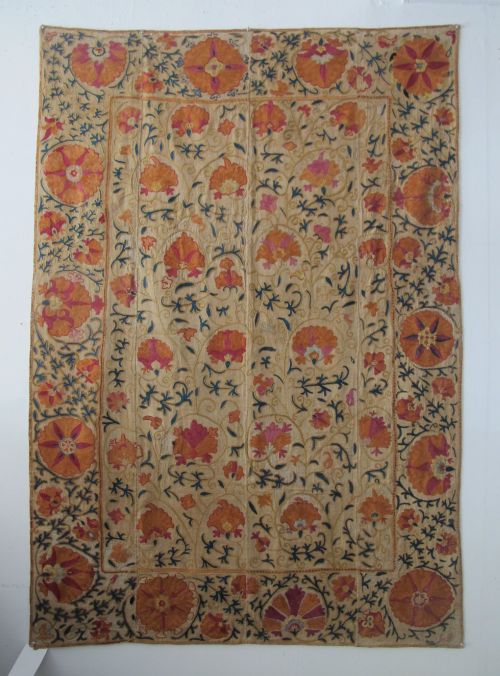
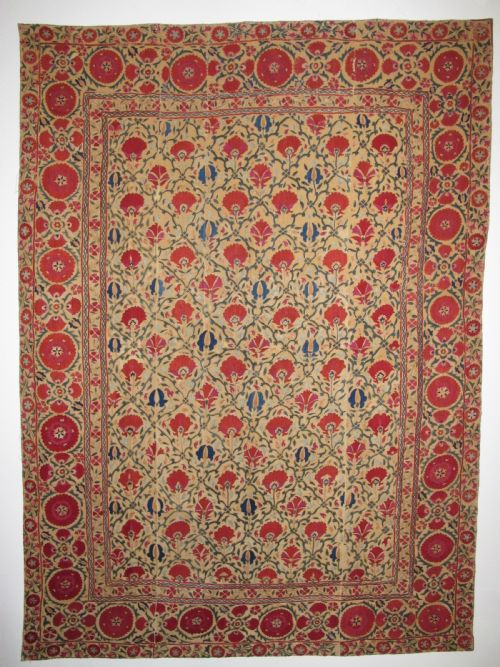
A mid 19th century textile encompasses diverse creations including silk embroidered suzanis, tribal torba faces, needlework samplers, and pillar rugs. These works bridge domestic craft and regional artistry from periods spanning the Victorian era to Qing Dynasty China.
The most frequently encountered examples on this page are silk embroidered suzanis originating from Uzbekistan and Bokhara alongside Turkmen tribal pieces such as torbas and chuvals. Buyers also discover framed needlework pictures, samplers, and Persian block printed cloths.
These pieces function primarily as wall hangings, small rugs, and framed artwork that introduce historical depth and vibrant pattern to contemporary interiors. Each object reflects the specific utilitarian or decorative purpose of its origin.
How they were made
Makers utilised natural materials such as silk, wool, cotton, linen, and canvas, frequently combining them with natural dyes to achieve enduring colour. Ground fabrics received hand stitching, fine weave structures, or block printing and painting.
Needlework pieces like gros point and samplers relied on meticulous hand stitching executed with wool or silk threads on canvas and linen. Tribal weavings employed tight structural knots and flat woven details on wool foundations.
Suzanis featured elaborate silk embroidery applied to cotton or linen grounds, often worked in tambour or surface stitch variations. Persian and Chinese workshops applied surface block printing and painted pigments directly onto woven textile bases.
Margaret Ann Blackow stitched her name and age into a sampler at twelve years old, inadvertently preserving her childhood for posterity.
What varies in quality
The standard of a mid 19th century textile rests upon the fineness of the weave, the precision of the needlework, and the preservation of the ground material. Pieces exhibiting exceptionally tight knotting or detailed silk embroidery command greater attention from collectors.
Colour saturation and the integrity of natural dyes heavily influence visual impact, distinguishing works with vibrant, unfaded palettes from those with muted tones. The survival of complete borders, plain weave backs, or original framing adds structural and historical completeness.
Compositional complexity also dictates standing, with multi-panel tree designs, figural scenes, and intricate gul motifs showing superior artistic ambition compared to simpler or fragmented layouts.
The Mid 19th Century Textile Glossary
- Suzani
- An embroidered tribal textile from Central Asia, typically worked in silk on a cotton or linen foundation with floral patterns. These large hangings served traditional domestic and ceremonial functions.
- Torba
- A small tribal bag face produced by Turkmen nomads, usually featuring guls and geometric motifs. These items were hung inside tents for storage.
- Chuval
- A large Turkmen storage bag face woven in wool, often displaying repeated gul arrangements and flat woven details. Complete examples sometimes retain their plain weave backs.
- Gros point
- A type of needlepoint worked on coarse canvas using wool or silk yarn to create firm, durable pictures and panels. This technique allowed makers to render detailed figurative scenes.
- Sampler
- A piece of needlework created by a young maker to demonstrate proficiency in various stitches and alphabets. These works frequently record names, ages, and dates.
- Gul
- A medallion-like primary motif repeated across Turkmen and Central Asian carpets and trappings. Each design often identified the specific tribal group that wove the piece.
Mid 19th Century Textile: Frequently Asked Questions
How should I hang a delicate textile?
Mounting requires professional conservation methods such as stitching the textile to a padded, fabric-covered support board rather than hanging it directly by its weight. This distributes tension evenly across the fibres and prevents distortion over time.
Display spaces should remain away from direct sunlight and artificial heat sources to protect natural dyes and fragile silk threads from fading and degradation.
Were these pieces used daily?
Many items served practical domestic purposes within tribal or household settings, functioning as storage bags, tent furnishings, or floor coverings. Others, such as samplers and silkwork pictures, were created primarily as decorative or educational household objects.
Tribal trappings endured the rigours of nomadic life, while suzanis and fine needleworks typically saw service during ceremonies or as interior wall displays.
How do I identify a suzani?
A suzani is distinguished by bold silk embroidery covering a cotton or linen ground, usually featuring large floral discs, vines, and leaves. They originate predominantly from Central Asian regions such as Uzbekistan and Bokhara.
These large textiles were traditionally stitched in panels by women for dowries and assembled into decorative wall hangings or coverlets.
What is a Turkmen torba?
A torba is a small rectangular trapping woven by Turkmen tribes to store household goods inside a felt tent. They are characterised by repeating gul motifs and fine wool pile weaves.
Collectors prize torba faces for their compact design structure and precise geometric patterns executed with natural dyes.