


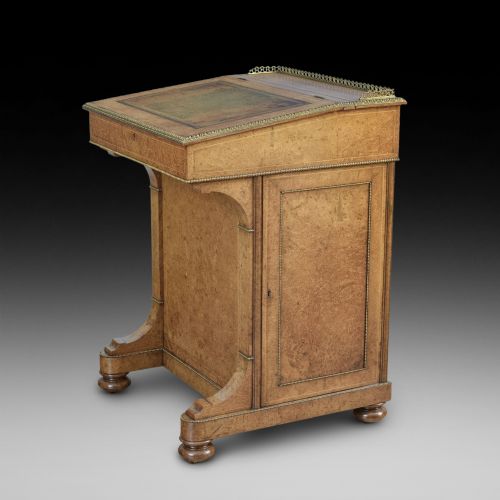
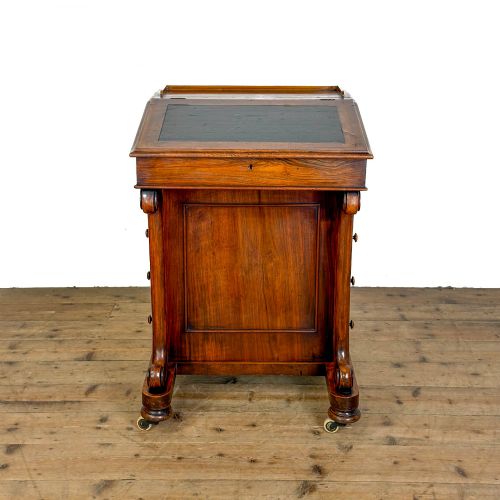
Small Slant Front Desk
A small slant front desk is a compact writing cabinet that folds down to reveal a fitted interior, offering private workspace and storage.
Small Slant Front Desk
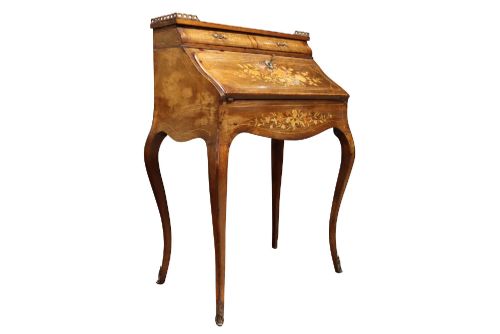
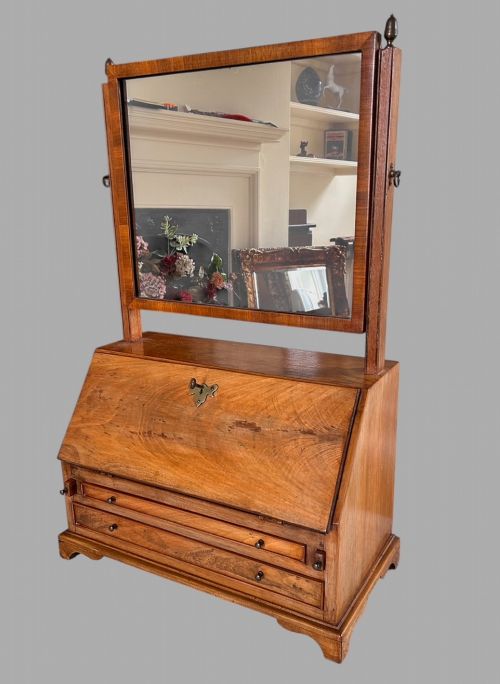
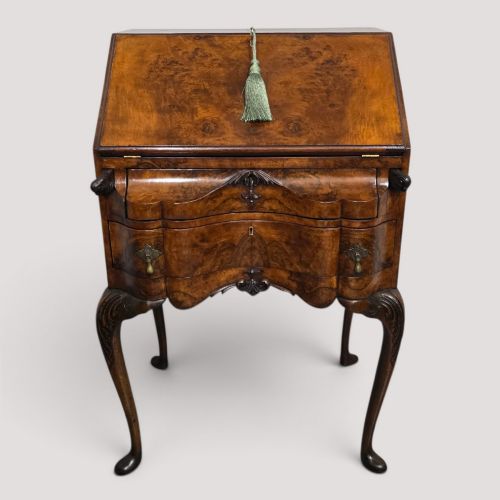
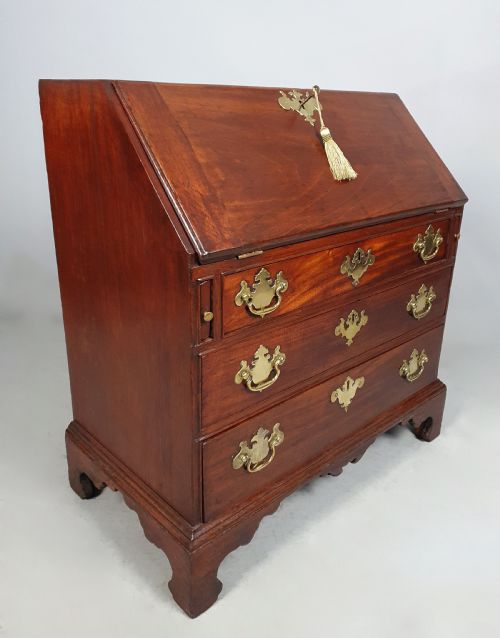
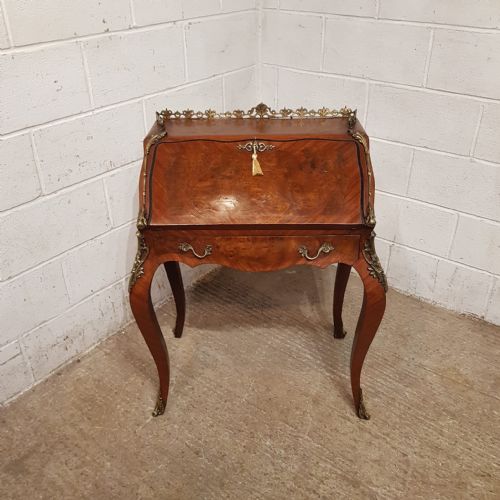
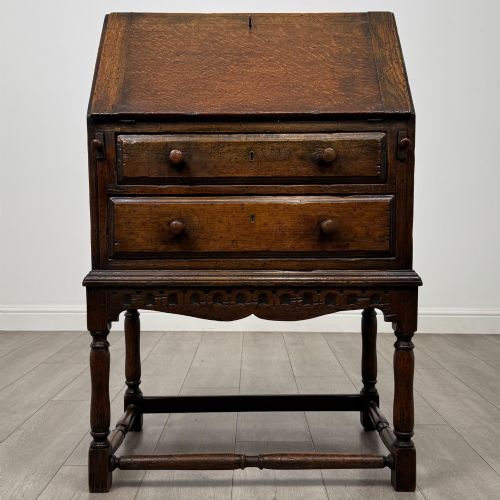
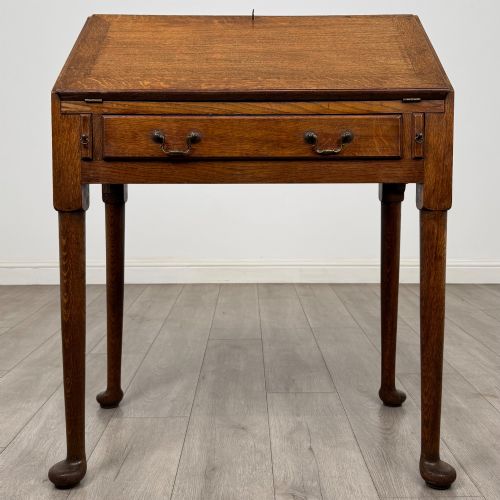
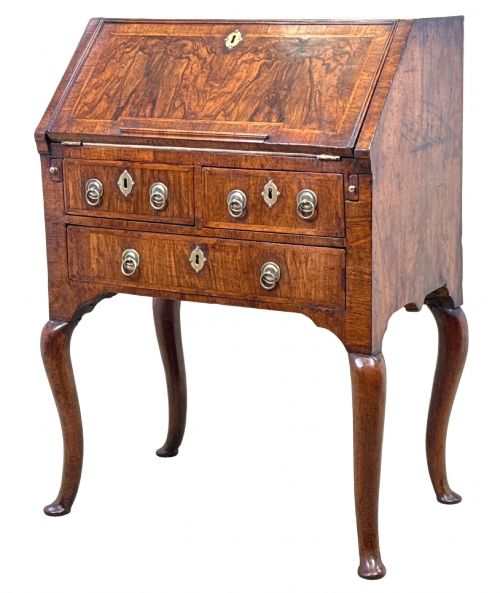
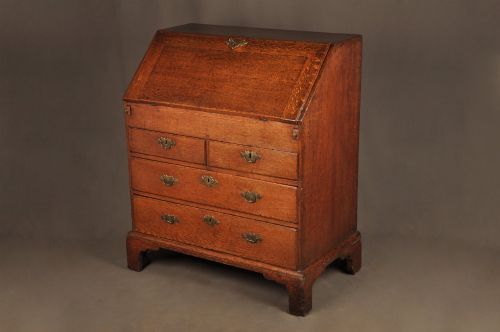
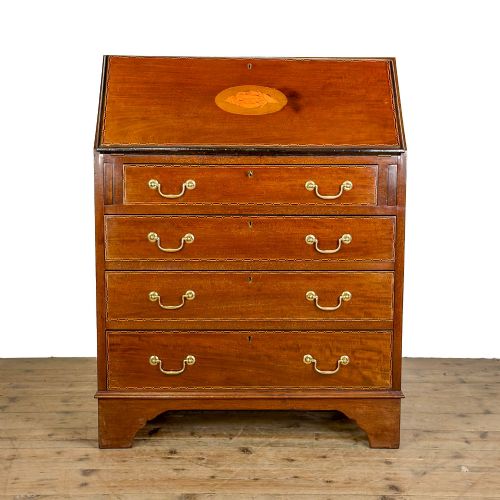
A small slant front desk appears most frequently in forms such as bureaux, Davenport desks, and bonheur-du-jour tables spanning the 18th century to the Edwardian era. These pieces combine a slanted writing flap with internal drawers and pigeonholes for correspondence.
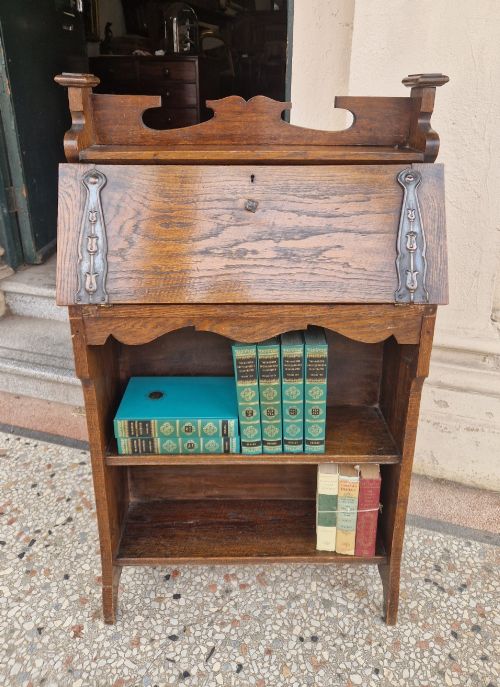
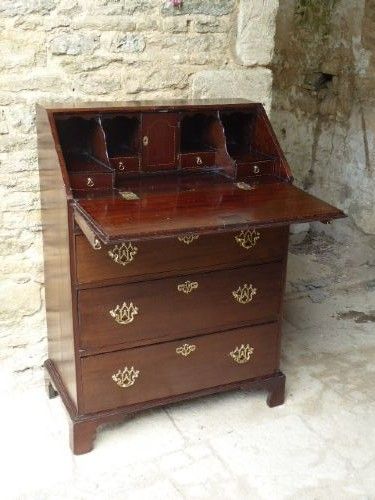
Examples on this page range from early 18th century walnut and oak formats to Georgian mahogany designs and later Victorian variations. Buyers encounter both freestanding cabinets and table-top versions suited for compact writing tasks.
Stylistic influences stretch across George II, George III, Queen Anne, and Louis XV revival periods. Each iteration reflects the domestic writing habits of its respective decade.
Materials and construction
Cabinet makers utilised dense hardwoods including mahogany, oak, walnut, and burr walnut, often enhanced with satinwood or rosewood veneers. Secondary woods like cedarwood occasionally support the internal drawer linings.
Decorative techniques involve marquetry inlay, brass mounts, ormolu, and porcelain plaques, particularly on French and revival pieces. Structural elements rely on dovetailed drawer construction and hinged writing slopes.
Some miniature desks include secret compartments hidden behind dummy drawer fronts for storing confidential notes.
Quality distinctions
Subtle differences in timber selection separate standard pieces from superior examples, particularly the figure and grain density found in burr walnut and mahogany veneers. Matching the grain across drawer fronts and the fall-front flap demonstrates higher cabinet-making skill.
The complexity of the interior fitments, such as secret compartments, shaped pigeonholes, and finely dovetailed small drawers, marks the distinction between workshop grades. Well-executed marquetry inlay and original brass or ormolu hardware also elevate a piece.
Gillows
The Small Slant Front Desk Glossary
- Bureau
- A writing desk with a sloping hinged lid that covers compartments and small drawers. It often sits upon a chest of drawers or a dedicated stand.
- Davenport
- A compact pedestal desk with a sloped, sliding writing surface and drawers opening to one side. It gained popularity during the Victorian era.
- Bonheur-du-jour
- A light ladies writing desk featuring a small cabinet or set of shelves upon the superstructure. French revival examples often display marquetry and ormolu mounts.
- Ormolu
- Gilded bronze used for decorative mounts and furniture trim. It appears frequently on French Louis XV style pieces.
- Marquetry
- Decorative veneer patterns formed by fitting together small pieces of wood, shell, or ivory. It creates pictorial or geometric designs on the writing surface.
Small Slant Front Desk: Frequently Asked Questions
What is a slant front desk?
A slant front desk is a compact writing cabinet featuring an angled lid that folds down to create a flat writing surface. The interior typically houses small drawers and pigeonholes for stationery.
These pieces were designed for private correspondence in domestic settings. Their footprint remains small, making them practical for modern rooms.
How do I date an antique bureau?
Dating relies on examining timber species, construction methods, and hardware styles. Early pieces often utilise oak or walnut, while mahogany became dominant during the Georgian period.
Internal drawer construction, such as hand-cut dovetails and secondary woods, provides further clues to the decade of manufacture. Comparing stylistic details against documented period furniture narrows the timeline.
Where were Davenport desks used?
Davenport desks served primarily as compact writing tables in Victorian drawing rooms or bedrooms. Their side drawers and sloping tops allowed writers to store paper and write letters in limited spaces.
Their freestanding nature meant they could sit comfortably away from walls. They functioned both as decorative furniture and practical writing stations.
How do I maintain wood finishes?
Maintenance involves keeping antique wooden desks away from direct sunlight and steady heat sources to prevent timber splitting or veneer lifting. Regular dusting with a soft, dry cloth preserves the polish.
Occasional applications of appropriate wax feed the timber without building up heavy residues. Avoid using modern silicone polishes on historic surfaces.