


Barley Twist Bureau
These barley twist bureau pieces bring together sturdy timber construction and distinctive turned supports for a practical writing surface.
Barley Twist Bureau
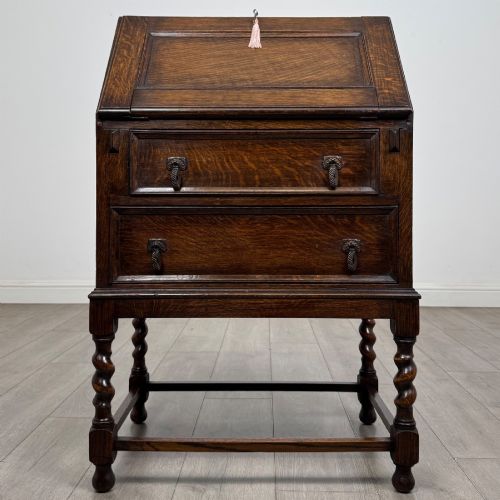
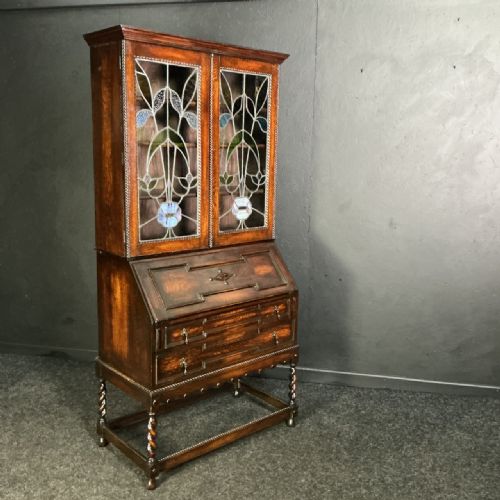
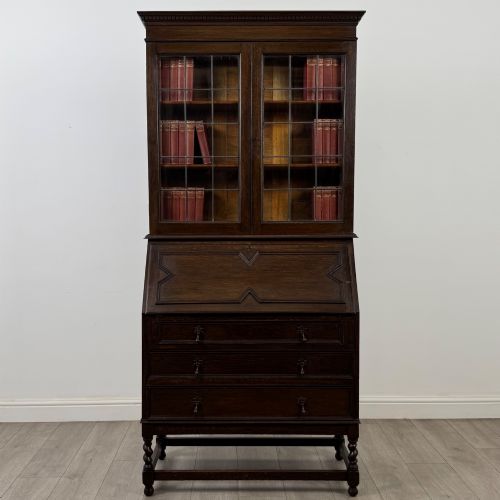
A barley twist bureau combines a sloping fall-front writing surface with helical turned legs, bringing together practical storage and distinctive turned woodwork. When you search for this phrase, you encounter writing furniture that dates from the Edwardian era through to the 1920s, rooted firmly in earlier revival traditions.
Most examples you meet on this page utilise solid oak timbers, often constructed in two distinct sections such as a glazed bookcase top sitting above a fitted writing compartment. The internal arrangement typically incorporates small pigeonholes and stationery drawers concealed behind the hinged fall front.
The supporting framework relies upon vigorous spiral turning on the legs and connecting stretchers, which lifts the heavy timber body off the floor. This combination of a utilitarian writing desk with ornate turned elements creates a robust form designed for domestic study use.
How they were made
Makers constructed these writing cabinets primarily from oak, utilising both solid planks and panelling for the main carcase and fall-front writing flap. Timber selection favoured durable hardwoods that could support the heavy weight of fitted interior pigeonholes and glazed upper bookcase sections.
The characteristic spiral supports were produced by hand or mechanical lathe work, shaping straight timber blanks into uniform helical twists before joining them to sturdy floor stretchers. Brass handles, hinges and key escutcheons were then fitted to secure the drawers and drop-down writing desks.
Some models hide rotating storage compartments, proving that early twentieth-century desk owners enjoyed an unexpected spin while writing letters.
What varies in quality
The standard of execution in the turned spiral supports dictates much of the distinction between individual pieces, where crispness of profile and symmetry show the maker's hand. Heavier, dense oak framing with well-figured grain provides greater structural integrity than softer secondary woods.
Internal complexity also separates standard utility writing desks from more ambitious cabinet work, particularly where fitted stationery interiors include secret compartments or finely dovetailed drawer construction. The integration of panelled doors and matching stretchers reveals the original ambition of the workshop.
Adriano Brambilla
The Barley Twist Bureau Glossary
- Fall front
- The hinged writing flap of a bureau that pulls down to reveal an interior fitted with pigeonholes and small drawers. When closed, it conceals the writing materials and protects the contents.
- Jacobean Revival
- A decorative style popular in the nineteenth and twentieth centuries that imitates seventeenth-century English furniture characteristics. It relies heavily on dark oak, deep carving and turned elements.
- Escritoire
- A decorative writing cabinet featuring a fall-front desk surface or drawers, often elevated on a stand or legs. The term derives from French vocabulary for writing.
- Stretchers
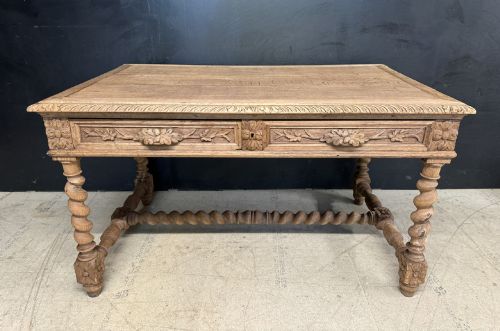
- Horizontal wooden rails connecting the legs of a table or desk to provide structural rigidity. In these pieces, they often feature matching spiral turning.
- Davenport
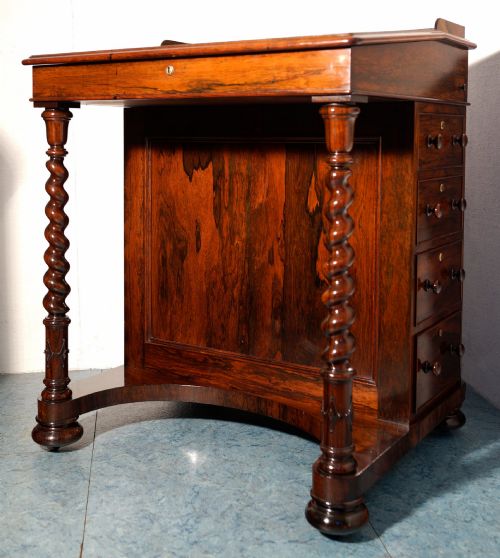
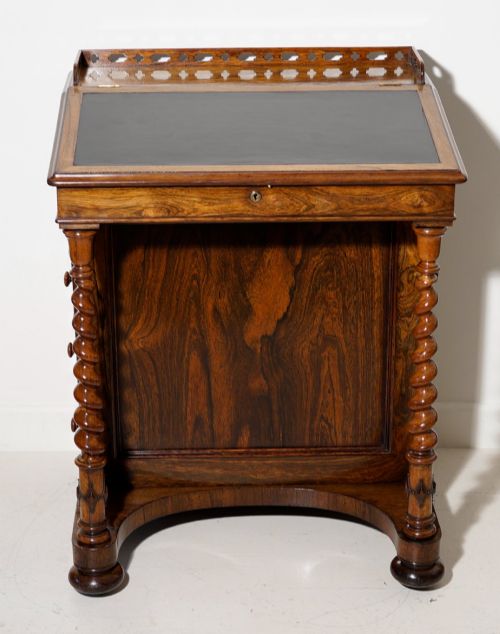
- A compact form of Victorian desk featuring a sloping writing top above a pedestal of side drawers. They combine small footprints with extensive compartment storage.
Barley Twist Bureau: Frequently Asked Questions
What is a barley twist bureau?
A barley twist bureau is a writing desk featuring a fall-front flap and distinctive helical turned wooden legs. These pieces combine practical storage with decorative turned framing.
They emerged strongly during the Edwardian period and the 1920s, drawing upon earlier revival styles to create sturdy domestic writing furniture.
How were these desks used?
Owners used these desks for correspondence, storing stationery within the internal pigeonholes and small drawers behind the closed fall front. The drop-down flap provided a stable horizontal writing surface.
Upper glazed bookcase sections on larger variants allowed for the display and storage of household library volumes.
Where should I place a bureau?
These pieces suit studies, living rooms or hallways where their compact footprints and timber finishes add traditional character. Ensure sufficient floor clearance for the drop-down writing flap.
Keep them away from direct heat sources and strong sunlight to protect the polish and prevent timber movement.
How do I date a bureau?
Dating relies on examining the timber species, construction methods, handles and decorative hardware styles present on the carcase. Edwardian and 1920s revival pieces often display machine-turned elements alongside traditional oak framing.
Earlier nineteenth-century examples utilise different internal drawer linings and cabinet assembly techniques compared to twentieth-century productions.