

Antique Oak Desk Cabinet
An antique oak desk cabinet brings together practical workspace and enclosed storage, drawing collectors through its enduring timber and functional design.
Antique Oak Desk Cabinet
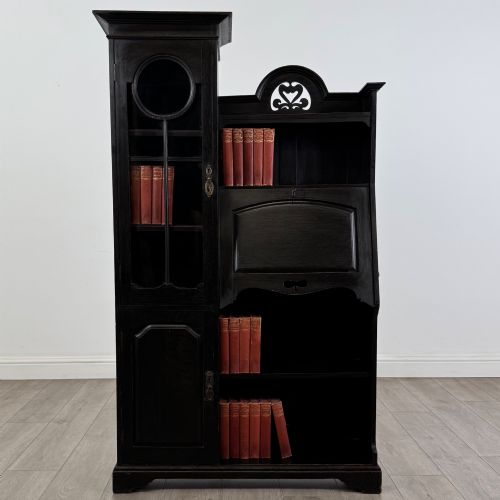
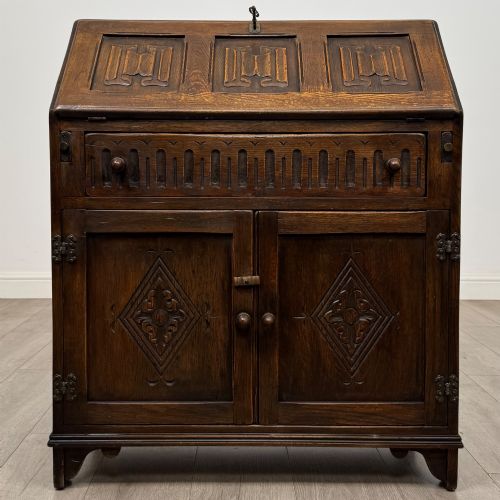
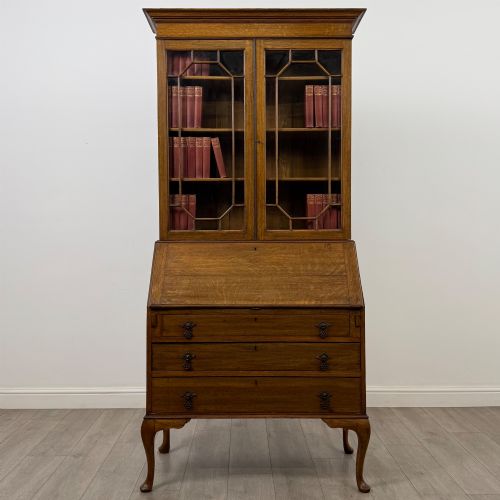
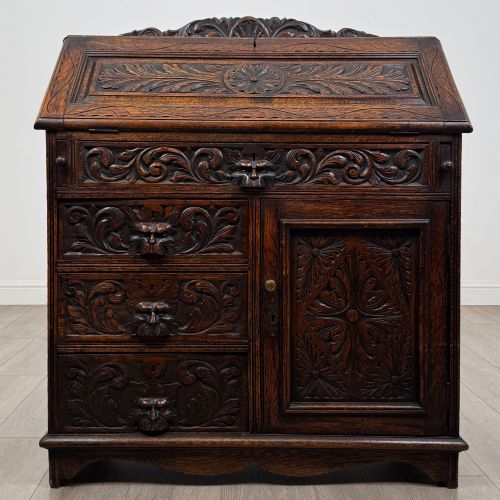
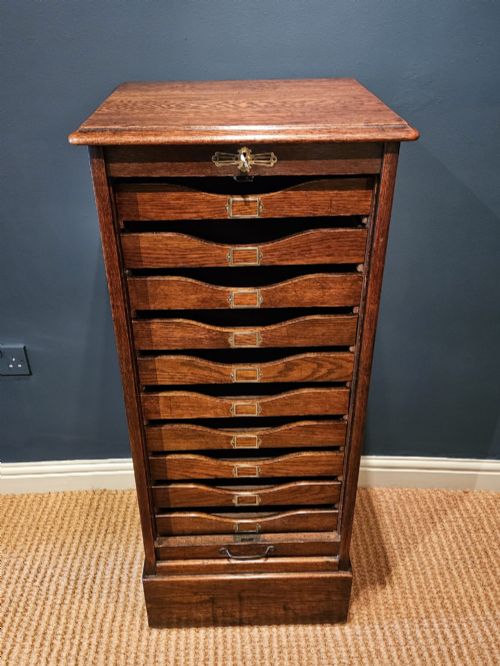
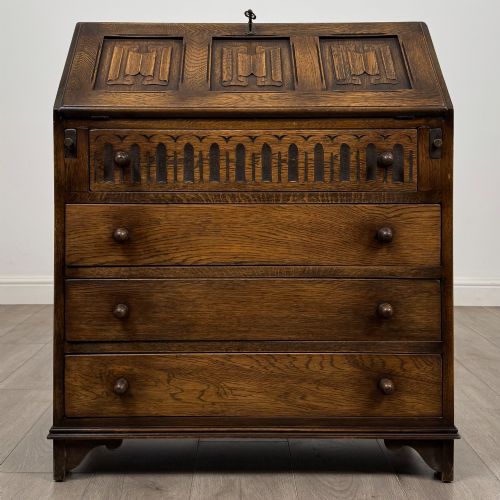
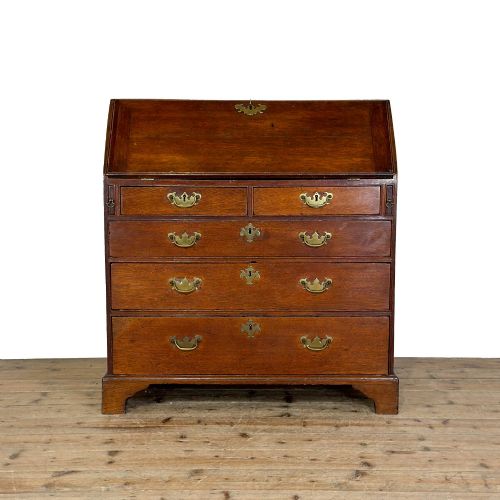
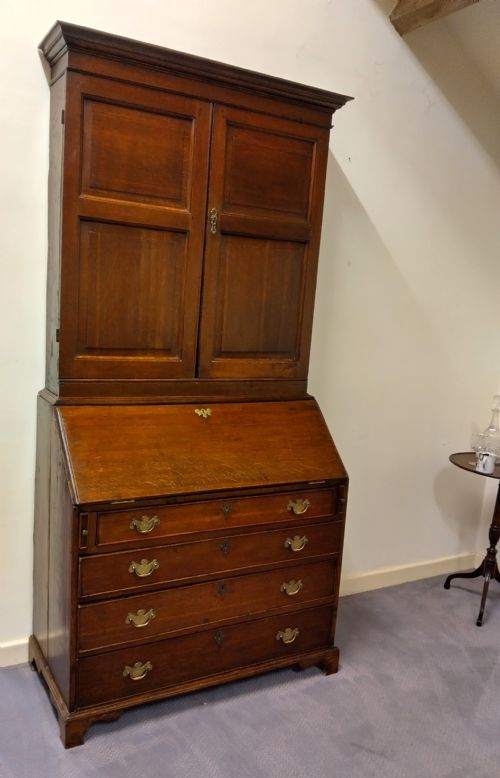
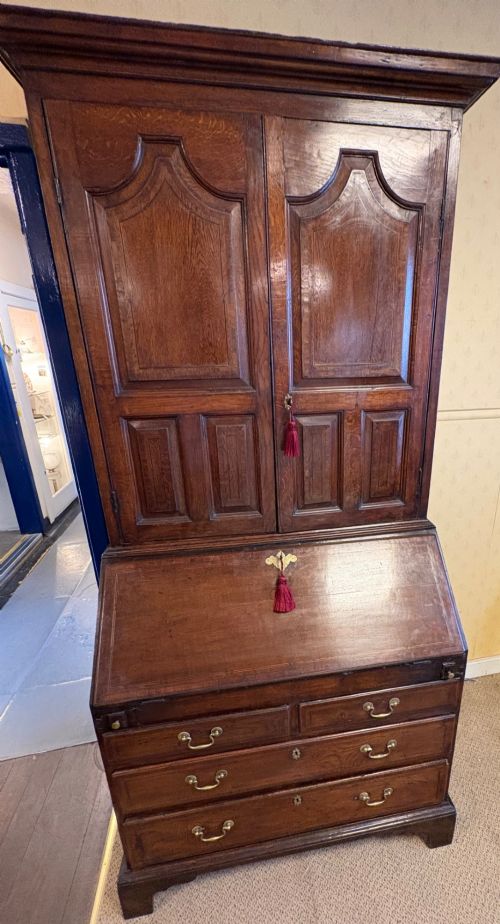
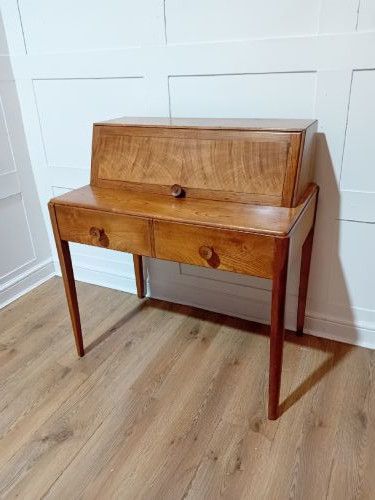
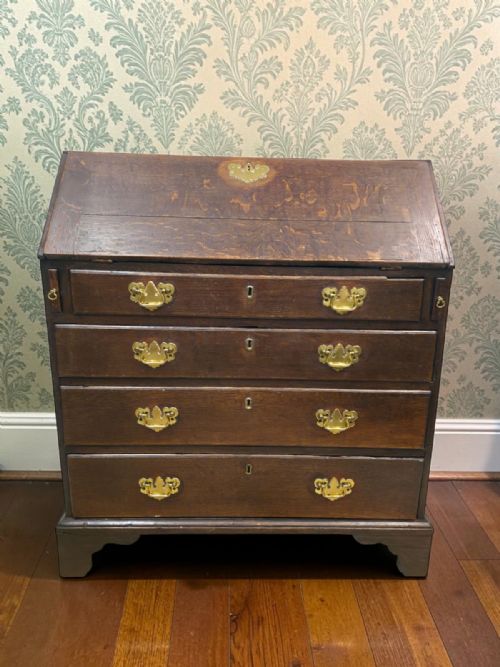
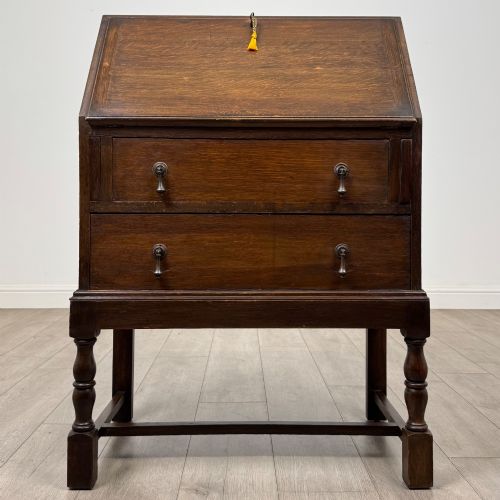
When you search for an antique oak desk cabinet, you encounter a range of forms spanning several centuries, from compact stationery boxes and tabletop chests to full bureau bookcases and filing cabinets. The selection on this page leans heavily toward Edwardian and Victorian pieces, alongside robust 18th-century and Georgian writing bureaux.
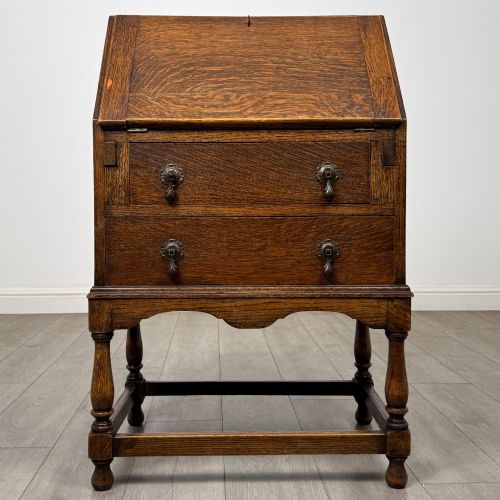
These items served various administrative roles in homes and offices, functioning as doctors' smoking cabinets, clerk cupboards, or library bookcases with drop fronts. You will frequently find pieces featuring fitted interiors with pigeonholes and stepped drawers behind a fall front or tambour door.
Materials and construction methods
Construction relies heavily on solid oak, occasionally described as golden or light oak, paired with functional hardware in brass, iron, and lead. Many examples incorporate glass panels for bookcase doors and leather inserts on writing surfaces.
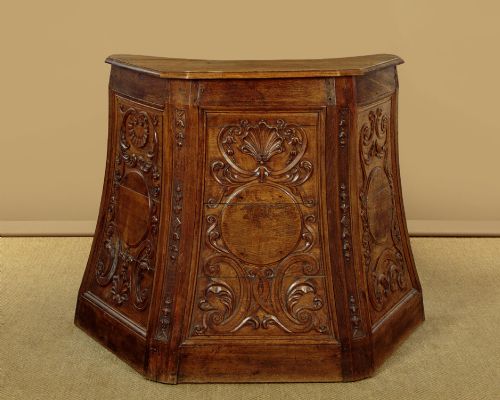
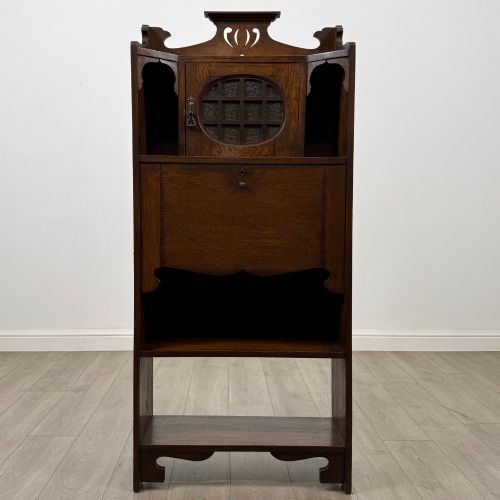
Cabinetmakers utilised traditional joinery techniques, sometimes enhancing the timber with hand-carved details such as linenfold motifs, green man masks, or Arts and Crafts styling. Desktop stationery boxes and filing cabinets often integrated mechanical tambour fronts or calendar mechanisms alongside standard drawer construction.
The archive includes regional Welsh and Scottish oak pieces alongside items reflecting Arts and Crafts and Jacobean revival styles.
Distinctions in construction and design
Quality separates through the integrity of the timber, the precision of the joinery, and the presence of maker attribution or specialised design work. Pieces originating from known workshops or specific regional movements display superior hand-carving and thoughtful proportion.
The sophistication of the internal fittings, such as stepped interior drawers and functioning original brass hardware, elevates a piece above standard utility items. The integration of complex mechanisms like tambour fronts or fitted calendars also distinguishes finer examples from simpler provincial boxes.
Arthur Basil Reynolds·Arthur Simpson of Kendal·Stanley Webb Davies·Bryn Mawr
The Antique Oak Desk Cabinet Glossary
- Bureau bookcase
- A writing cabinet featuring a fall-front desk section surmounted by glazed or panelled bookshelves. This combination offered both workspace and a library in a single tall footprint.
- Tambour front
- A flexible door constructed from narrow slats of wood glued to canvas or leather backing, allowing it to slide smoothly around a curved track to conceal pigeonholes.
- Linenfold
- A style of wood carving that imitates folded parchment or linen, commonly found on panels of the medieval and revival periods. It adds texture and decorative relief to plain cabinet doors.
- Secretaire
- A piece of furniture containing a drawer or compartment that folds down to form a writing surface. It often conceals smaller drawers and pigeonholes within.
- Pigeonhole
- A small, open compartment within a desk interior used for sorting letters and papers. Multiple pigeonholes often form a stepped arrangement inside a bureau.
Antique Oak Desk Cabinet: Frequently Asked Questions
How do I date an oak desk cabinet?
Dating relies on observing construction methods, timber selection, and stylistic cues such as hardware and carving motifs. Georgian and 18th-century pieces often feature hand-cut dovetails and pegged joints, whereas Victorian and Edwardian examples show machine assistance and revival styling like Jacobean or Arts and Crafts.
Examining the backboards, secondary woods, and interior configuration provides further clues to the era of manufacture. Documented labels or stamps can also confirm the exact workshop and production decade.
What is a tambour front cabinet?
A tambour front cabinet utilises a slatted sliding door that moves along a recessed track to cover shelves or pigeonholes. This mechanism allowed makers to enclose desk spaces without needing clearance for swinging doors.
Cabinetmakers valued this design for compact office furniture and stationery boxes where space was limited. The operation relies on precise alignment of wooden slats adhered to a flexible backing fabric.
How were stationery cabinets used?
Stationery cabinets sat upon large desks or tables to keep writing paper, envelopes, and ink organised within easy reach. Many included built-in calendars, sliding compartments, and small drawers for stamps and nibs.
Estate offices and doctors' consulting rooms utilised these lidded or door-fronted boxes to maintain order among correspondence. They served as private repositories for important documents before the widespread adoption of modern filing systems.
Are these cabinets suitable for modern laptops?
Many tabletop cabinets and small writing desks accommodate modern laptops when the fall front or slide-out writing surface provides sufficient depth. Bureau interiors with stepped drawers and pigeonholes are best measured beforehand to ensure adequate clearance for modern technology.
Choosing a piece with a sturdy drop-front mechanism ensures the writing surface supports daily use. Using a protective pad inside the fall-front prevents scratches to historical timber surfaces.