




Queen Anne Writing Slope
These pieces for a queen anne writing slope gather early walnut and later revival desks designed for correspondence and storage.
Queen Anne Writing Slope
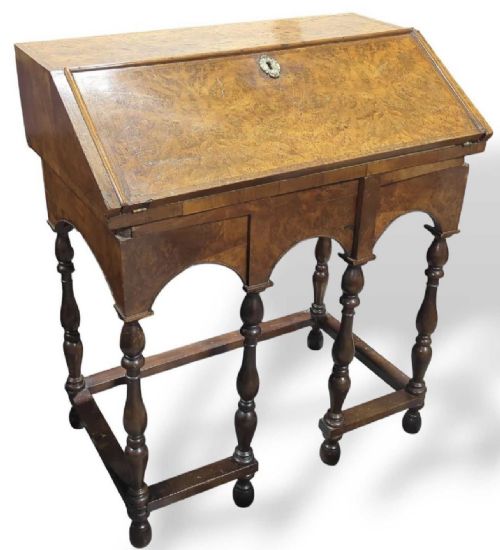
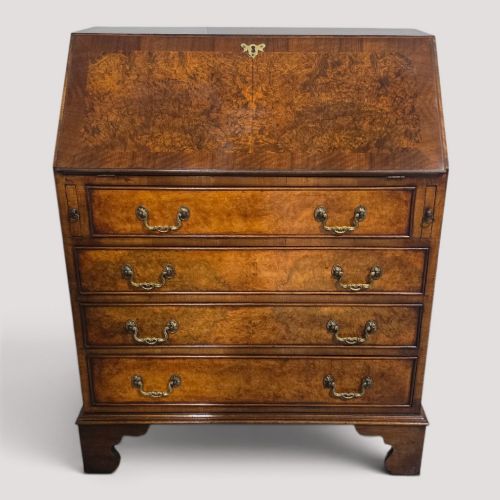
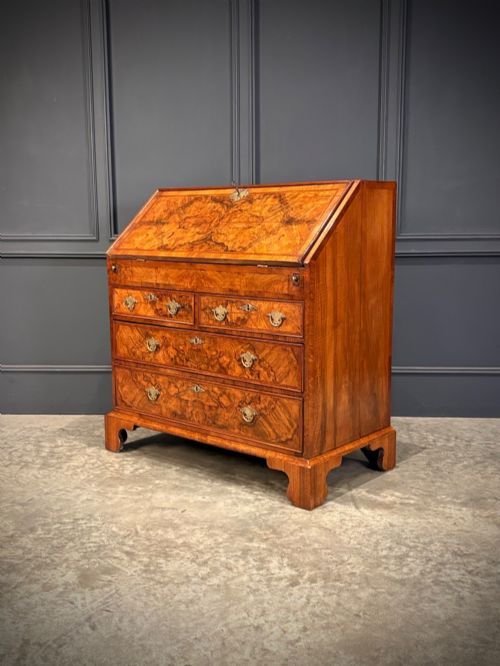
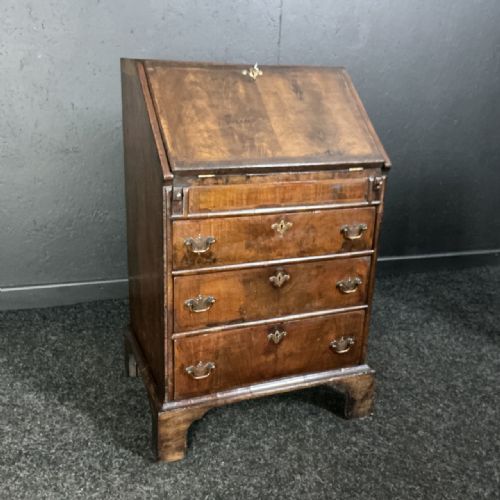
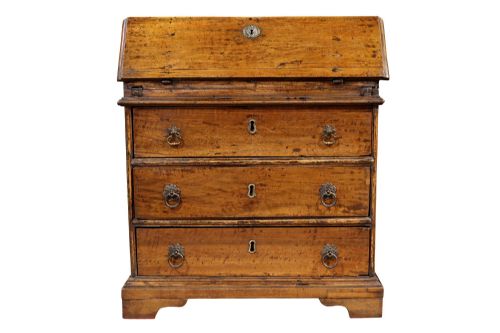
A queen anne writing slope usually takes the form of a bureau, combining a fall-front desk with internal drawers and pigeonholes above further drawer storage. The pieces meeting this search range from genuine 18th-century examples to later 20th-century revival interpretations.
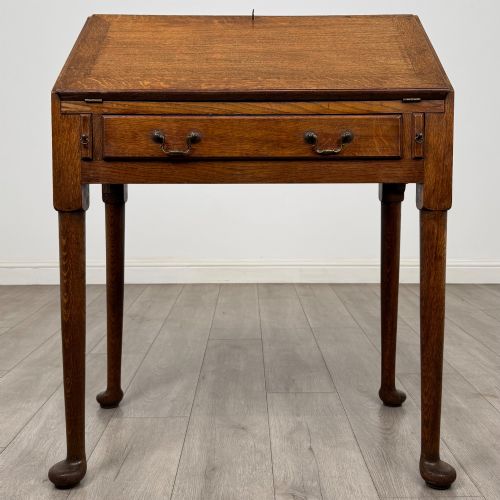
The primary forms found here include compact bureaux, desks on stands, and occasional bureau bookcases constructed in various timbers. Buyers encounter both period originals dating from the 1700s and early 1900s revival pieces built in the same idiom.
Originating in the early 18th century, these items served the practical needs of letter writing and document storage. The domestic desk remains a central focus for collectors of early English furniture.
What varies in quality
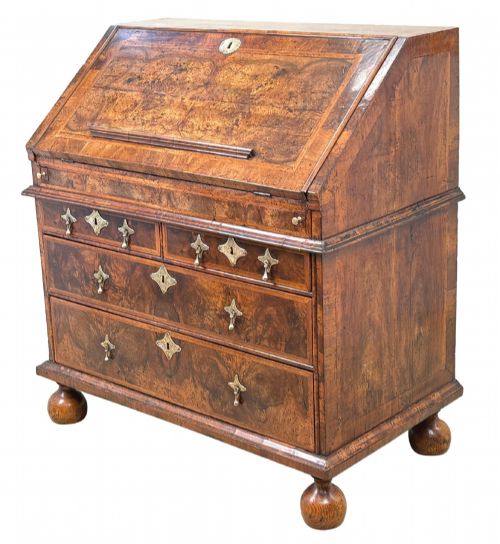
The choice of timber dictates the visual impact, with figured burr walnut and burr elm commanding attention over plain oak or mahogany. Grain selection and matching across the fall-front distinguish superior examples from standard ones.
Construction details such as dovetailed drawer joints and the retention of original ironwork or brass hardware reflect the skill of the original workshop. Later revival pieces vary according to how closely they adhere to early proportions and timber selection.
Many of these desks have hidden internal compartments behind sliding panels, originally designed to keep love letters away from prying eyes.
The Queen Anne Writing Slope Glossary
- Bureau
- A sloping desk with a hinged flap that opens to reveal compartments for papers. It generally sits above a chest of drawers.
- Fall-front
- The hinged writing flap that pulls down to create a flat surface for correspondence. This panel conceals the interior pigeonholes and small drawers.
- Bun feet
- Rounded, slightly flattened wooden feet that elevate early cabinets and desks off the floor. They appear frequently on pieces from the early 18th century.
- Burr walnut
- Timber taken from the wart-like growths on walnut trees, yielding intricate, swirling grain patterns. Cabinet makers used it for high-status veneering.
- Marquetry
- Decorative patterns formed by fitting together thin slices of various woods into a veneer. It adds ornamental complexity to the exterior surfaces.
Queen Anne Writing Slope: Frequently Asked Questions
What is a queen anne writing slope?
A queen anne writing slope generally refers to a bureau or slant-front desk originating from the early 18th century or later revival periods. These pieces provide a slant writing surface opening to drawers.
They combine a compact cabinet for correspondence with a chest of drawers below. Both period originals and 20th-century revival examples appear in this category.
How do I date a walnut bureau?
Dating relies upon timber choices, construction methods, and hardware styles. Early 18th-century pieces display walnut veneers over oak or pine, often supported on bun feet.
Later revival examples from the Edwardian era or 1920 adopt similar forms but employ machine-cut elements or different secondary woods. Original ironwork and brasses also offer clues to the period.
What woods were used for these desks?
Walnut and burr walnut are the predominant materials seen in these listings. Elm, burr elm, oak, and mahogany also feature across various periods.
Craftsmen often used figured veneers on the primary surfaces to create decorative grain patterns. Secondary structural timbers typically included oak or deal.
How were these desks used originally?
These desks served for writing letters, managing household accounts, and storing private documents. The drop-down flap provided a stable surface for ink and paper.
Internal pigeonholes and small drawers kept stationery and seals organised. Below the writing area, larger drawers held papers and personal items.