
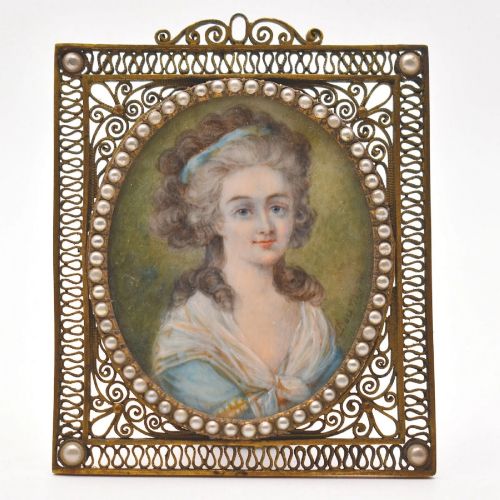


Small Oval Portrait Painting
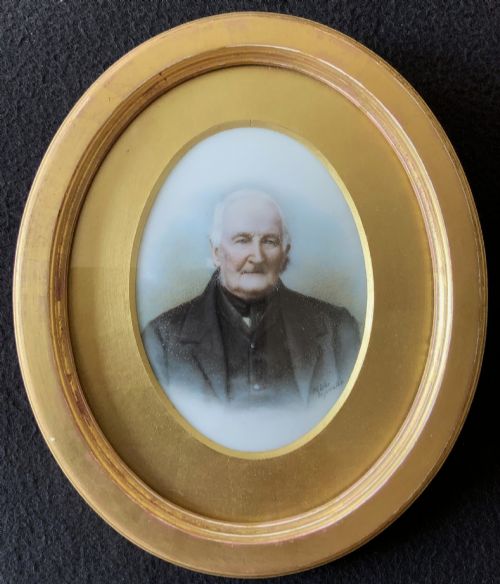
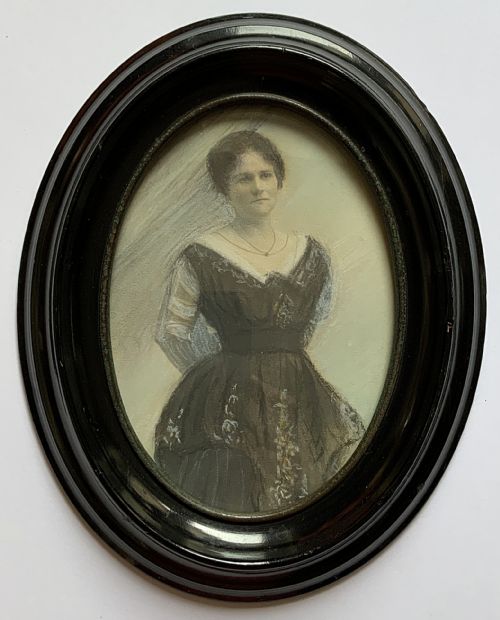
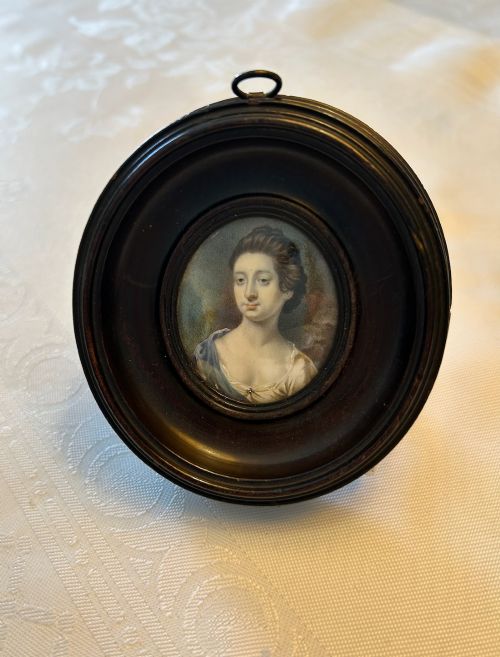
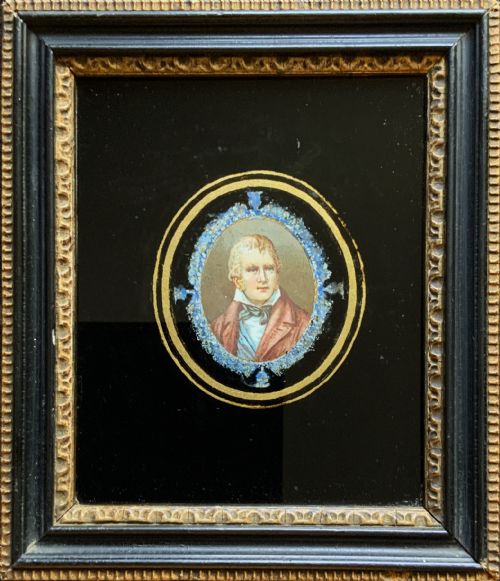
A small oval portrait painting captures a likeness on an intimate scale, offering a personal window into past centuries that appeals to collectors of miniatures.
Small Oval Portrait Painting
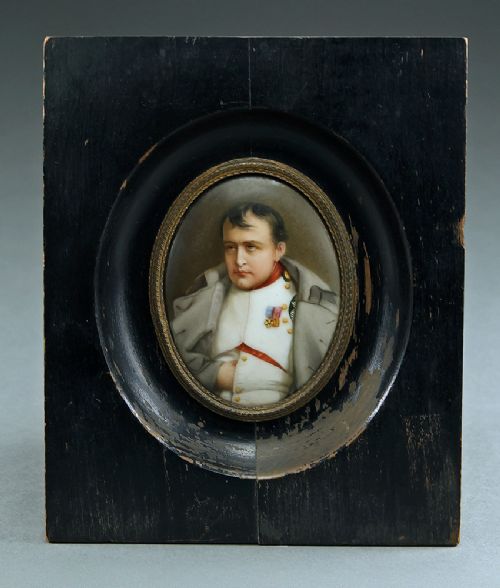
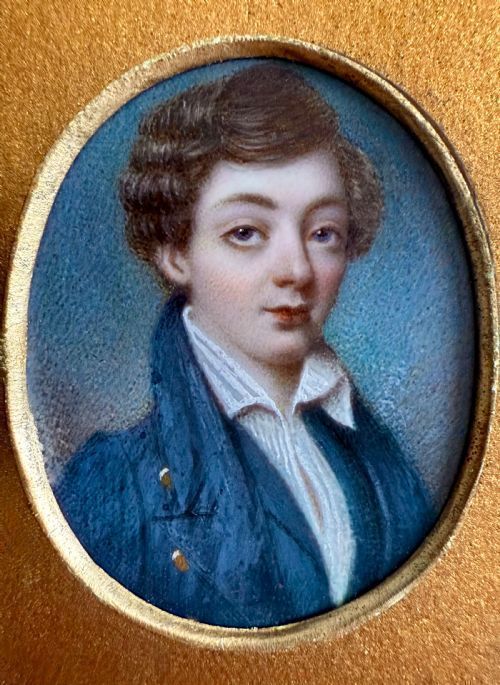
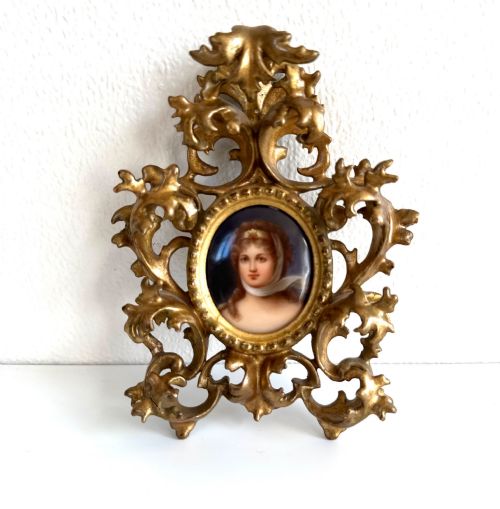
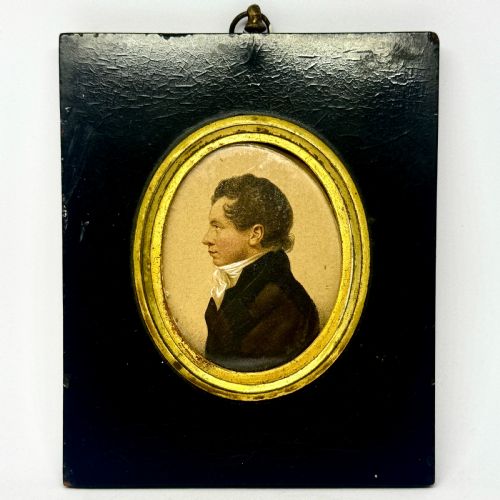
A small oval portrait painting represents historical sitters rendered in miniature, appearing across the Georgian, Regency, and Victorian periods. These pieces take the form of miniature portraits, paintings, and oil studies framed in brass, ebonised wood, and gilt metal. Buyers encounter works from British and Continental schools, depicting subjects ranging from notable figures to anonymous ladies and gentlemen.
The format relies on the vertical curve of the oval frame to concentrate attention entirely upon the subject's face and costume. Examples on this page span from the mid eighteenth century through to the Edwardian era, showing shifts in dress from ringlets and bonnets to formal attire. Most pieces are designed for hanging or display on a gilt metal stand.
Judging quality in miniature works
The housing contributes significantly to the overall merit, as original frames in gilt metal, brass, or ebonised wood designed specifically for the oval aperture preserve the integrity of the object. Signed works or those attributed to known hands hold distinct interest for collectors.
Napoleon makes multiple appearances here, sharing wall space with British nobility and anonymous children in bonnets.
Richard Cosway·Dumont·George Hargreaves·Isaac Wane Slater
The Small Oval Portrait Painting Glossary
- Portrait miniature
- A small-scale painting depicting a specific person, executed with fine detail during the eighteenth and nineteenth centuries.
- Ebonised wood
- Timber treated to imitate ebony, providing a dark, contrasting border often seen on eighteenth century frames.
- Gilt metal
- Metal treated with gold leaf or a gold coloured finish, frequently utilised for decorative miniature frames and stands.
- Watercolour
- A paint medium consisting of pigment suspended in a water-based solution, widely applied on paper for miniature studies.
Small Oval Portrait Painting: Frequently Asked Questions
How were these miniature portraits displayed?
Owners hung them on walls within intimate spaces or placed them on tables using specialised gilt metal stands.
Some examples were designed as personal items to be kept close or displayed in pairs alongside family members.
What materials did artists use for the base?
Makers painted upon paper, glass, and ivory surfaces depending on the period and the specific technique employed.
Watercolour and pastel required paper or glass supports, while oil paintings utilised small panels or canvas.
How can I tell the period of the frame?
Georgian and Regency frames often feature simple ebonised wood or slender brass surrounds, reflecting neoclassical tastes.
Victorian and later nineteenth century examples tend towards heavier gilt metal frames, sometimes incorporating elaborate cast ornamentation or stands.
Are these paintings usually signed by the artist?
Most surviving miniature portraits remain unsigned, as many were produced by anonymous artists working within regional or continental schools.
Signed works or those attributed to recorded practitioners like George Hargreaves or Isaac Wane Slater appear occasionally.