
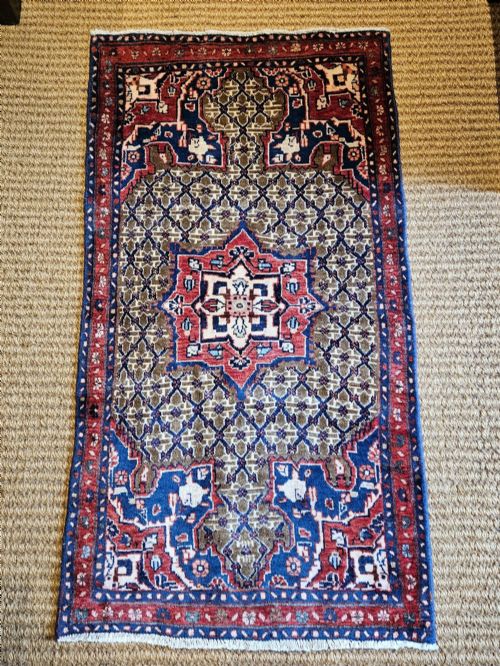
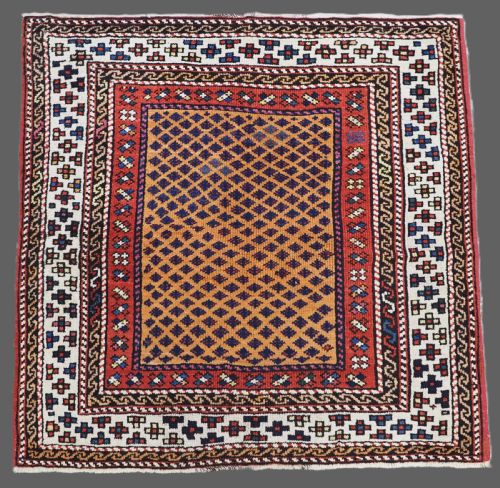
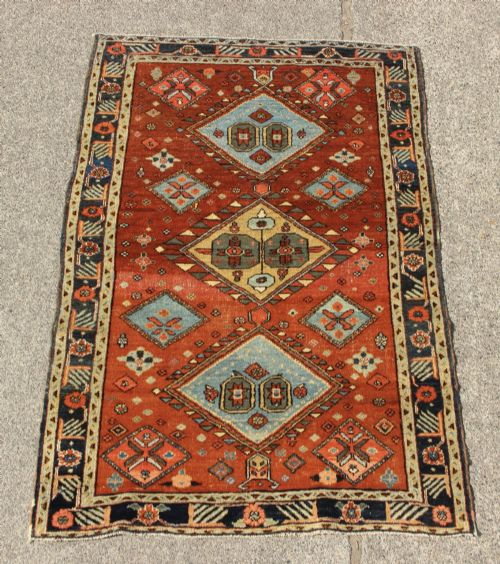
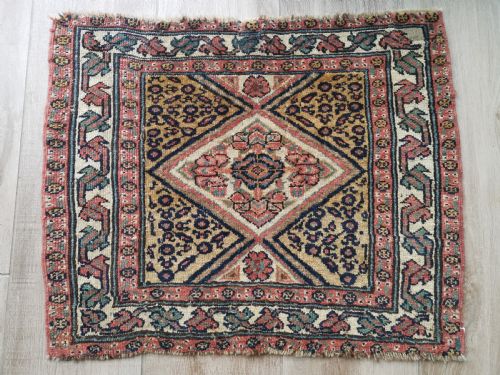

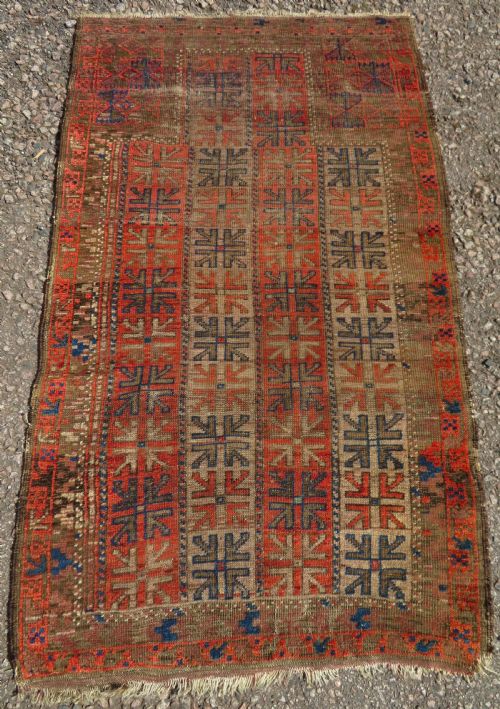
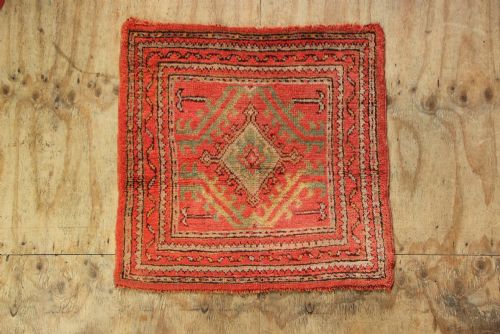
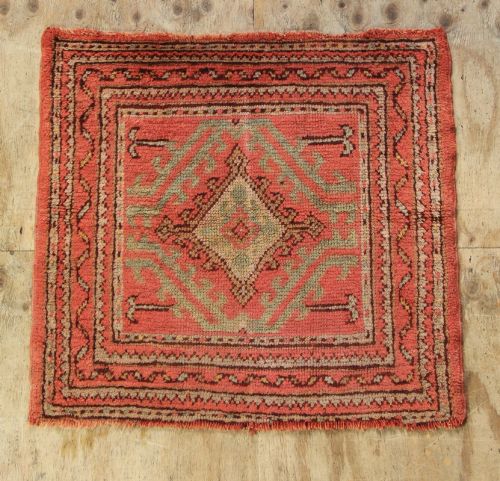
Small Geometric Tribal Rug
A small geometric tribal rug brings vernacular artistry and rich wool texture directly to the floor from nineteenth and early twentieth century workshops.
Small Geometric Tribal Rug
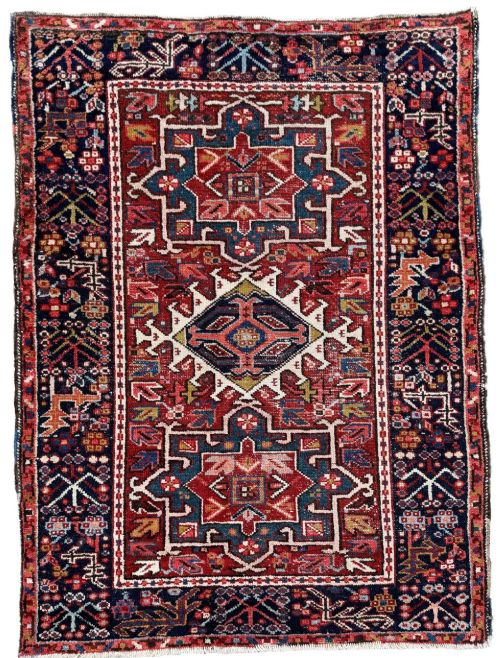
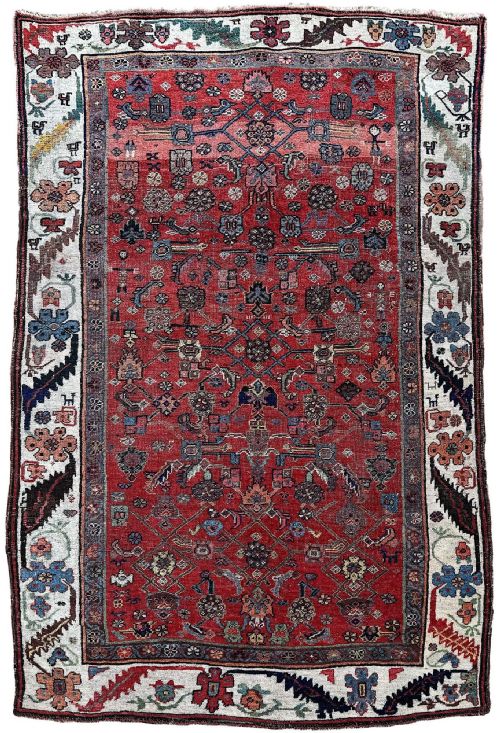
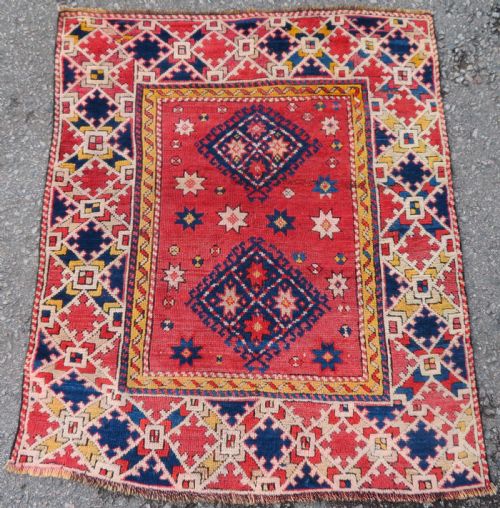
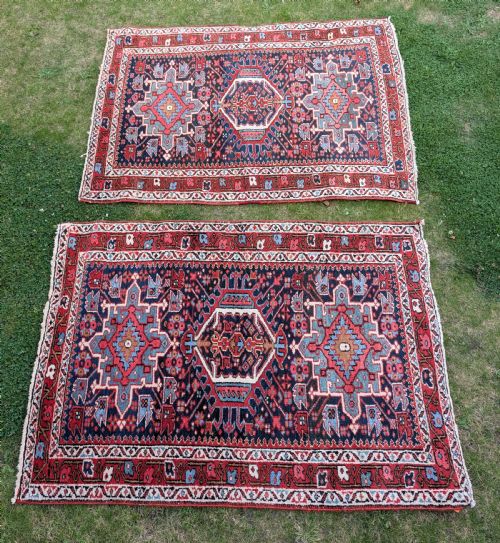
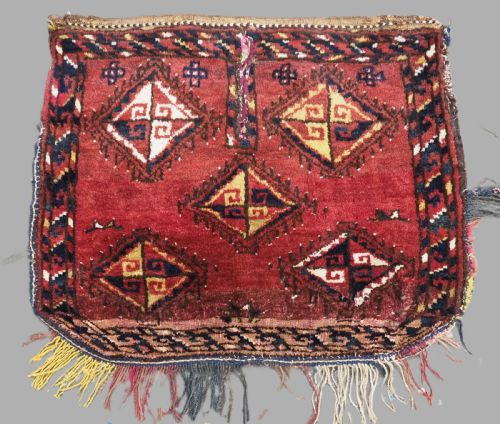
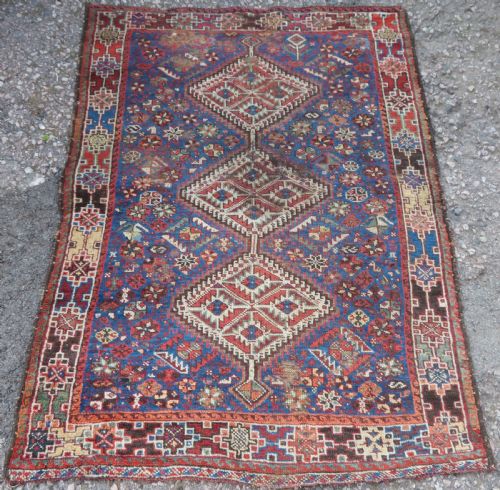
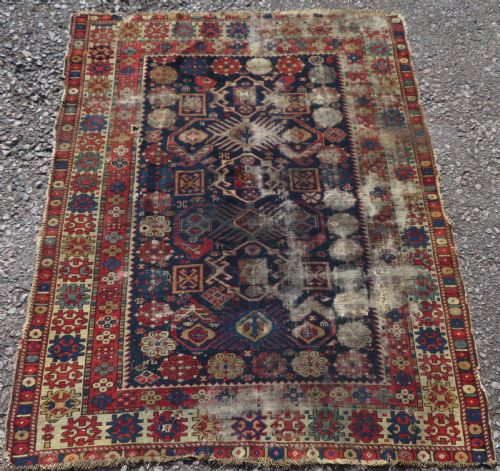
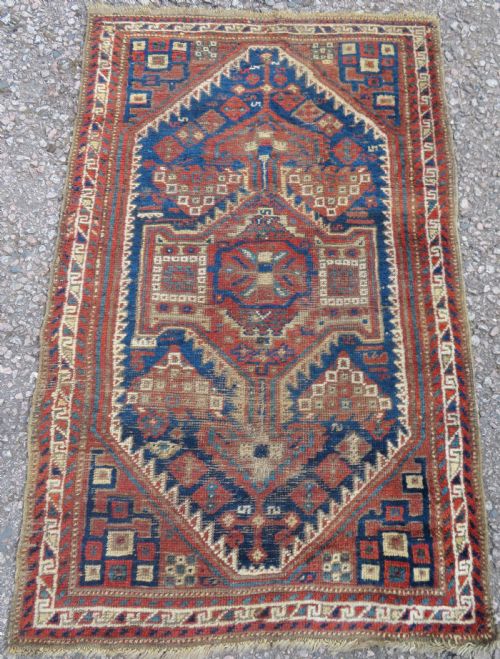
When you search for a small geometric tribal rug, you encounter woven works originating from Persian, Anatolian, Caucasian, Afghan, Turkmen, and Kurdish traditions. These pieces include square sizes, mats, hearth-sized formats, prayer rugs, bagfaces, and tent door rugs produced across the nineteenth and early twentieth centuries.
The most common examples on this page are hand-knotted village and nomad carpets featuring medallion layouts, lattice designs, and repeating motifs. Dating typically ranges from the 1870s through the 1930s, reflecting traditional household and utilitarian weaving from regional groups.
How they were made
The construction relies fundamentally on wool piles tied onto cotton or wool warps, using hand-spun fibres that absorb dyestuffs with distinct variation. Weavers utilised natural dyes to achieve rich colour palettes across field patterns and borders.
Village and nomadic makers constructed these textiles on portable or floor looms, resulting in dense knots and sturdy foundations meant for daily use in tents and houses.
Current listings span production dates from the 1870s through the 1930s, featuring wool, cotton, and natural dyes.
What varies in quality
Quality rests upon the crispness of the geometric drawing and the subtlety of the natural dye palette. Tighter knot counts and resilient hand-spun wool create greater durability and sharper definition in lattice and medallion motifs.
The handling of secondary borders and the integrity of the original wool or cotton selvedges distinguish finer tribal weaving from standard utilitarian output.
The Small Geometric Tribal Rug Glossary
- Warp
- The vertical threads stretched on a loom that form the foundation of the textile. Fringe ends typically reveal these underlying structural cords.
- Prayer rug
- A format characterised by a mihrab or niche design at one end, traditionally used for individual daily worship.
- Bagface
- The decorated front panel of a utilitarian storage sack produced by nomadic tribes for household possessions.
- Natural dye
- Colouring matter derived from plants, insects, or minerals rather than synthetic chemical compounds.
- Selvedge
- The bound or reinforced edge running along the long sides of a rug to prevent unravelling.
Small Geometric Tribal Rug: Frequently Asked Questions
How do I identify a tribal rug?
Tribal rugs display geometric motifs, stylized medallions, and symbols rooted in specific regional weaving traditions rather than court designs. Their patterns often show slight asymmetries resulting from memory-based weaving.
These pieces frequently utilise hand-spun wool and natural dyes that produce subtle shade variations across the field.
Where were these small rugs made?
The pieces originate from village and nomadic communities across Persia, Anatolia, the Caucasus, and Central Asia. Specific regional groups such as the Afshar, Baluch, Khamseh, and Shahsevan created distinct local styles.
Production took place within domestic settings using materials sourced directly from local flocks.
How should I care for an antique rug?
Protect the textile by placing a breathable, non-slip underlay beneath it on hard floors to prevent sliding and friction. Vacuum gently using suction only, avoiding revolving brush heads that can pull at the wool pile.
Rotate the rug periodically to ensure even wear from foot traffic and sunlight exposure.
What does prayer rug design mean?
A prayer rug incorporates a distinct pointed arch or niche motif known as a mihrab, which pointed toward Mecca during use. These formats served devotional purposes within nomadic and village households.
Secondary borders and spandrels frame the central niche with protective symbols and geometric flora.