


Persian Tribal Saddlebag Face
A persian tribal saddlebag face is a woven fragment of nomadic life, offering direct contact with nineteenth-century weaving traditions through portable art.
Persian Tribal Saddlebag Face
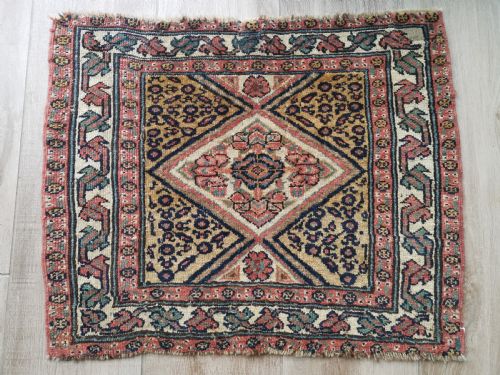
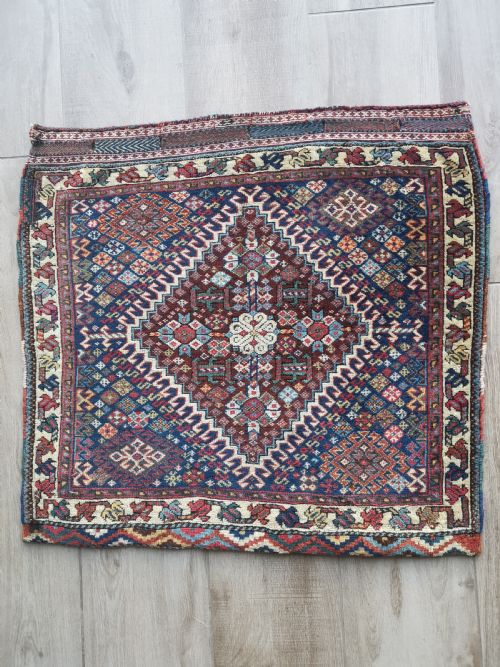
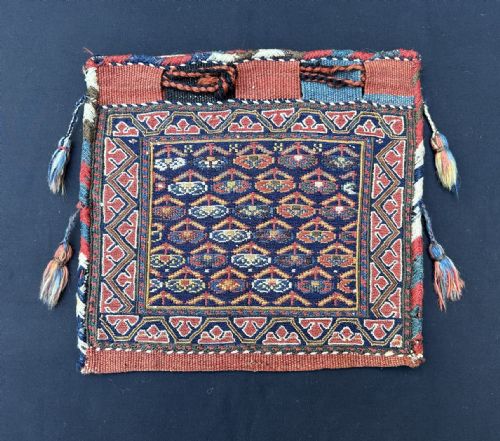
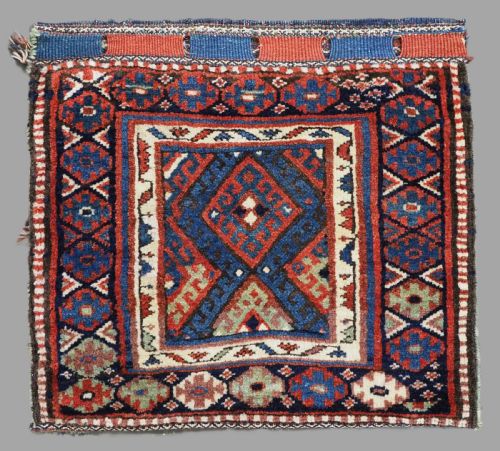
When you search for a persian tribal saddlebag face, you encounter panels and fronts originally fashioned as utilitarian containers for nomadic travel. These textiles derive from various tribal groups across Persia, including the Qashqai, Afshar, Shahsavan, and Jaf Kurd. Most pieces on this page survive as single bag faces or halved portions from larger khorjin pairs, having separated from their plain weave backs over decades of use.
The regional origins shape the visual vocabulary, displaying specific tribal motifs like central medallions, boteh patterns, and geometric field layouts. These nomadic fragments served practical storage functions in tents and on pack animals before entering the collector market as decorative wall hangings or small rugs. The forms range from complete bag faces with intact backs to fragments and panels.
How They Were Made
The makers utilised hand-spun wool for the pile and structure, combining it with natural dyes extracted from regional plants and minerals to achieve deep, variable colour tones. Cotton frequently appears in the foundations or supplementary details, providing structural stability to the dense pile and flatweave sections.
Weavers employed hand-knotted pile construction alongside flatweave techniques such as soumak, creating varied textures within a single textile surface. This combination of knotting and wrapping allowed nomadic weavers to produce both durable utilitarian storage items and intricate geometric designs without urban workshop apparatus.
Listings span periods from the mid-nineteenth century through the early twentieth century, incorporating wool, cotton, and natural dyes.
What Varies in Quality
The standard of materials dictates much of the visual impact, particularly the grade of hand-spun wool and the depth achieved by natural dyes. Luminous, lustrous wool handles light differently and retains rich variations across the surface, whereas coarse or dry wool yields a flatter appearance.
Execution and precision in the weaving define the finer examples, from the tightness of the knotting to the crispness of the tribal geometry. Pieces demonstrating meticulous handling of traditional motifs and balanced colour distribution stand apart from simpler, heavier utility work.
The Persian Tribal Saddlebag Face Glossary
- Khorjin
- The Persian term for a double saddlebag used by nomadic tribes for transport and storage. These bags were typically slung over pack animals during migration.
- Soumak
- A flatweave technique where supplementary weft threads wrap around the warp threads in a herringbone pattern. This method produces a textured, durable surface without pile knots.
- Boteh
- A stylised floral motif resembling a pear or almond shape, frequently utilised in Persian and tribal weaving. It is one of the most enduring designs in Middle Eastern textiles.
- Plain weave
- A simple structural weave where weft threads pass alternately over and under warp threads. In saddlebags, this technique often forms the utilitarian backs or subsidiary panels.
Persian Tribal Saddlebag Face: Frequently Asked Questions
What is a saddlebag face?
A persian tribal saddlebag face is the decorative front portion of a nomadic storage bag that has been separated from its back. These panels were woven by tribal groups for practical use during seasonal migrations.
Over time, many double saddlebags were cut in half as wear separated the functional backs from the decorative faces, leaving collectable textile fragments.
How were these bags used?
Nomadic tribes utilised these double bags to transport household possessions, grain, and personal belongings on horses, camels, or donkeys. They formed part of the essential equipment for tent-dwelling communities.
When stationary, the bags served inside the tent for domestic storage, displaying the weaving identity and skill of the maker within the camp.
How do I hang a bag face?
These textile fragments adapt well to wall display when mounted with conservation-grade support methods that distribute weight evenly across the wool foundation. Avoid direct pinning through the textile.
Placing the piece away from direct sunlight preserves the natural dyes used in nineteenth-century Persian tribal weaving against premature fading.
How can I tell different tribes apart?
Tribal attribution relies on distinctive design structures, colour palettes, and structural characteristics associated with specific regions like Fars, Kerman, or Kurdistan. Qashqai and Afshar weavers, for instance, favoured different geometric vocabulary.
Examining the knotting style, edge finishes, and secondary wool colours helps connect a piece to its specific nomadic confederation.