


Sloped Desk Top Box
A sloped desk top box offers a practical writing surface and compact storage, answering the need for a portable writing station.
Sloped Desk Top Box
A sloped desk top box encompasses a variety of portable and tabletop writing equipment designed for domestic, clerical, or travel use. The selection spans centuries, featuring early oak examples from the seventeenth and eighteenth centuries alongside nineteenth-century iterations in mahogany, rosewood, and camphor wood.
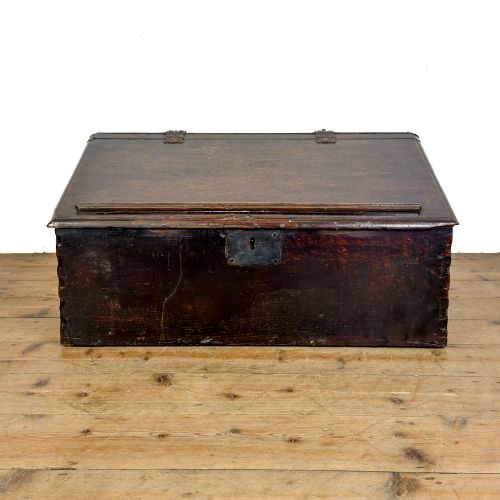
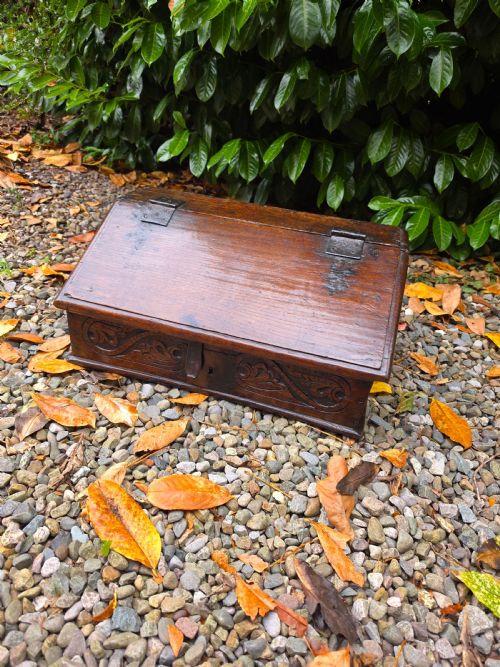
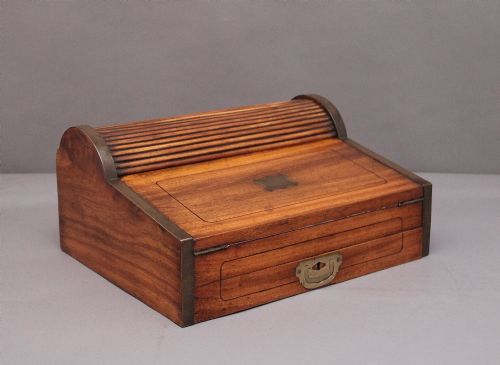
The primary forms appearing here include writing slopes, Bible boxes, stationery cabinets, and table top bureaux. Earlier pieces often display robust oak construction with carved decoration, whereas later nineteenth-century examples utilise exotic timbers, brass mounts, and campaign styling for travel utility.
Materials and construction methods
Cabinet makers utilised a range of domestic and imported timbers, predominantly oak for seventeenth and eighteenth-century boxes, alongside mahogany, rosewood, camphor wood, and walnut for nineteenth-century items. These woods were chosen for durability and appearance, frequently enhanced by brass bindings, inlay, or painted finishes.
Joinery techniques varied from traditional pegged framing in early oak Bible boxes to finer veneering and dovetailing in Victorian writing slopes and stationery cabinets. Metalwork fittings such as brass hinges, carrying handles, and lock plates provided structural reinforcement for portable campaign and travel use.
Listings feature oak, mahogany, rosewood, and camphor wood across periods from the seventeenth century through to the Victorian era.
Factors influencing quality and execution
Quality in a sloped desk top box is determined by the selection of timber, the precision of the joinery, and the integrity of internal fittings such as drawers and secret compartments. Superior examples maintain original hardware and undamaged wood surfaces, reflecting skilled craftsmanship appropriate to their period.
The sophistication of the design, whether a simple oak Bible box with a carved frieze or a metamorphic campaign writing slope with complex internal mechanisms, dictates the distinction between standard utility items and finer workshop productions.
The Sloped Desk Top Box Glossary
- Writing slope
- A portable box featuring an angled lid that opens to reveal a slanted writing surface and internal storage compartments. These pieces were designed for correspondence and document storage.
- Bible box
- An early rectangular wooden box, often featuring a sloped lid, originally intended to hold sacred texts and personal papers. They typically date from the seventeenth and eighteenth centuries.
- Campaign box
- Furniture constructed for military use or travel, frequently featuring brass corners, recessed carrying handles, and durable timbers such as camphor wood. These pieces were built to withstand frequent transport.
- Stationery cabinet
- A tabletop desk accessory designed to hold writing paper, envelopes, and inkwells, often featuring internal pigeonholes and panelled doors. They gained popularity during the Victorian period.
- Table top bureau
- A compact writing desk designed to rest on a larger table or chest, combining a sloped writing flap with internal drawers. Examples range from seventeenth-century oak forms to later variations.
Sloped Desk Top Box: Frequently Asked Questions
What is a sloped desk top box used for?
These boxes provided a portable writing surface and secure storage for letters, documents, and writing implements before the widespread use of fitted desks. They allowed individuals to write comfortably while seated at a table or travelling.
Today, they serve similar domestic functions as desktop organisers or decorative storage for modern stationery and correspondence.
How do I identify an oak Bible box?
An oak Bible box typically presents a rectangular wooden construction with a hinged sloped lid, often dating from the seventeenth or eighteenth centuries. Many feature pegged joinery, simple mouldings, or carved friezes characteristic of early English cabinet making.
Inside, they generally offer an open compartment, occasionally accompanied by small internal drawers for holding documents or books.
What is camphor wood used for in writing boxes?
Camphor wood was frequently utilised for nineteenth-century campaign writing slopes and boxes due to its natural resistance to insects and damp conditions. This made it a practical choice for military officers and travellers operating in tropical climates.
Boxes made from this material often include brass bound corners and flush carrying handles to withstand the rigours of transit.