

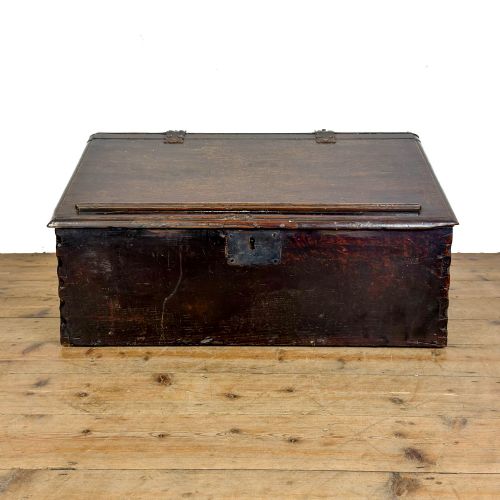
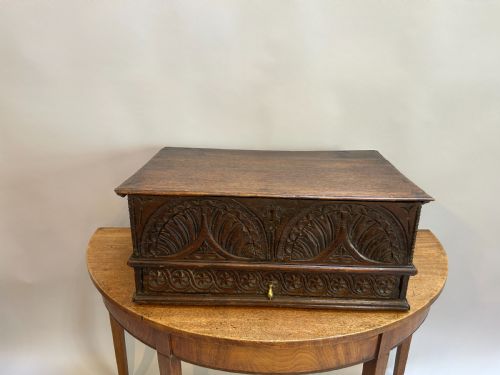
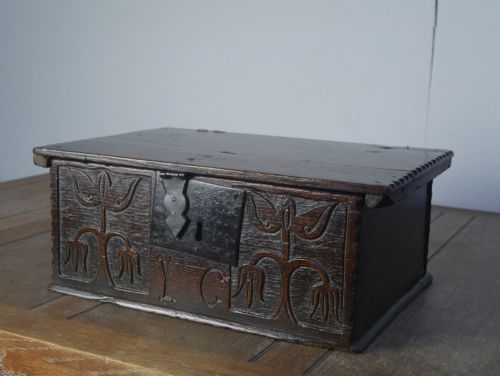


Brown Oak Bible Box
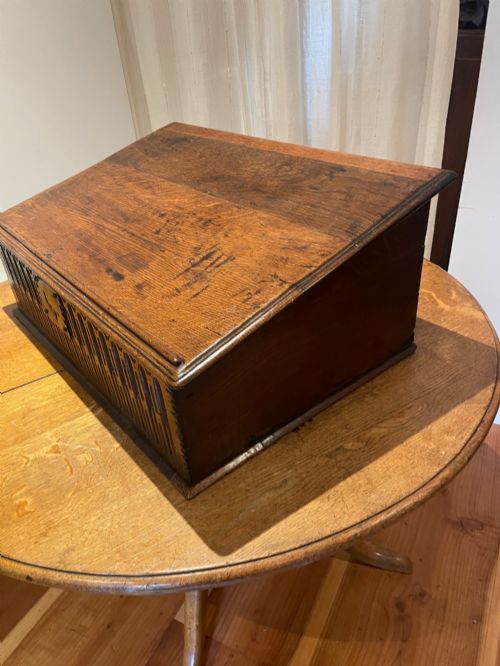
These brown oak bible boxes are sturdy table top repositories built for domestic scripture or vital documents.
Brown Oak Bible Box
When searching for a brown oak bible box, buyers examine utilitarian desktop containers constructed during the seventeenth and eighteenth centuries. These utilitarian objects served households for storing important papers or sacred texts safely.
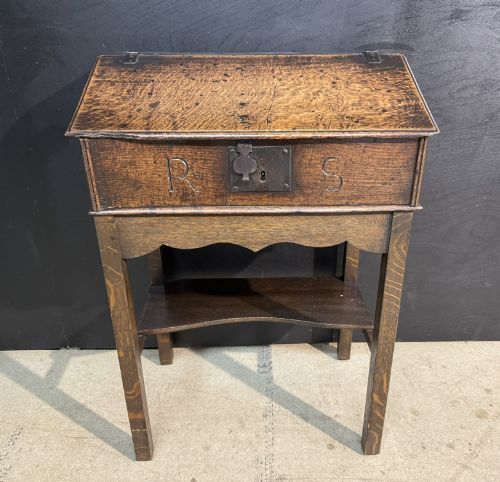
The pieces appearing on this page span several decades, featuring English and Welsh examples in distinct regional vernacular styles. Variants range from plain table boxes to forms fitted with internal drawers or later stands.
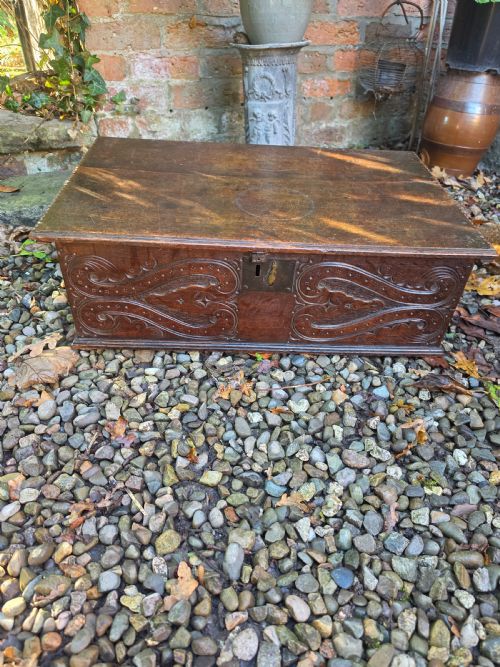
Common regional variations include the Welsh coffer bach and domestic document chests bearing carved decoration. Many of these sturdy containers demonstrate simple joinery typical of early vernacular furniture.
Materials and construction
Cabinet makers utilised solid oak timbers, often supplemented by fruitwood inlay or turned wooden feet. Structural integrity relied on pegged mortise and tenon joints designed to withstand heavy daily use.
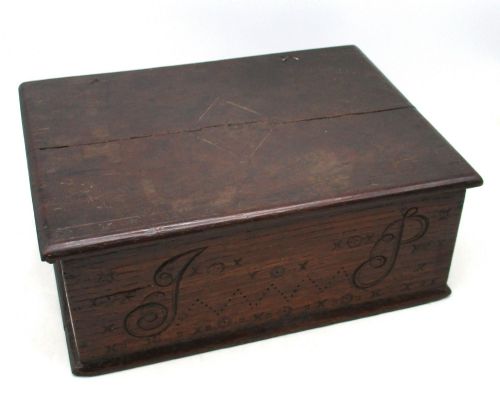
Hardware typically comprised wrought iron hinges and brass escutcheons secured by hand. Surfaces frequently display chip carving, geometric paneling, or simple incised decoration applied directly to the timber.
Brown Oak Bible Box Retail Price Guide 2026
Typical asking prices for brown oak bible box among the pieces listed under this phrase on Sellingantiques today, from the lower quarter to the upper quarter. They describe what is for sale here now, not the wider market.
Forms include table boxes, writing slopes, and miniature Welsh coffers resting on turned feet.
Qualities of craftsmanship
Superior examples display crisp, original carving and well-figured timber with a rich, undisturbed surface patina. The quality of the original ironwork and hinges heavily influences the overall character of the piece.
Boxes retaining their original stands or internal fittings command particular attention from collectors. Alterations to the base or replacement boards alter the historical integrity of the container.
The Brown Oak Bible Box Glossary
- Coffer bach
- A small Welsh chest or box, often featuring a drawer beneath the main compartment. These miniature repositories served as marriage chests or valuables boxes.
- Writing slope
- A desk box featuring an inclined lid designed to provide a comfortable writing surface. Many contain interior partitions for inkwells and quills.
- Chip carving
- A decorative technique where small chips are removed from the surface of the wood to create geometric patterns. This method appears frequently on seventeenth-century pieces.
- Escutcheon
- A protective plate surrounding a keyhole, usually fashioned from brass or iron. They prevent the surrounding wood from splitting around the lock.
Brown Oak Bible Box: Frequently Asked Questions
What is a bible box?
A bible box is a small wooden chest constructed to hold a family bible or important legal documents securely. They sat upon tables or desks in homes and churches.
Most feature a sloping or flat hinged lid that protected the contents from damp and dust. Their compact size allowed owners to transport them easily.
How old are these boxes?
The pieces available date primarily from the seventeenth and eighteenth centuries, with occasional Victorian examples. Construction methods and decorative motifs help determine the era of manufacture.
Earlier examples often display Jacobean carving and hand-wrought ironwork. Later pieces tend to show simpler surfaces or regional vernacular traits.
Where were they made?
These boxes originate predominantly from English and Welsh workshops utilising local hardwoods. Regional styles often reflect the specific vernacular traditions of rural makers.
Welsh examples frequently incorporate distinctive carving patterns or internal drawer arrangements. English pieces often exhibit characteristics associated with seventeenth-century joinery.
How do I care for oak?
Oak furniture requires stable humidity levels and protection from direct sunlight to prevent splitting. Regular dusting with a dry cloth maintains the surface.
Applying traditional wax polish occasionally helps nourish the timber and preserve the patina. Avoid placing them near direct heat sources.