
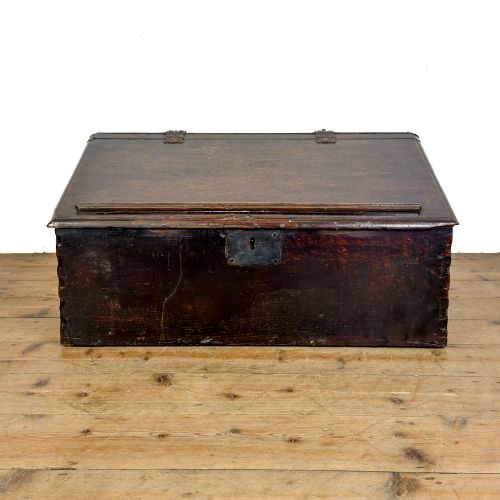


Oak Clerk Desk Slope
These oak clerk desk slope pieces are working furniture of solid timber built for daily business, offering a tangible connection to historical offices and studies.
Oak Clerk Desk Slope
An oak clerk desk slope is a functional writing surface designed for standing or seated administrative work, frequently appearing as a portable box or a fitted desk on a stand. These items emerge from various eras including the Georgian, Victorian, and Edwardian periods, reflecting the practical writing needs of past centuries.
Buyers browsing this selection will encounter formats ranging from early bible boxes and table tops to larger George III clerks' desks and hotel reception stations. The construction typically relies on sturdy oak, often paired with secondary timbers like pine, and occasionally incorporating practical internal drawers or brass and iron hardware.
How They Were Made
Makers constructed these pieces using solid oak, often shaped into sloping lids for comfortable writing and fitted with internal compartments for stationery and ink. Cabinetmakers utilised traditional joinery methods to ensure the angled lids and desk bodies withstood heavy daily use in offices and town halls.
Metal components such as brass hinges, iron locks, and occasional marquetry inlay add functional and decorative detail to the timber framework. Some examples feature leather or leatherette writing surfaces set into the wood, while others retain carved friezes and box constructions dating back to the seventeenth century.
Listings feature oak items spanning the seventeenth century through to the Edwardian era, including bible boxes, clerks' desks, and reception stations.
What Varies in Quality
The distinction between simpler utilitarian pieces and finer examples rests in the crispness of the cabinetwork and the selection of figured timber. Superior specimens display thoughtful proportion, original stands, and integrated interior compartments that remain intact and functional.
Hardware and secondary materials also influence the character of each piece, with hand-forged iron or quality brass fittings marking a higher grade of manufacture. Modifications over the centuries, such as later stands applied to earlier boxes, distinguish altered items from those retaining their original configuration.
Pairs MFG Co·Simpsons of Kendall
The Oak Clerk Desk Slope Glossary
- Slope
- An inclined writing surface designed to hold paper at a comfortable angle for reading or script. This angled lid often lifts to reveal storage compartments beneath.
- Bible Box
- A small wooden chest historically used to store sacred texts and writing materials. These portable boxes frequently serve as the foundational top section for later desk stands.
- George III
- A design period spanning the late eighteenth and early nineteenth centuries. Furniture from this era often exhibits refined proportions and disciplined classical details.
- Marquetry Inlay
- Decorative patterns created by fitting contrasting pieces of wood veneer into the primary timber surface. This technique adds visual interest to selected panels and desk fronts.
Oak Clerk Desk Slope: Frequently Asked Questions
What is an oak clerk desk slope?
An oak clerk desk slope is a practical wooden writing desk featuring an angled top designed for standing or sitting clerical work.
These pieces range from portable table boxes to large freestanding desks used in offices, town halls, and ecclesiastical settings.
How were these desks used historically?
Clerks and officials utilised the sloping surface to draft documents, maintain ledgers, and store correspondence securely inside the desk body.
The internal drawers and compartments kept ink, quills, and paper organised within arm's reach during busy working hours.
How should I care for antique oak furniture?
Maintain oak desks by keeping them away from direct heat sources and sudden humidity changes to protect the solid timber and joinery.
Apply occasional wax polish to nourish the wood and preserve the natural finish without sealing the grain.
Can I use a slope for modern writing?
The inclined surface provides a natural angle for writing letters, journaling, or supporting a modern notebook.
Interior compartments remain useful for storing stationery, pens, and small desk accessories in a study or living space.
How do I identify a Georgian desk?
Georgian desks typically display restrained classical proportions, solid oak construction, and traditional period hardware like brass escutcheons.
Examining the interior drawer construction and timber patination helps confirm the eighteenth-century origin of the piece.