

Slope Top Desk
A slope top desk offers a sloping surface for correspondence and archival storage, uniting compact form with practical compartments.
Slope Top Desk
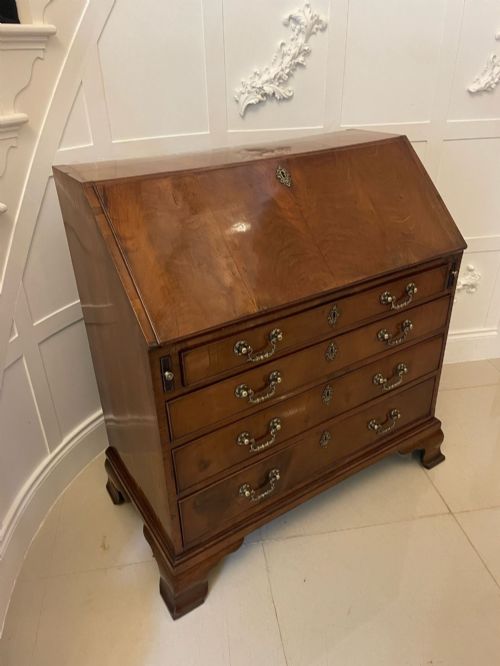
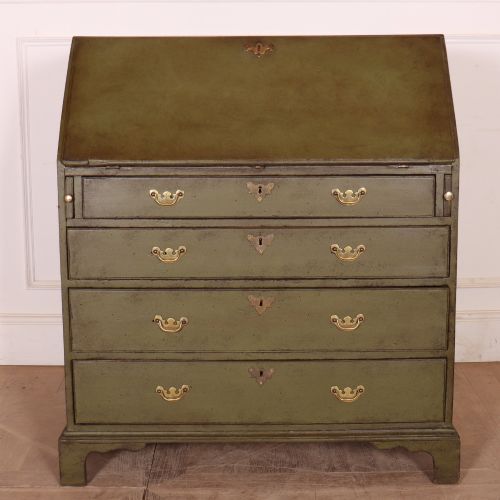
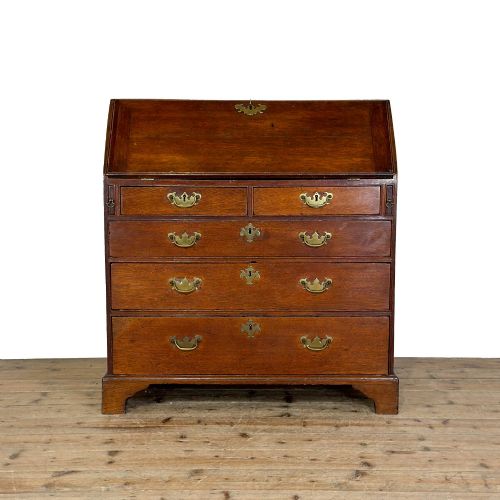
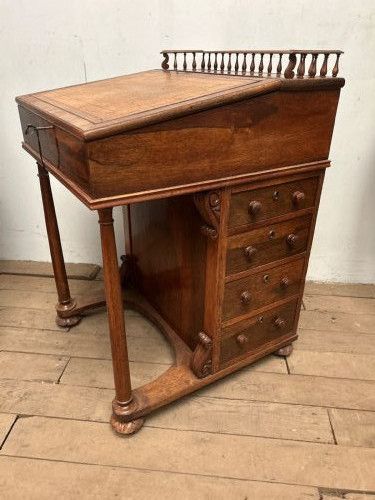
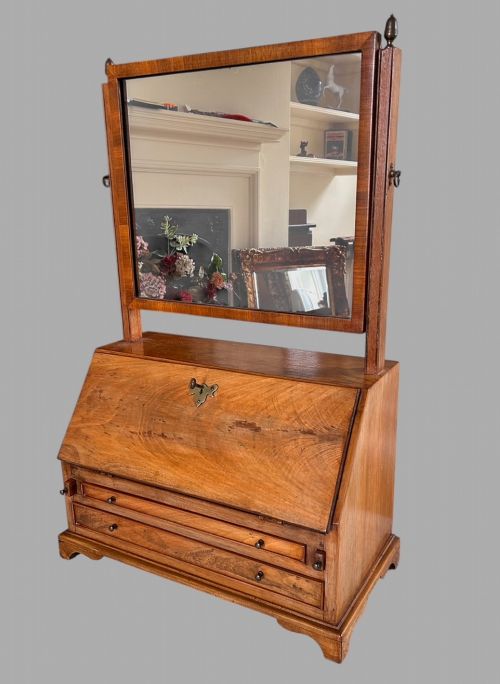
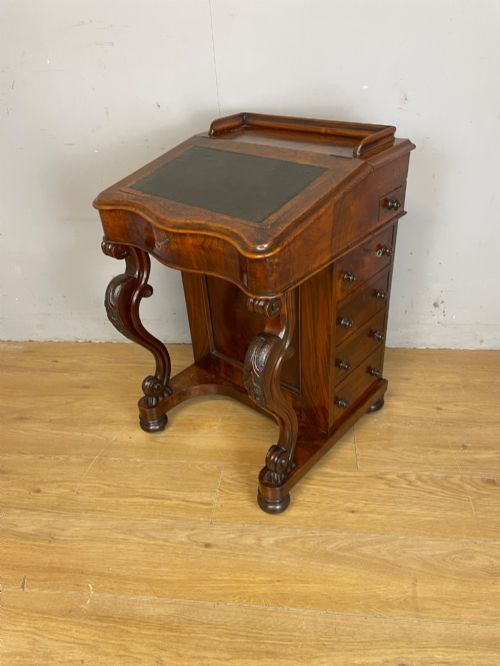
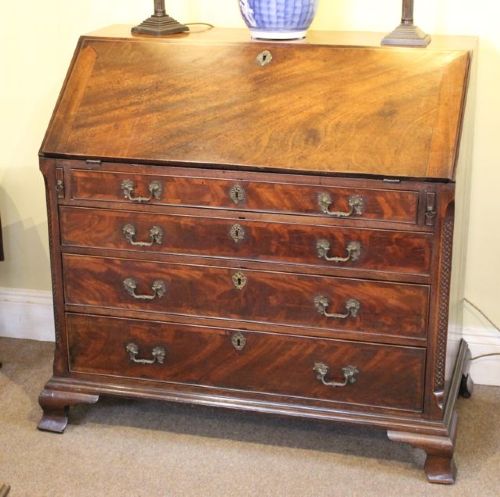
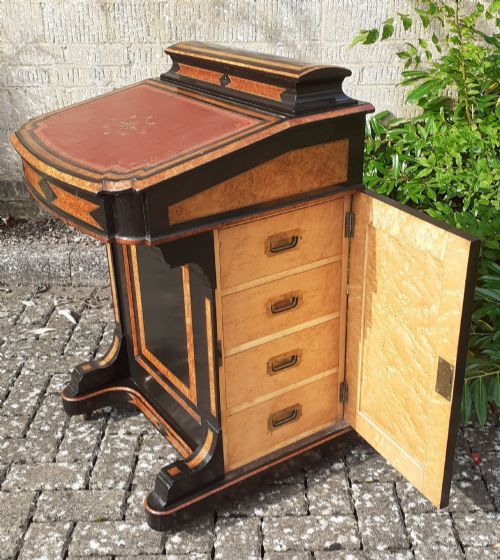
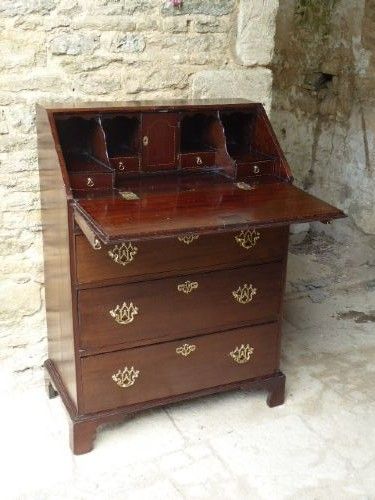
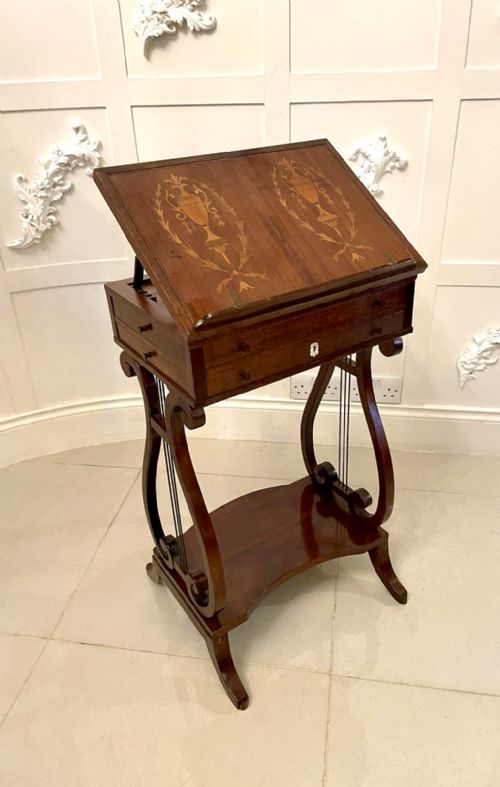
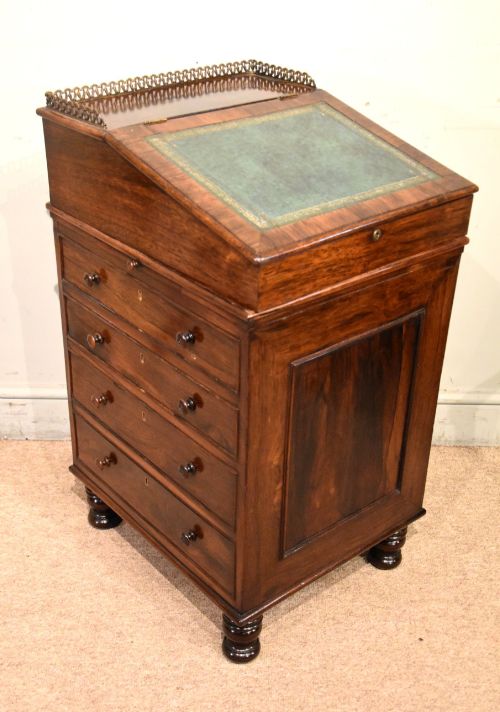
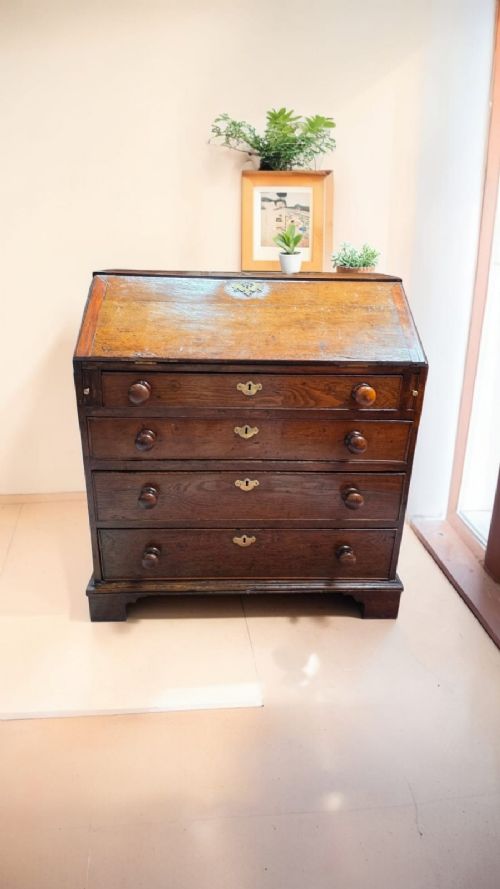
A slope top desk covers forms ranging from compact table-top boxes to substantial pedestals,bureaux, and davenports. Buyers seeking this phrase encounter slant-front writing boxes, fall-front bureaux with drawers, and compact davenports intended for domestic correspondence.
The material palette spans native timbers such as oak, mahogany, and walnut alongside exotic veneers including rosewood, amboyna, and burr walnut. These woods appear across Georgian, Victorian, and Regency periods, utilising brass mounts, leather inserts, and internal satinwood fittings.
Materials and construction methods
Cabinetmakers constructed these pieces primarily in solid mahogany, oak, and walnut, often applying veneers of burr walnut, rosewood, amboyna, or satinwood over secondary timbers. Internal compartments frequently incorporate lighter woods and hidden drawers accessed through sliding panels.
Brass hardware, including hinges, carrying handles, and escutcheons, secures the structural joints and operational lids. Writing surfaces commonly receive inset panels of leather, providing a durable plane for daily correspondence.
Some nineteenth-century davenports hide ingenious pop-up stationery compartments that spring upward at the touch of a secret brass release.
Distinctions in craftsmanship and materials
The selection of timber figure, such as highly grained burr walnut, flame mahogany, or figured rosewood, distinguishes standard utilitarian pieces from exceptional examples. Superior items exhibit careful grain matching across the fall front and drawer fronts.
Internal complexity and secondary details, including original ironwork, fitted satinwood stationery nests, and branded cabinetmaker signatures, separate standard production items from workshop pieces of superior execution.
Gillows of Lancaster·Lowe Bristol·Gillow and Co
The Slope Top Desk Glossary
- Bureau
- A writing desk featuring a sloping lid that opens to reveal internal pigeonholes and small drawers. This form frequently sits upon a chest of drawers or a dedicated stand.
- Davenport
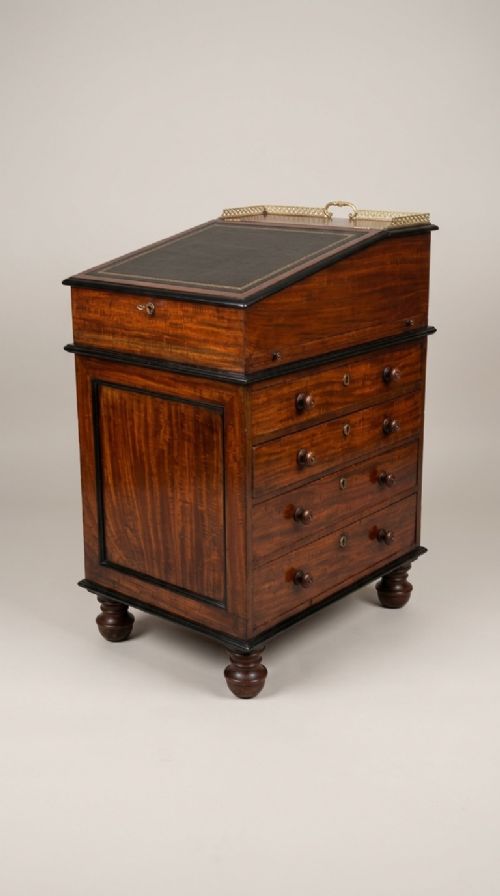
- A compact pedestal desk with a sloping, hinged writing surface that typically incorporates side drawers and a stationery compartment. The form gained widespread popularity during the nineteenth century.
- Writing slope
- A portable box with an angled lid that folds flat to create a writing surface while housing writing implements and paper inside. Examples often feature brass binding and leather writing inserts.
- Bible box
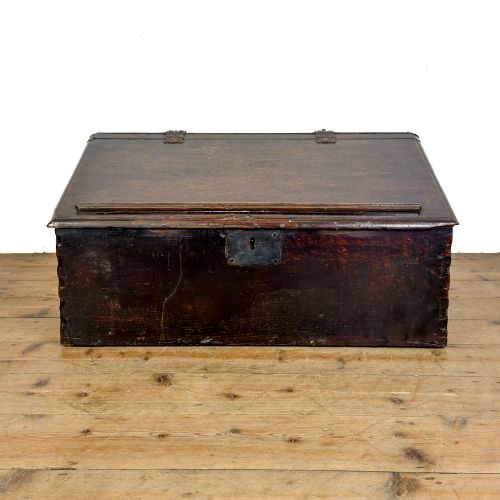
- A small, early wooden box with a slant top, originally designed to hold sacred texts and documents. These pieces predate standard domestic desks and rest on tables or stands.
- Dickens desk
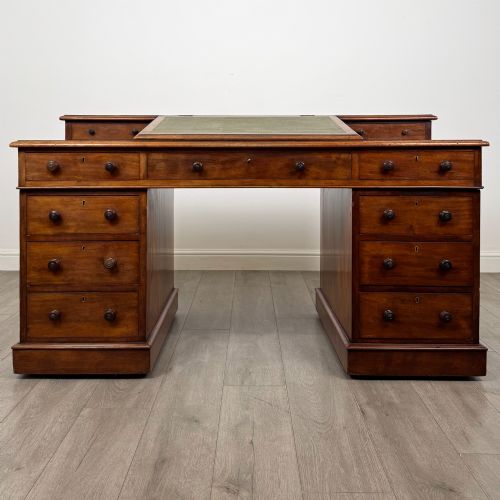
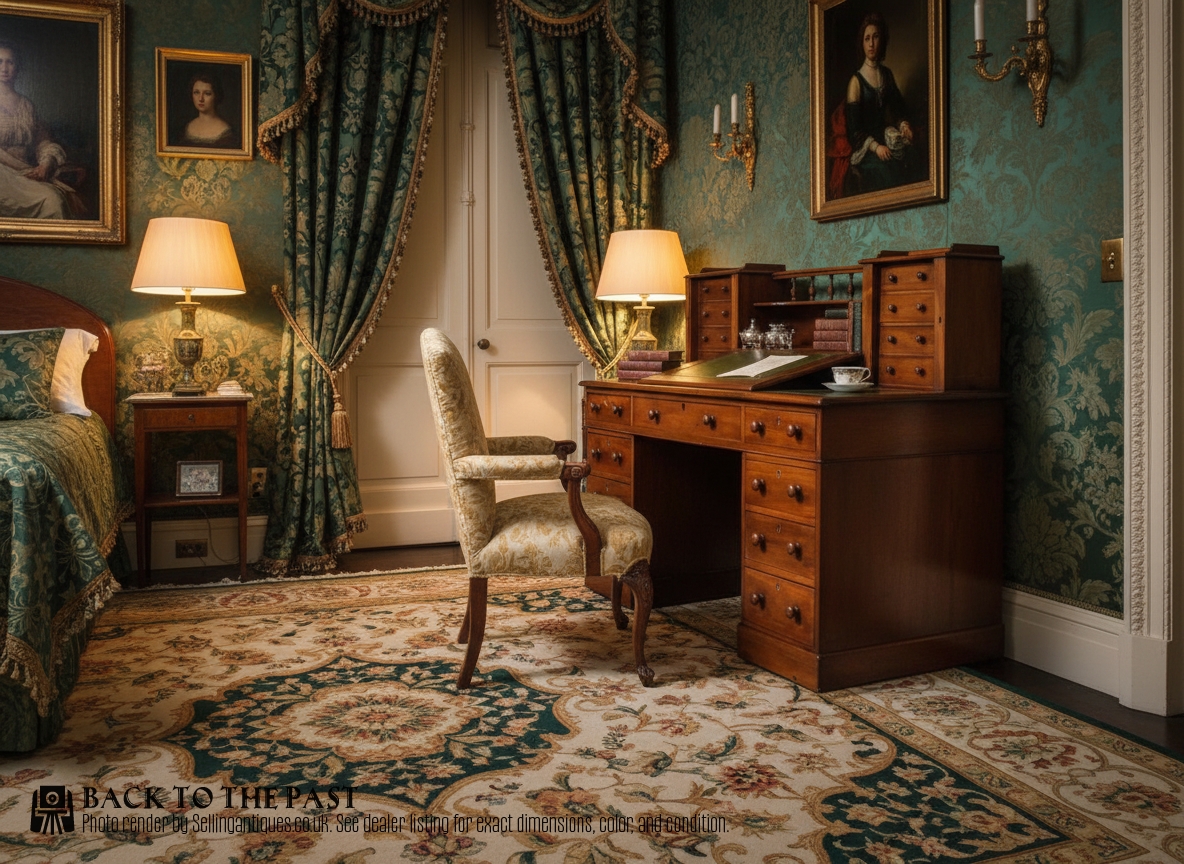
- A large partner desk featuring a raised central compartment with rows of small drawers and pigeonholes above twin pedestals. This configuration provides ample compartmentalised storage for administrative work.
Slope Top Desk: Frequently Asked Questions
What is a slope top desk?
A slope top desk is a piece of furniture featuring an angled writing surface that often lifts or folds down. These items provide a slanted plane designed for comfortable reading and handwriting.
Underneath or behind the sloping lid, makers built various compartments, pigeonholes, and small drawers for stationery storage. The category encompasses portable writing boxes, compact davenports, and full-size bureaux.
How do I use a slope top desk?
You use a slope top desk by sitting at the ledge while the angled surface supports paper or ledgers at an ergonomic viewing angle. The slant reduces strain during prolonged writing tasks.
Opening the fall-front or lifting the lid grants access to internal inkwells, pen trays, and document slots. Papers store flat within the internal carcass when the desk closes.
Where were slope top desks placed?
These desks found placement in domestic studies, libraries, drawing rooms, and commercial offices depending on their size and form. Smaller boxes and davenports suited parlour use for writing letters.
Larger bureau desks and pedestal models stood against study walls to manage household accounts and correspondence. Portable writing slopes travelled across rooms or on journeys.
How do I date a slope top desk?
Dating relies on observing timber choices, construction techniques, hardware styles, and overall proportions across different periods. Eighteenth-century examples frequently feature solid oak or mahogany with bracket feet and traditional joinery.
Nineteenth-century pieces introduce exotic veneers like amboyna and burr walnut, alongside mechanical pop-up compartments and brass-bound edges. Maker signatures or stamps help confirm specific workshop eras.