


Slatted Music Rack
A slatted music rack brings genuine architectural timber and disciplined joinery into a room, offering a functional home for folios and journals.
Slatted Music Rack
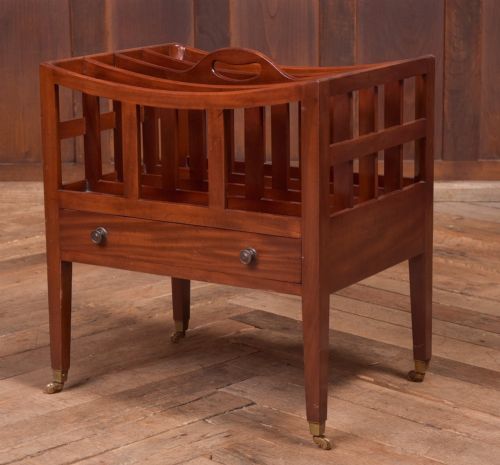
A slatted music rack, commonly known in the trade as a canterbury, serves as a movable stand designed to hold sheet music, folios, and periodicals. These pieces appear across several distinct periods, including the Georgian, Regency, Edwardian, and early Victorian eras.
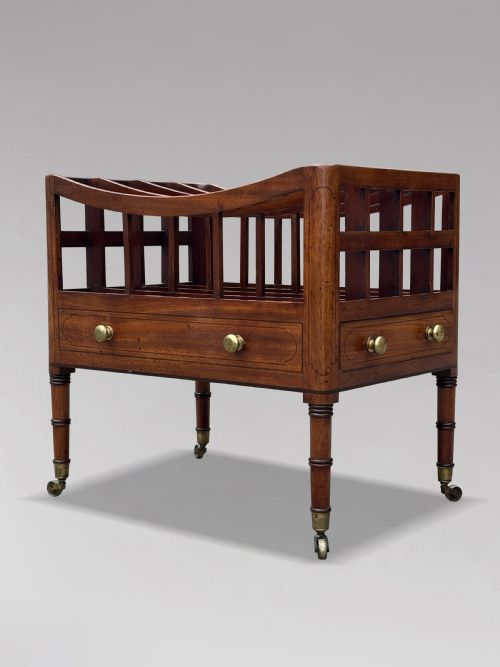
The form typically comprises divided vertical sections above a low base, occasionally incorporating a small drawer. Most examples encountered here are constructed from mahogany, reflecting the material preferences of eighteenth and nineteenth-century cabinet makers.
Makers produced these stands in various configurations, from boat-shaped designs to rectilinear three-division formats. Each piece demonstrates the domestic habits of earlier centuries, when household music-making required dedicated storage close to the pianoforte.
How they were made
Joiners relied heavily on solid mahogany, selecting timber with rich grain patterns to form the upright slats, dividers, and framing elements. This dense wood allowed for slender structural members that remained rigid under the weight of heavy paper folios.
Brass fittings frequently appear on these pieces, utilised for castors, carrying handles, or subtle decorative hinges on integrated drawers. Metal components were chosen for durability and smooth mobility across carpeted drawing room floors.
Some nineteenth-century examples include tiny drawers originally intended for keeping stray ivory tuning keys out of sight.
What varies in quality
Quality rests in the precision of the slatted divisions and the integrity of the joinery where uprights meet the base plinth. Finer examples display meticulous timber selection, ensuring the grain flows harmoniously across visible surfaces without patching or clumsy repairs.
The refinement of turned or reeded legs and the crispness of brass castors further distinguish superior workshops from standard commercial production. Proportion dictates the visual success of the piece, with better iterations maintaining balanced lines between the upper dividers and the lower drawer section.
The Slatted Music Rack Glossary
- Canterbury
- A low stand with divisions for holding sheet music or magazines, frequently fitted with castors and a small drawer. This term appears interchangeably with music rack in period records.
- Divisions
- The upright slats or partitions that separate the rack into distinct compartments for storing folios vertically. These are often shaped or turned by hand.
- Reeded
- A decorative moulding consisting of parallel convex strips carved directly into the timber leg or stile. This technique adds vertical emphasis to the frame.
- Plinth
- The heavy horizontal base or platform upon which the vertical divisions and legs are anchored. It provides essential stability for the loaded rack.
- Castors
- Small swivelling wheels attached to the feet of the stand, typically cast in brass. They allowed the rack to be repositioned easily beside an instrument.
Slatted Music Rack: Frequently Asked Questions
What is a slatted music rack?
A slatted music rack is a piece of antique furniture designed to hold sheet music and folios upright in a domestic setting. These stands usually feature partitioned sections and a low frame.
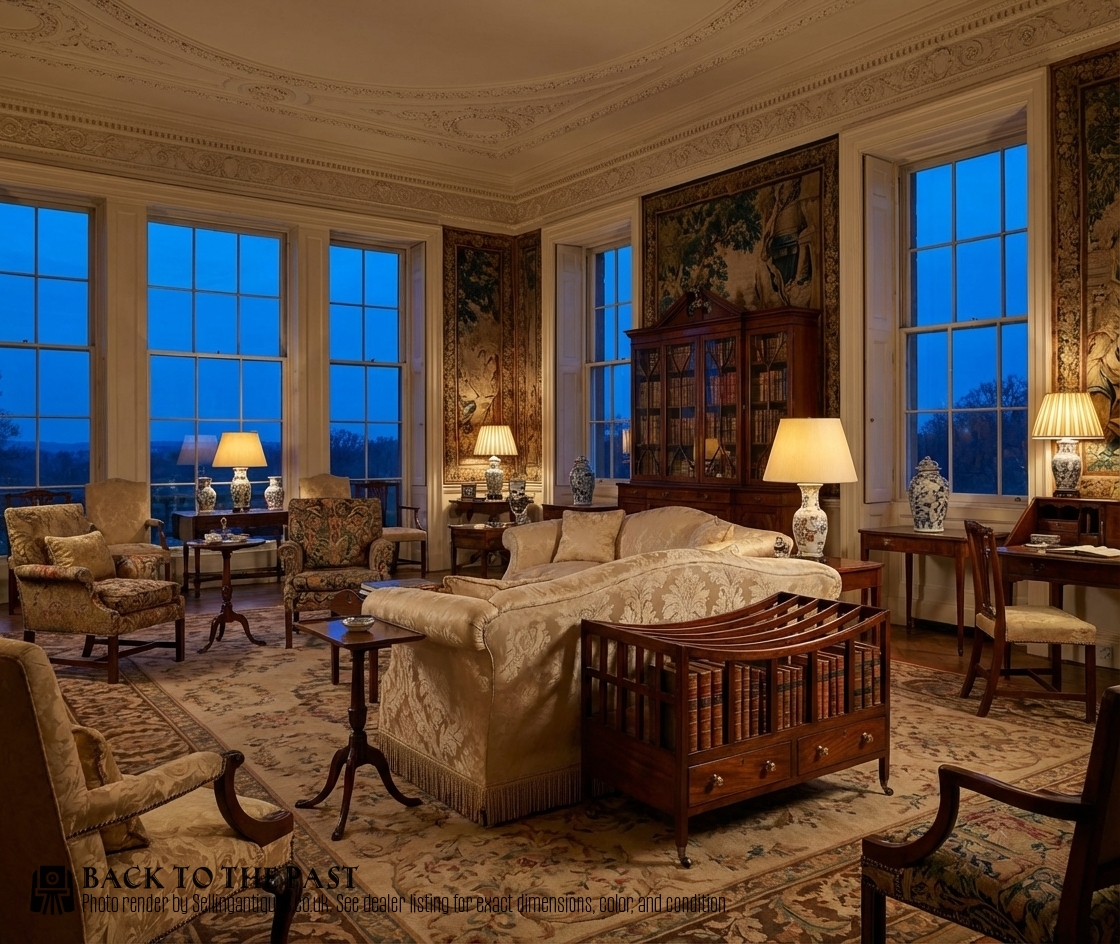
Most surviving examples date from the Georgian through to the Edwardian period. They were traditionally placed beside a piano or music stand in the drawing room.
How were these stands used?
Owners used these racks to keep scores, sheet music, and literary periodicals organised and accessible near household instruments. The vertical divisions kept bound music from slumping.
Many versions also included a small drawer at the base for holding smaller accessories such as tuning keys, manuscript paper, or pencils.
How do I date a mahogany rack?
Dating relies on stylistic details, such as the shape of the upright slats, the presence of reeding, and the overall proportions of the frame. Georgian and Regency pieces often exhibit sharper joinery and specific leg turnings.
Later Victorian and Edwardian iterations tend to show heavier construction methods or different secondary timbers. Comparing the brass fittings also helps establish the period of manufacture.
Can these hold modern magazines?
These racks accommodate standard periodicals and large-format books comfortably within their vertical divisions. The spacing between the slats was originally designed for large sheet music folios.
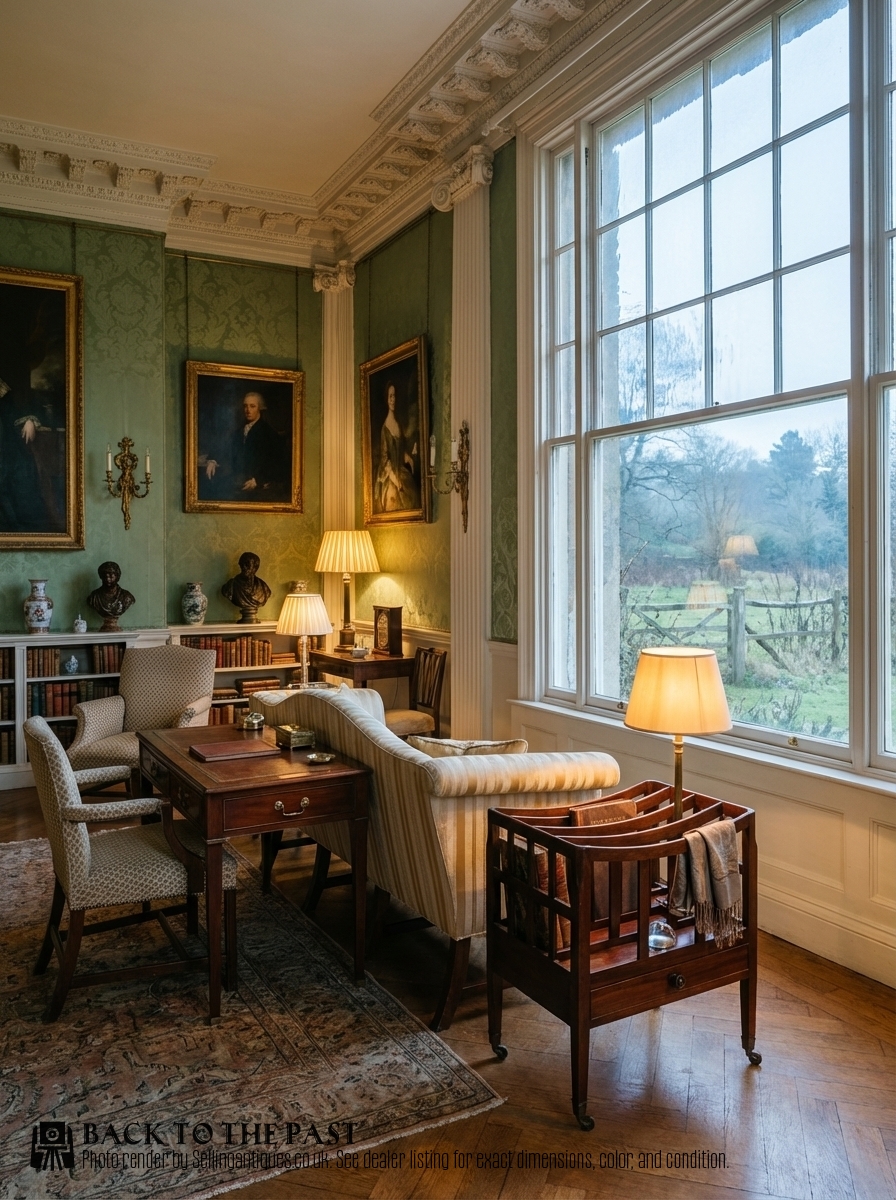
Placing them in a modern room provides practical storage for contemporary journals while maintaining traditional woodwork. The sturdy mahogany construction handles everyday use without difficulty.