
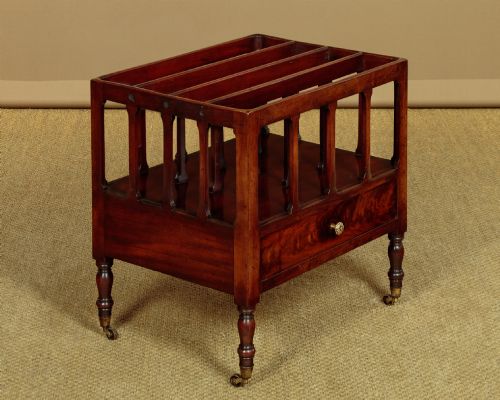
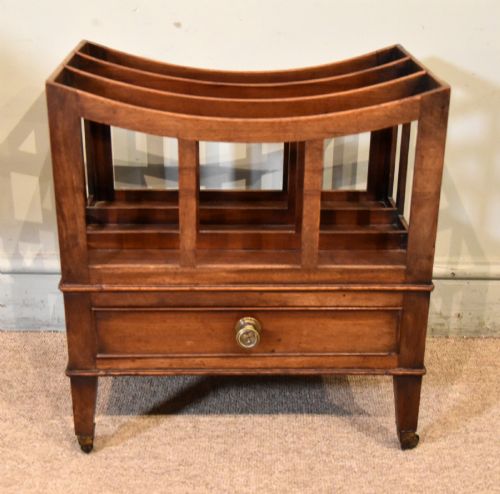
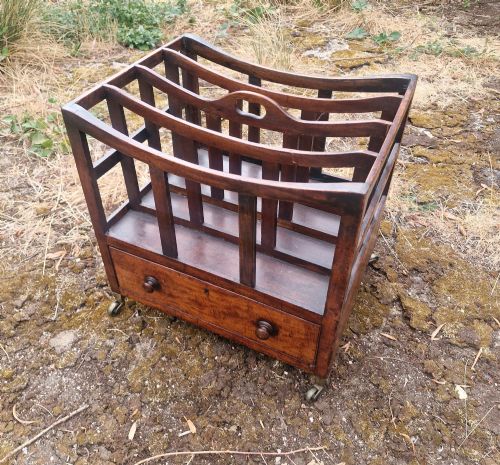
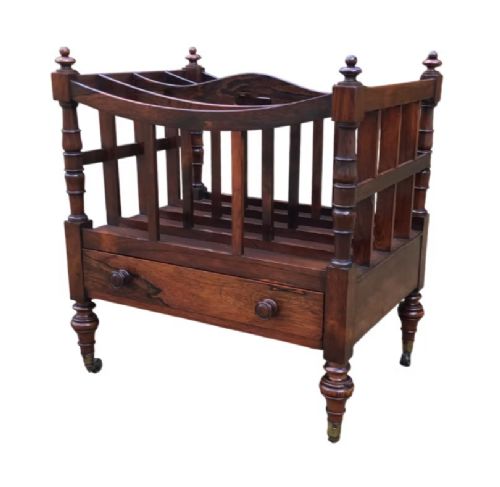
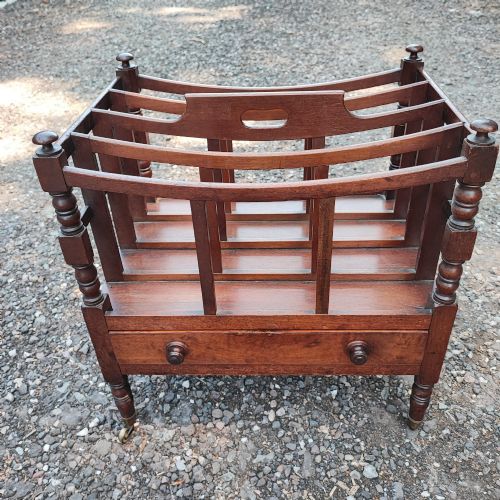
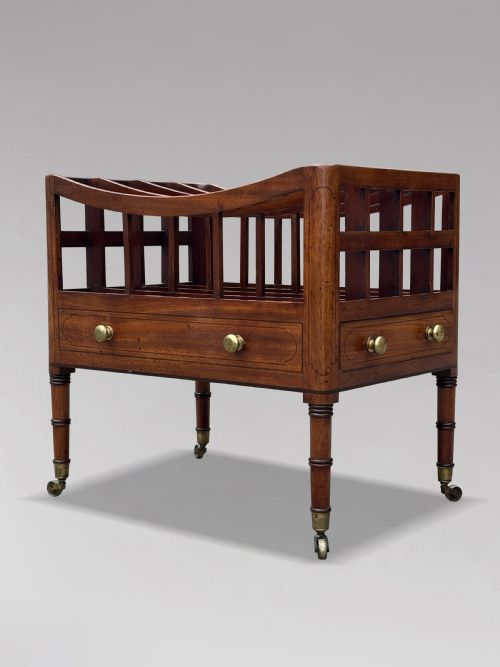
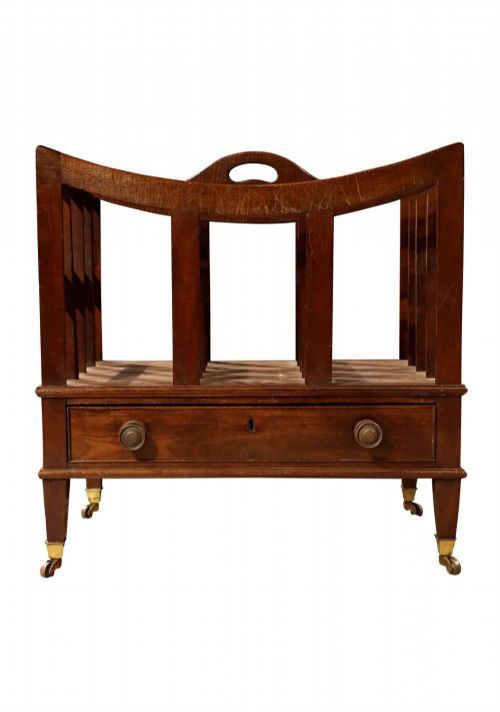


Georgian Mahogany Magazine Stand
A georgian mahogany magazine stand is a practical piece of furniture designed to hold periodicals, sheet music or folios within a room.
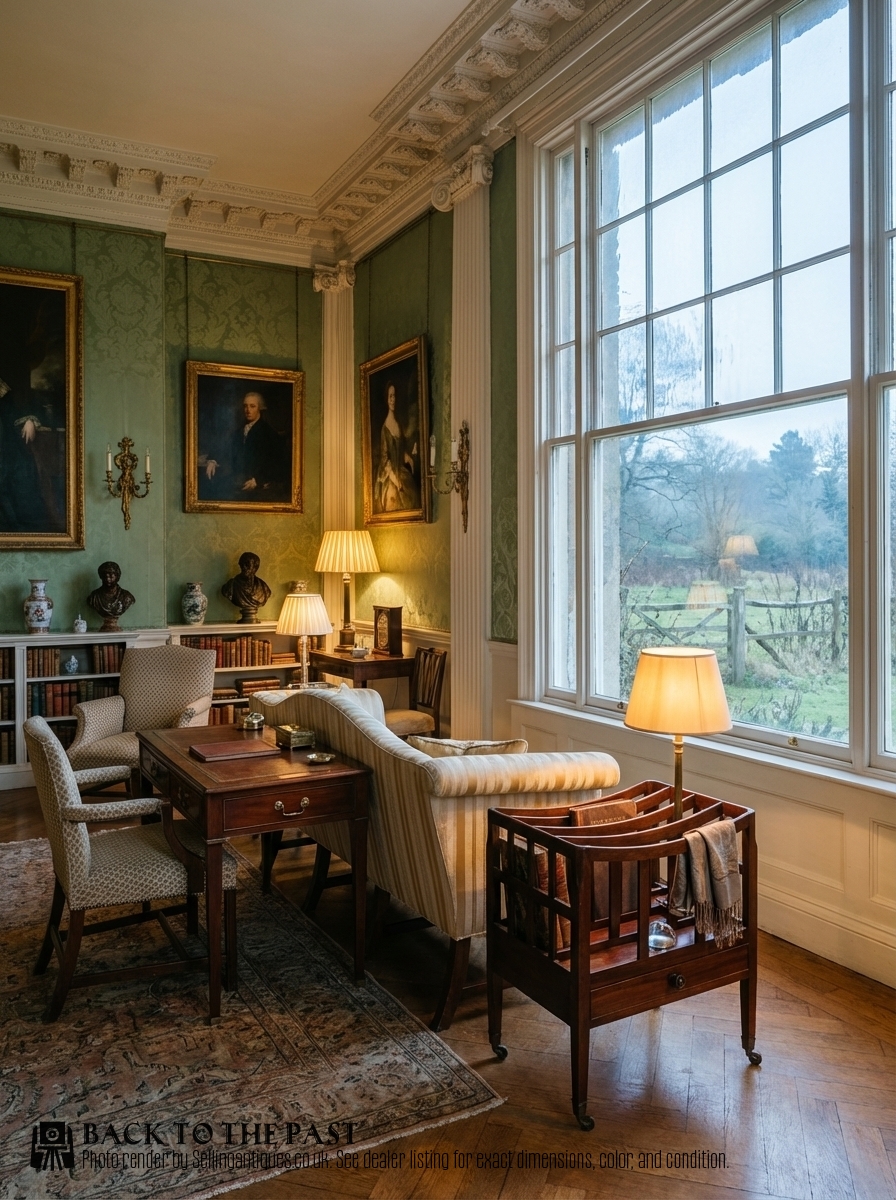
Georgian Mahogany Magazine Stand
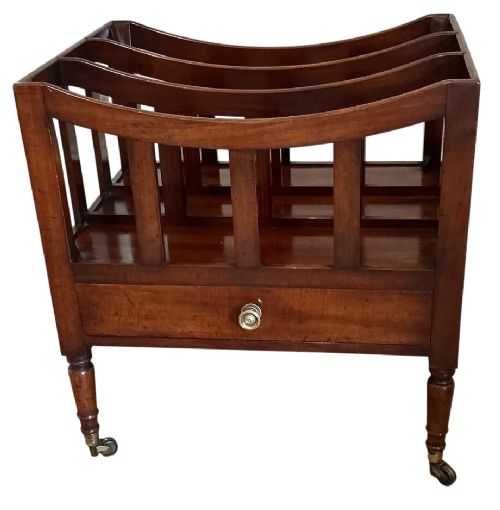
When you search for a georgian mahogany magazine stand, you encounter pieces primarily catalogued as canterburys, folio stands and magazine racks. These items date across the 18th century, Georgian and Regency periods, alongside later Victorian and Edwardian examples.
How they were made
The construction relies heavily on solid mahogany and flame mahogany veneer, chosen for rich grain patterns and durability. Workshops also utilised Cuban mahogany for larger or more substantial frames.
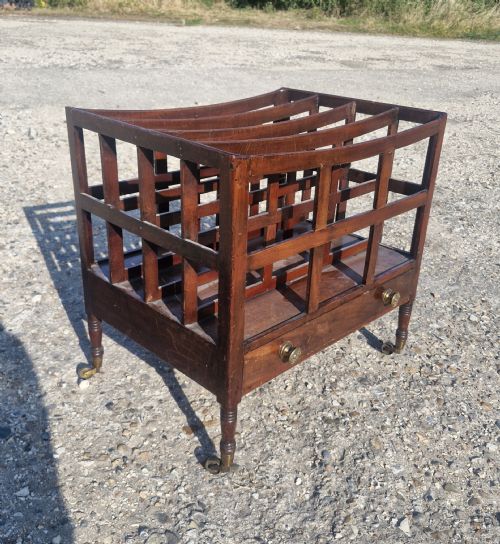
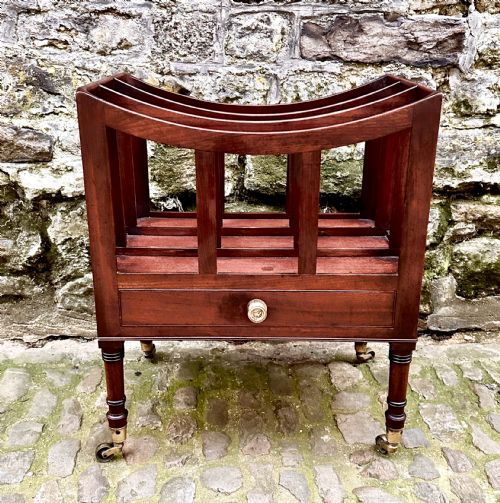
Detailing often includes brass mounts, ebony and boxwood inlay, alongside turned legs fitted with castors for mobility. Pierced scroll divisions and boat-shaped profiles demonstrate the cabinetmaker's skill in shaping the timber.
Several canterburys arrive equipped with original castors, ready to roll across the carpet the moment the morning paper arrives.
What varies in quality
Quality rests on the choice of timber, distinguishing standard mahogany from figured Cuban timber or flame veneer. The crispness of inlay work and the elegance of turned or carved supports also set finer examples apart.
Construction methods define the grade of the piece, from simple open frames to items featuring fitted drawers, fine joinery, and original brass castors.
The Georgian Mahogany Magazine Stand Glossary
- Canterbury
- A low stand with open divisions, used originally for holding music sheets or newspapers. It often includes a small drawer at the base.
- Folio Stand
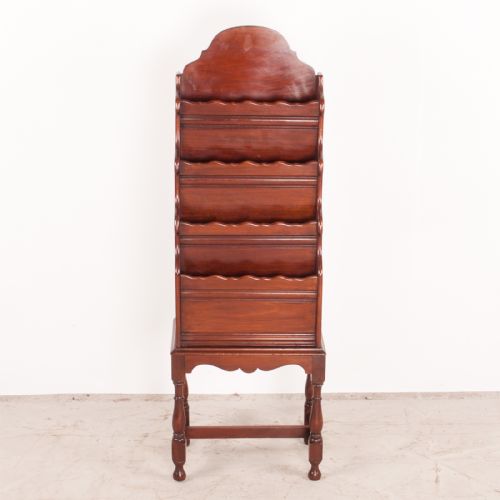
- A larger standing rack designed to store loose prints, drawings or large books. These pieces frequently date from the Georgian and Victorian eras.
- Flame Mahogany Veneer
- A sheet of timber sliced from the fork of the mahogany tree to create a distinctive flame-like pattern. It decorates the exterior surfaces of finer cabinets.
- Inlay
- A technique where contrasting woods such as boxwood and ebony are inserted into depressions in the mahogany surface to form decorative patterns.
Georgian Mahogany Magazine Stand: Frequently Asked Questions
What is a canterbury used for?
A canterbury functions as a small stand for holding newspapers, magazines, and sheets of music within a parlour or sitting room. The divided sections keep periodicals upright and organised near seating areas.
Historically, these stands allowed readers to keep daily journals and music scores close at hand. Today, they serve a similar purpose while functioning as decorative accent furniture.
How do I date a mahogany stand?
Dating relies on stylistic clues such as the presence of Regency boat-shaped frames, George III bracket feet, or Edwardian edgings. Timber selection, such as Cuban mahogany, also points towards specific production eras.
Examining the construction of the drawers and the style of the turned legs helps narrow down the period. Comparing the piece against documented examples from the 18th and 19th centuries provides further clarity.
Are folio stands different from racks?
Folio stands are generally larger pieces built to support oversized books, maps, and unbound art plates. Magazine racks and canterburys are typically scaled for smaller periodicals and daily newspapers.
Both forms utilise upright divisions, but their intended load and overall proportions vary. Folio stands often present a more substantial presence suited for libraries.
Where should I place my stand?
These stands fit well beside armchairs, sofas, or within a study to hold current reading material. Their compact footprint allows them to sit comfortably against walls or near corner tables.
Keeping the wood away from direct heat sources helps preserve the mahogany finish and any delicate veneer work. The mobile nature of pieces with castors permits easy repositioning within the room.