

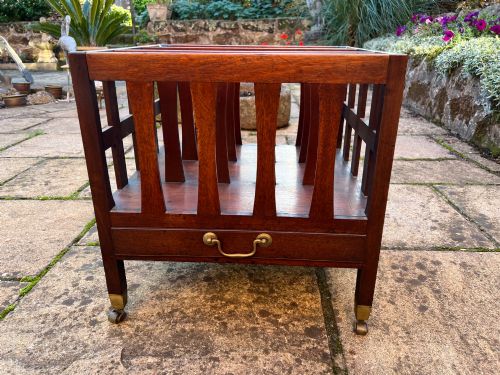
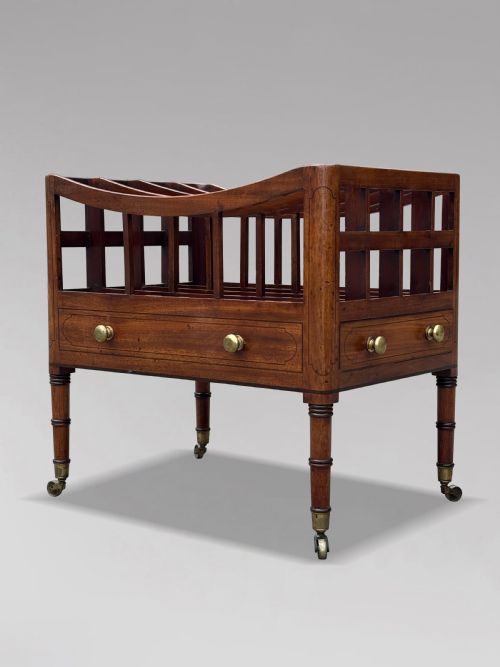


Georgian Slatted Canterbury
These georgian slatted canterbury pieces are timber music and folio stands built to keep sheets near the hearth.
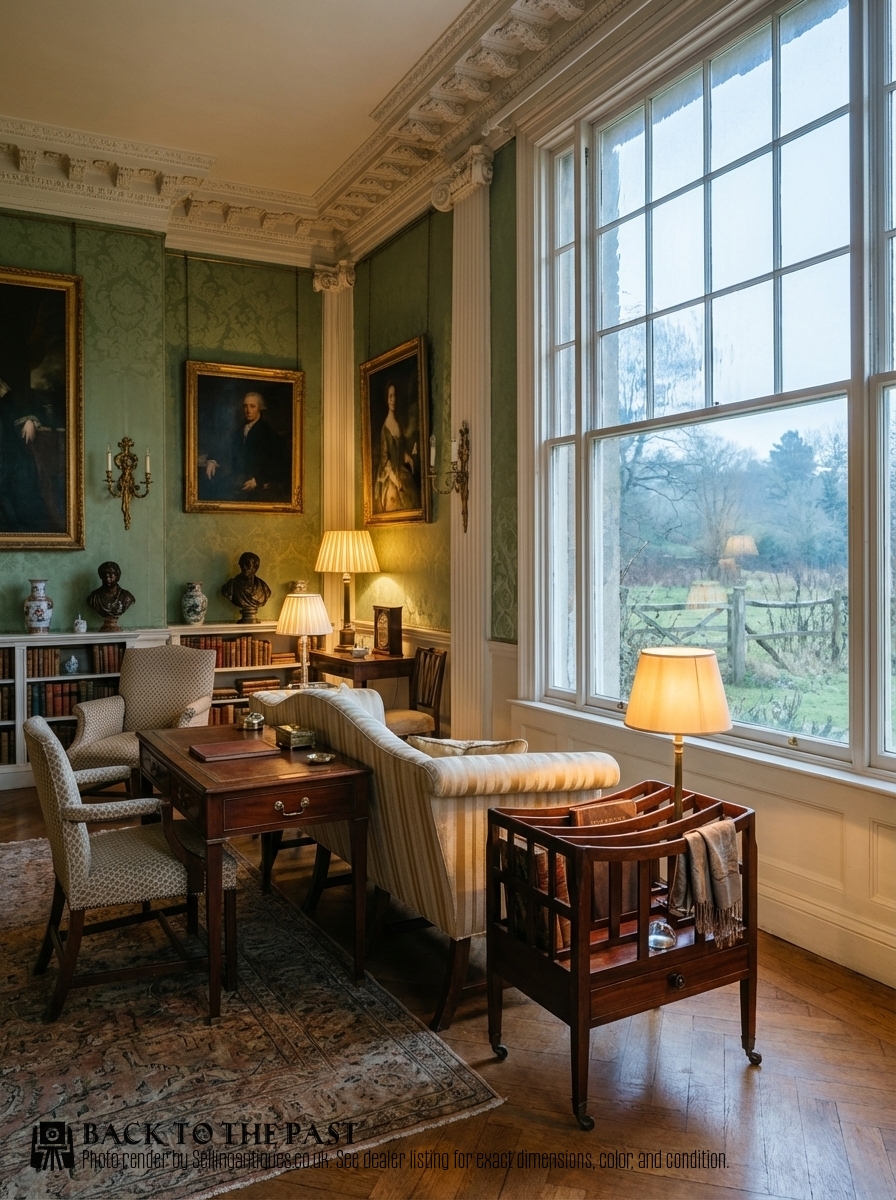
Georgian Slatted Canterbury
A georgian slatted canterbury is a low, compartmentalised stand designed for holding music scores, books and loose folios near a chair or table. The form typically rests on low supports, sometimes fitted with castors to move easily across floorboards.
Most examples found here date from the Georgian, George III, Regency and George IV periods, spanning the late eighteenth century into the early nineteenth. A small number of later items appear, including pieces from the twentieth century.
How they were made
Mahogany serves as the primary timber across these pieces, selected for its strength and rich grain during the Georgian and Regency eras. Cabinet makers shaped the wood into slender vertical slats and sturdy frames to support heavy paper collections without sagging.
Brass fittings frequently appear on the feet and castors, providing both structural reinforcement and rolling mobility. Joinery methods of the period relied on precise framing to secure the open partitions.
Georgian Slatted Canterbury Retail Price Guide 2026
Typical asking prices for georgian slatted canterbury among the pieces listed under this phrase on Sellingantiques today, from the lower quarter to the upper quarter. They describe what is for sale here now, not the wider market.
Listings feature mahogany throughout, spanning the Georgian, Regency, and George IV eras alongside occasional twentieth-century examples.
What varies in quality
Quality rests in the crispness of the slatted divisions and the finesse of the timber grain selected for the frame. Finer examples display careful proportioning in the boat-shaped bodies and well-turned supports.
The presence of an integrated drawer or refined brass castors elevates the status of a piece. Finer items reflect the distinct hand of cabinet makers working within George III and Regency stylistic traditions.
The Georgian Slatted Canterbury Glossary
- Canterbury
- A low stand with vertical divisions used for holding music and folios. The name derives from an archbishop who reportedly ordered the first such stand.
- Slatted
- Constructed with narrow strips of timber arranged vertically to form open partitions. This allows papers to remain visible and accessible from the side.
- George III
- The period spanning the long reign of the third king, associated with refined cabinet work in mahogany. Pieces from this era often feature restrained classical lines.
- Regency
- The stylistic period following the Prince Regent's accession, marked by bolder forms such as boat-shaped bodies. Brass accents and curved outlines are typical.
- Boat-shaped
- A curved hull-like profile utilised for the main body of certain stands. This configuration softens the rectangular rigidity of standard partition boxes.
Georgian Slatted Canterbury: Frequently Asked Questions
What is a georgian slatted canterbury used for?
These stands were originally built to hold sheet music, folios and books close to a piano or seating area. They keep papers upright and sorted into sections for quick retrieval.
Today, they function well beside a sofa or desk to hold magazines, newspapers and modern journals while maintaining period character in a room.
How do I date a mahogany canterbury?
Dating relies on examining the timber choice, construction methods and stylistic markers such as turned legs or brass castors. George III examples often show lighter framing and precise joinery.
Later nineteenth-century and twentieth-century interpretations may replicate these forms using heavier proportions or different internal bracing methods.
Did all canterburys have drawers?
No, many versions consist solely of open slatted divisions mounted on legs or castors. Those with a drawer typically feature a shallow compartment positioned beneath the main rack.
The drawer provided extra space for smaller items like manuscript pens, small books or loose notes.
How do I care for antique mahogany?
Mahogany requires stable indoor humidity and protection from direct sunlight to prevent the timber from drying out or fading. Gentle dusting with a soft cloth preserves the polished surface.
Avoid placing damp items directly onto the wood, as moisture can mark the historic polish over time.