



Slanted Top Davenport Desk
A slanted top davenport desk packs a compact writing surface and steady storage into a singular, timber-heavy footprint.
Slanted Top Davenport Desk
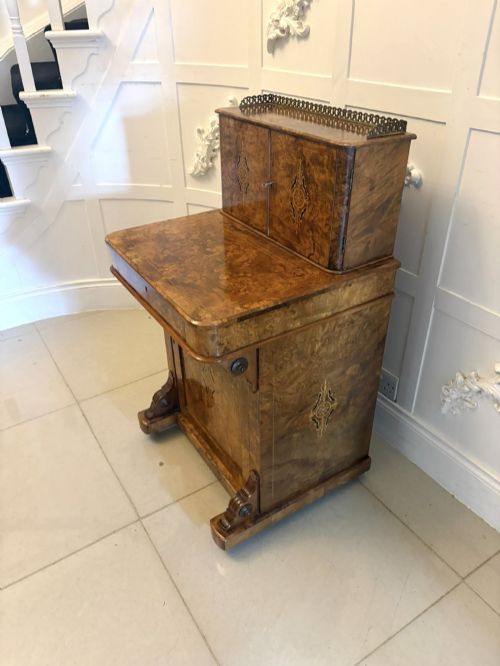
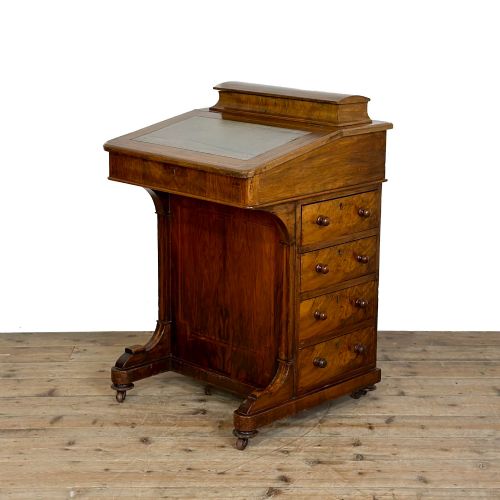
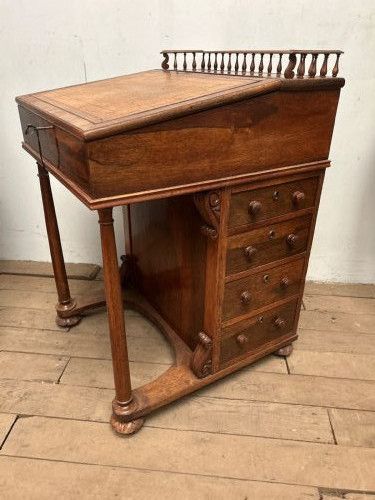
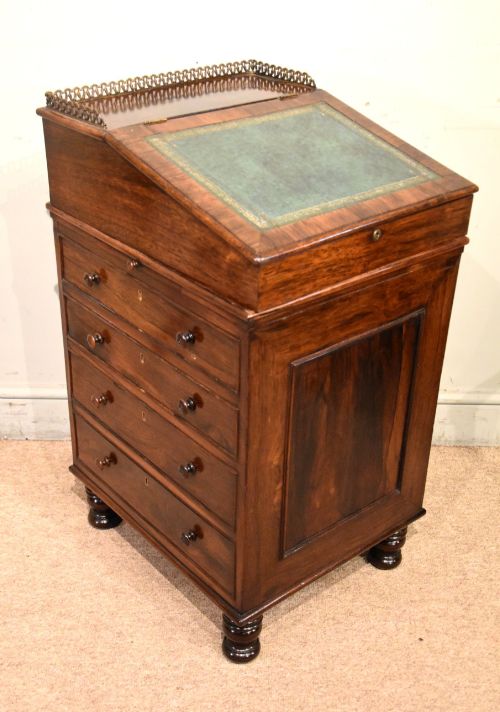
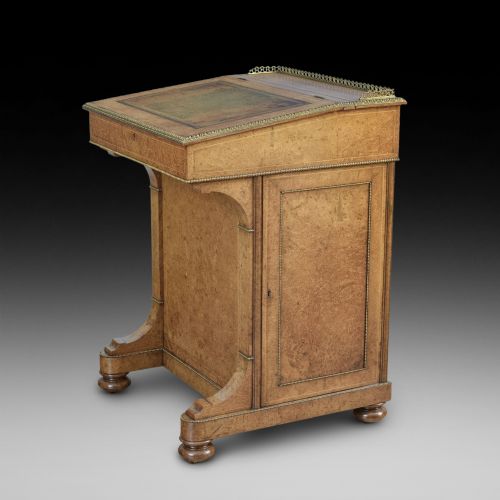
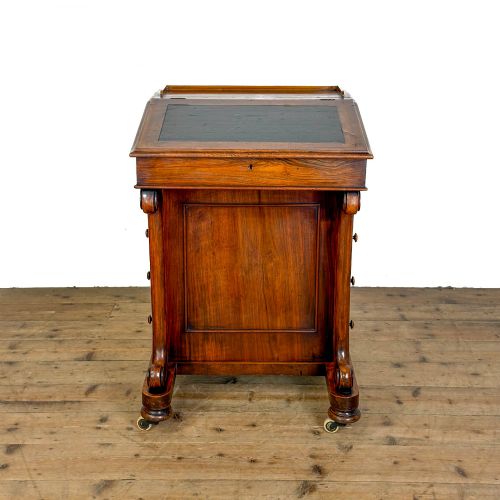
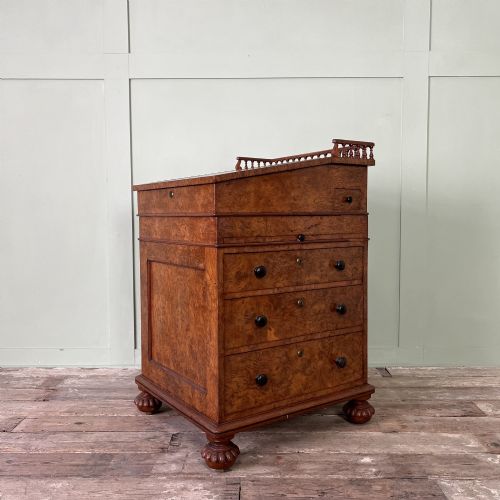
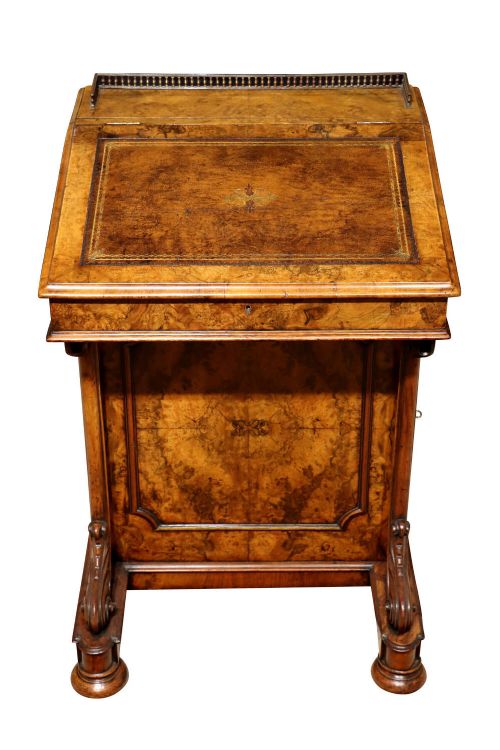
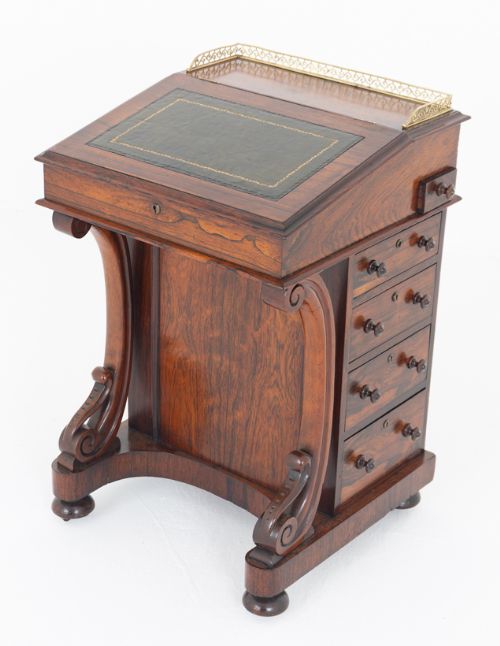
A slanted top davenport desk is a compact writing cabinet featuring an angled writing slope above a pedestal of drawers. These pieces emerge primarily across the Georgian, Regency, William IV, and Victorian periods, remaining a staple of nineteenth-century domestic stationery.
The versions met most frequently on this page are Victorian and nineteenth-century examples executed in burr walnut, mahogany, or rosewood. They combine a sloping leather-lined writing surface with functional side drawers and stationary compartments.
Makers adapted the fundamental form across decades, resulting in variations from early Georgian and Regency pieces through to later Sheraton Revival and Edwardian iterations. The structural intent remains consistent: a small footprint delivering dedicated writing storage.
Woods and Construction Methods
Cabinet makers utilised dense native and exotic timbers, framing carcasses in mahogany, oak, or walnut before applying figured veneers such as burr walnut, amboyna, and rosewood. Solid brass fittings, handles, and occasional brass mounting secure the moving components and drawers.
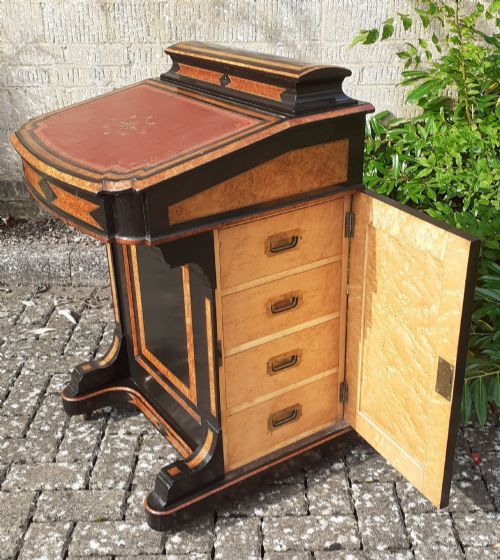
Writing slopes integrate inset panels of tooled leather to provide a suitable writing texture. Interiors frequently house satinwood drawer arrangements, while exterior surfaces display crossbanding, floral marquetry, and carved details.
Current listings feature pieces spanning the Georgian, Regency, William IV, and Victorian periods, constructed in rosewood, mahogany, walnut, oak, amboyna, and olivewood.
Distinctions in Execution
Quality rests on the selection of timber figures, such as highly figured burr walnut or rich flame mahogany, matched with precise crossbanding and marquetry inlay. Superior examples display refined internal satinwood fittings and integrated sliding top mechanisms rather than fixed surfaces.
Gillow & Co·Gillows
The Slanted Top Davenport Desk Glossary
- Crossbanding
- A border technique where thin strips of veneer are laid perpendicular to the grain of the primary surface. This frames panels of burr walnut or mahogany on the desk lid.
- Marquetry
- The art of forming decorative patterns using fitted pieces of coloured wood veneer. Floral marquetry is frequently found on Victorian walnut desk lids.
- Satinwood
- A pale, durable exotic hardwood utilised for contrasting interior drawer linings and small compartments. It provides a bright visual offset to darker exterior timbers.
- Pollard Oak
- Timber harvested from pollarded trees, exhibiting dense, knotty growth rings. This figured wood creates distinctive mottled surfaces on nineteenth-century desks.
- Sliding Top
- A mechanism allowing the upper writing slope to advance forward independently of the pedestal. This modification grants improved legroom while seated.
Slanted Top Davenport Desk: Frequently Asked Questions
What is a davenport desk?
A davenport desk is a small writing cabinet featuring a sloping lid above a pedestal of drawers. It was designed to occupy minimal floor space while providing secure storage for stationery.
First appearing in the late eighteenth century, the form gained popularity throughout the Victorian era as a lady's writing desk or a compact study piece.
How do I date a davenport?
Dating relies on observing timber choices, hardware, and decorative styles across different periods. Regency and Georgian examples tend to use rosewood or mahogany with restrained brass mounts.
Victorian pieces frequently showcase burr walnut, amboyna, or elaborate marquetry inlay, sometimes incorporating mechanical sliding tops and side drawers.
Where were they used?
These desks served in private parlours, bedrooms, and studies where a full-sized partner desk would prove too large. Their compact proportions suited domestic writing and correspondence.
Many examples include interior compartments for inkwells and pens, keeping writing materials contained within the cabinet when not in use.
How do I maintain the leather slope?
The leather writing surface benefits from occasional cleaning and conditioning to prevent drying and cracking. Avoid using harsh chemical solvents on the surrounding timber veneer.
Keeping the desk away from direct sunlight and steady heat sources preserves both the leather insert and the polished wood finish.