





Victorian Burr Walnut Davenport
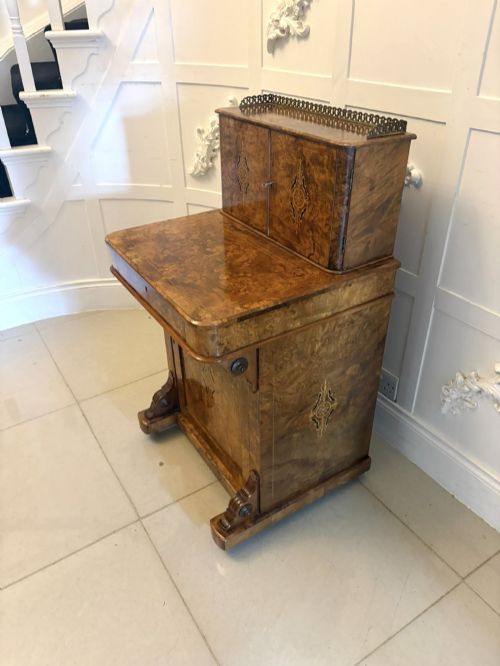
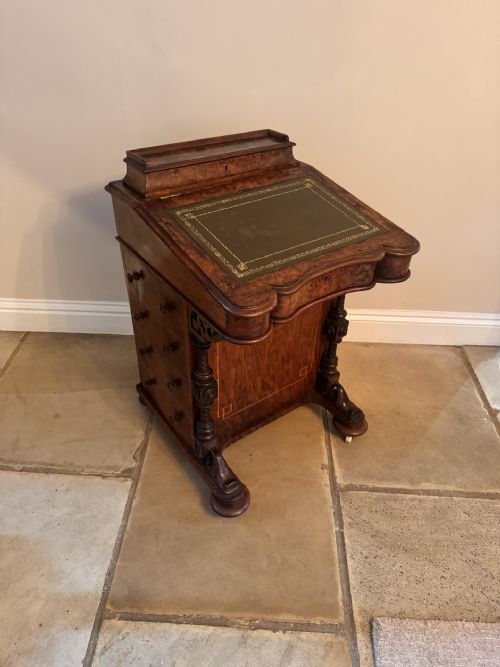
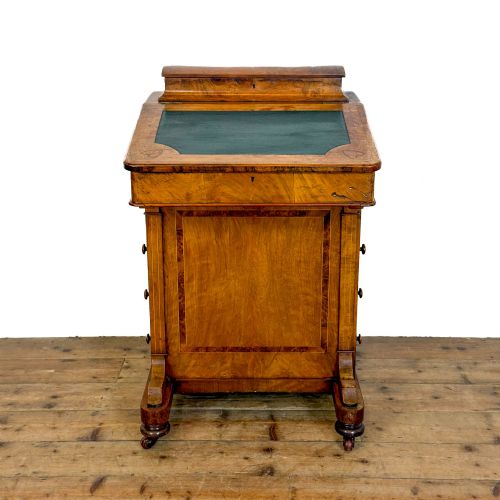
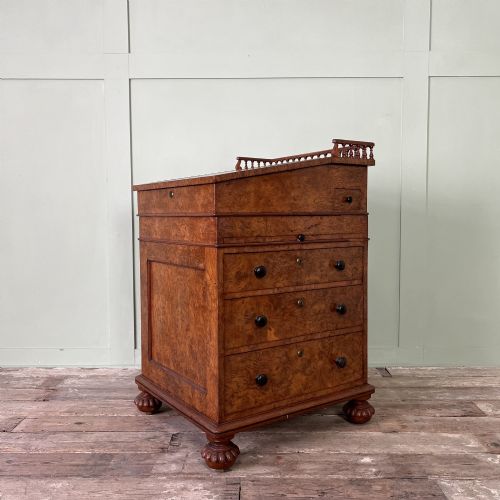
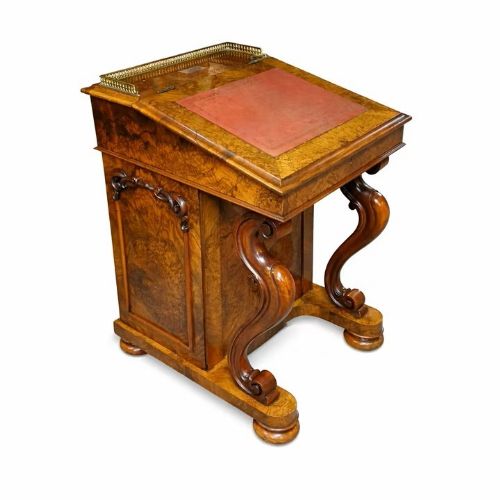
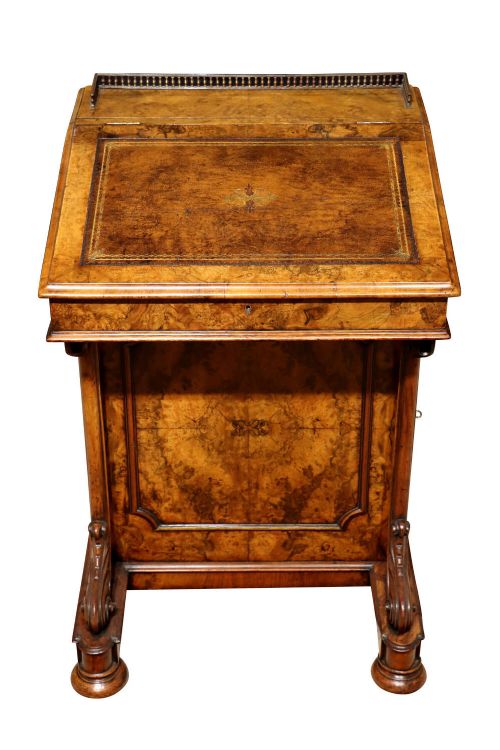
A victorian burr walnut davenport offers a compact writing station wrapped in richly patterned timber, combining a sloped desk with hidden drawers.

Victorian Burr Walnut Davenport
A victorian burr walnut davenport is a small desk designed primarily for correspondence, housing a sloping writing surface above a pedestal of drawers. These pieces date predominantly from the mid-nineteenth century, appearing in forms such as standard static pedestals, pop-up mechanisms, and piano top configurations.
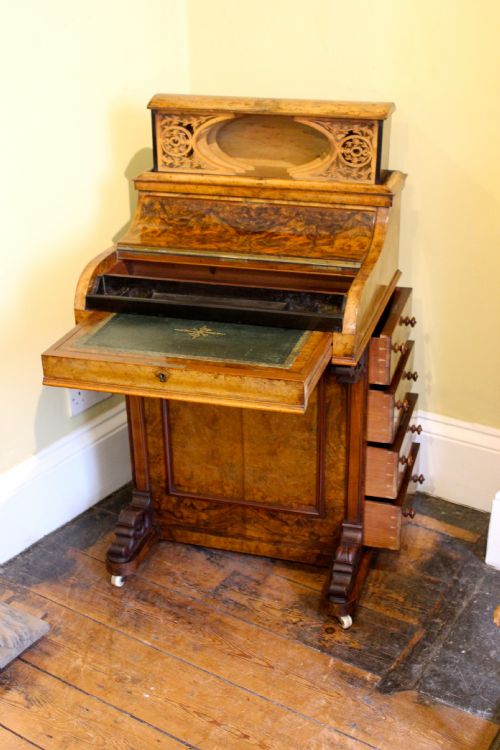
The version most commonly met on this page is the Victorian model featuring a slant-lid desk, a leather writing insert, and a bank of drawers accessed from the side. Many examples incorporate a stationary compartment or superstructure on top, balancing compact dimensions with substantial internal storage.
Materials and construction
Cabinetmakers used walnut and burr walnut veneers applied over solid secondary woods, selecting burr timber for its swirling, highly figured grain patterns on the primary exterior surfaces. Boxwood inlay, marquetry, and satinwood accents often decorate the panels and interiors.
Structural elements integrate brass hardware, leather writing surfaces, and secret compartments, while advanced mechanical variants utilise spring-loaded pop-up stationery boxes.
Secret compartments hidden inside pop-up stationery boxes were designed to guard private letters from curious house guests.
Gradations in quality
Quality rests in the intensity and matching of the burr walnut veneer across the exterior surfaces, alongside the precision of the boxwood inlay and marquetry. Superior examples display continuous grain matching across the drawers and fall-front panels.
Internal secondary timbers, the complexity of internal stationery fittings, and the smoothness of operating mechanisms like pop-up superstructures distinguish standard production items from master cabinetmaker productions.
Gillow and Co
The Victorian Burr Walnut Davenport Glossary
- Burr walnut
- A veneer sliced from the gnarled growths of a walnut tree, prized for its intricate and chaotic grain patterns.
- Pop-up
- A mechanical desk variant where opening the writing lid lifts an internal stationery compartment into view.
- Marquetry
- Decorative patterns formed by fitting small pieces of veneer into a fitted ground of wood.
- Pedestal desk
- A writing table supported by one or two banks of drawers rather than four independent legs.
- Satinwood
- A pale, hard wood utilised for contrasting interior drawers and stringing lines.
Victorian Burr Walnut Davenport: Frequently Asked Questions
What is a davenport desk used for?
These pieces served as compact writing desks in Victorian sitting rooms and boudoirs, providing a dedicated space for correspondence.
They held stationery, inkwells, and writing paper within their upper compartments while keeping active letters inside the sloping desk.
How do pop-up davenports work?
Pop-up mechanisms utilise a series of internal springs and levers linked to the main writing slope.
Lifting or sliding the top section automatically raises the hidden stationery box from inside the body of the desk.
How do I identify a Victorian piece?
Victorian examples date from the mid to late nineteenth century, identified by timber selection, construction methods, and hardware styles.
Burr walnut veneers combined with satinwood interiors and brass-handled drawers point directly to this manufacturing era.