



Mid Victorian Davenport
These mid victorian davenport pieces bring compact, beautifully figured writing desks and ceramic sauce tureens into the home.
Mid Victorian Davenport
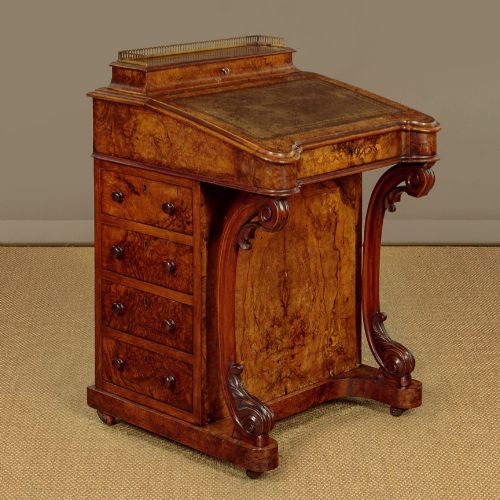
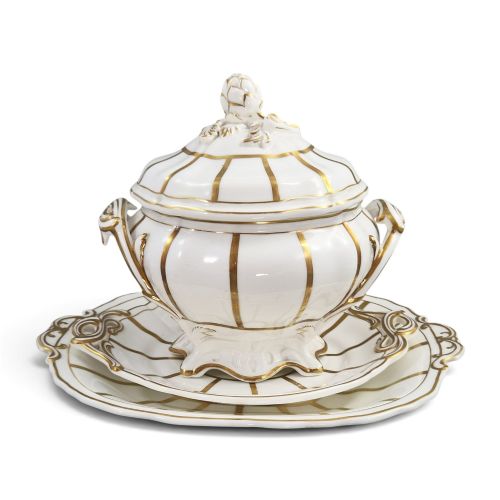
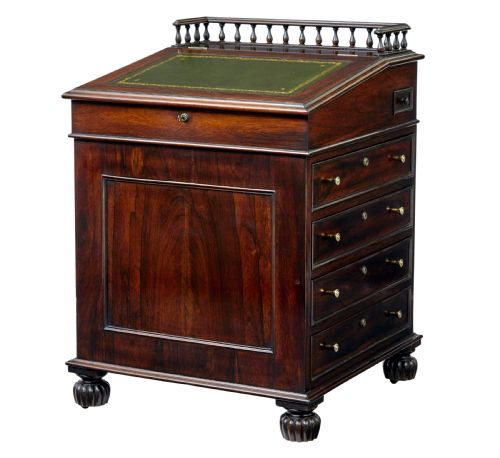
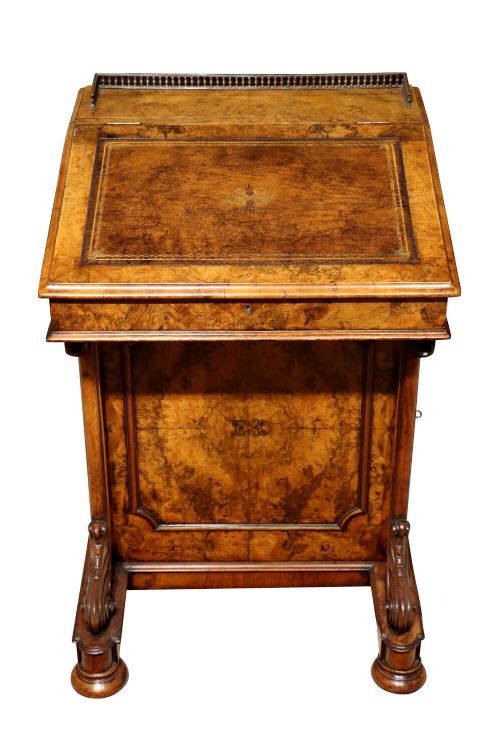
A mid victorian davenport typically appears as a compact writing desk or a bone china sauce tureen set from the nineteenth century. The desks form the majority of the pieces on this page, offering clever storage alongside a sloped writing surface.
Most examples date from around eighteen-sixty, sitting firmly within the Victorian period. Buyers encounter variations in timber and form, ranging from standard writing desks to piano top versions.
How they were made
Cabinet makers utilised choice timbers such as burr walnut, mahogany, pollard oak, burr elm, and satinwood to construct the desks. These woods were chosen for their striking grain patterns, often complemented by satinwood interiors.
Metal components like brass hardware provide structural and decorative accents, while ceramic pieces utilise bone china adorned with gold leaf and specific painted patterns.
Mid Victorian Davenport Retail Price Guide 2026
Typical asking prices for mid victorian davenport among the pieces listed under this phrase on Sellingantiques today, from the lower quarter to the upper quarter. They describe what is for sale here now, not the wider market.
Materials recorded across the current selection include burr walnut, mahogany, pollard oak, burr elm, satinwood, leather, brass, and bone china.
What varies in quality
The choice and figure of the timber dictate much of the visual appeal, with richly figured burr walnut and exhibition quality craftsmanship standing apart from simpler constructions. The complexity of the interior fittings and secondary woods also mark out superior examples.
Ceramic pieces rely on the precision of the pattern work and the quality of the bone china body. Superior specimens display crisp gilding and well-preserved painted details that remain intact across the tureen set.
The Mid Victorian Davenport Glossary
- Davenport
- A compact form of nineteenth century writing desk featuring a sloping top and drawers to the side. It provides a practical writing surface without occupying excessive floor space.
- Burr Walnut
- A timber highly prized for its swirling, mottled grain patterns created by growths on the walnut tree. Cabinet makers used veneers of this wood on prominent exterior surfaces.
- Sauce Tureen
- A small ceramic serving vessel with a lid and fixed or attached undertray, designed for holding table sauces. Bone china versions feature painted motifs and gilding.
- Satinwood
- A luminous, fine-grained hardwood with a golden yellow sheen, frequently utilised for internal drawers and pigeonholes within larger desks.
- Piano Top Davenport
- A specialised desk variant where the top slides forward to reveal an inner writing compartment, reminiscent of a keyboard lid.
Mid Victorian Davenport: Frequently Asked Questions
What is a davenport desk used for?
A davenport serves as a compact writing station with a sloping surface for correspondence and paperwork. Side drawers provide built-in storage for stationery and ink.
Historically placed in reception rooms or parlours, these desks offered a private place to write letters without requiring a massive library table.
How do I date a mid Victorian piece?
Dating relies on stylistic markers, timber choices, and construction methods characteristic of the nineteenth century. Pieces from this era often feature rich burr veneers and specific cabinet-making traits.
Reference marks like pattern numbers on ceramics or construction hallmarks on furniture help narrow the period down to the mid Victorian years.
Where were davenports placed in a home?
These pieces suited smaller drawing rooms, boudoirs, and private studies where floor space was at a premium. Their finished backs meant they could sit away from a wall.
Owners appreciated the combination of a functional desk footprint and integrated storage that kept writing materials neatly tucked away.
What makes burr walnut different from regular walnut?
Burr walnut comes from a tree growth that produces intricate, swirling grain patterns rather than straight lines. Craftsmen sliced this wood into thin veneers for decorative effect.
Regular walnut has a more uniform, linear grain, whereas burr walnut creates highly individual, highly figured decorative surfaces on nineteenth century furniture.