





Leather Top Writing Slope
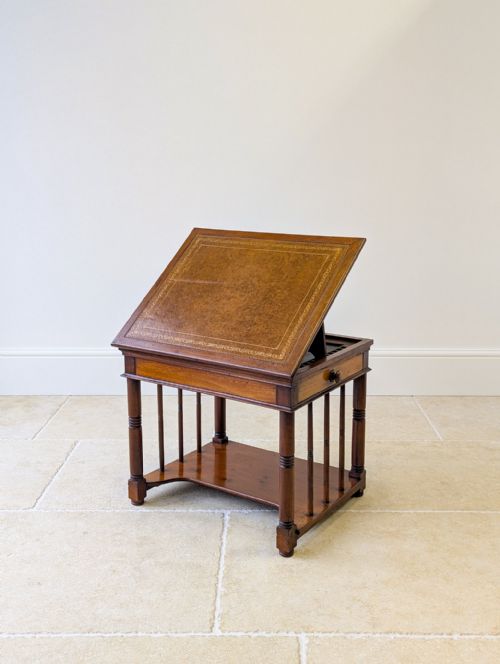
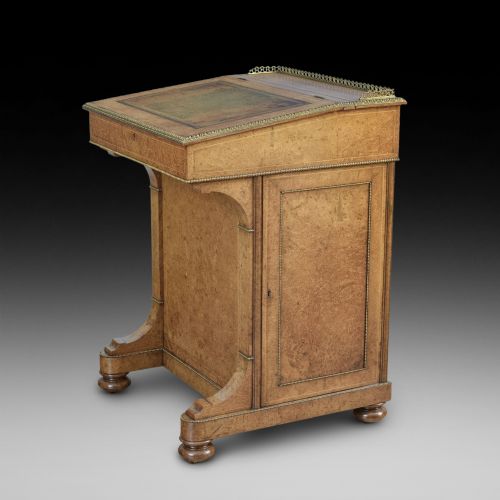
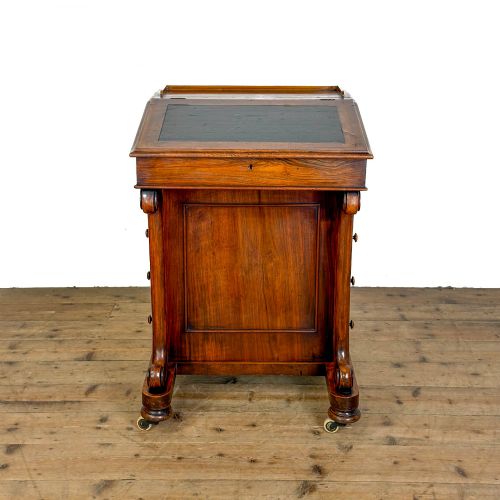
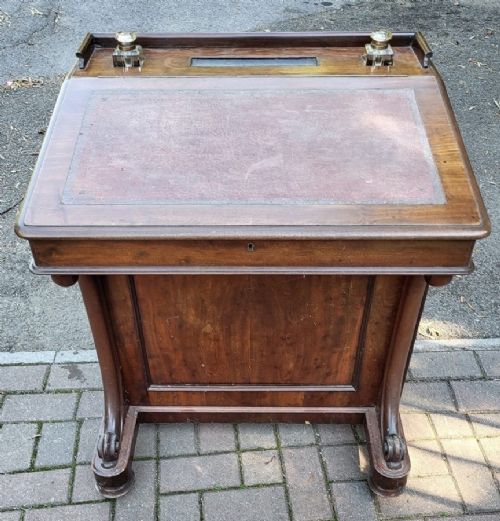
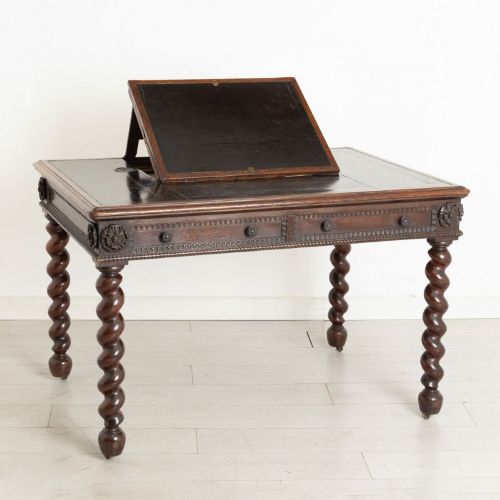
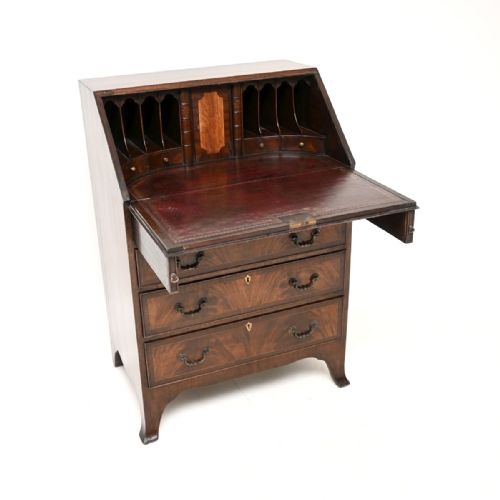
A leather top writing slope offers a dedicated surface for correspondence, most commonly met here as a Victorian or Regency desk.

Leather Top Writing Slope
When you search for a leather top writing slope, you encounter compact writing boxes, Davenport desks, and larger pedestal formats designed for home and office correspondence. These pieces appear predominantly in Victorian and Regency styles, ranging from Georgian beginnings to Edwardian interpretations.
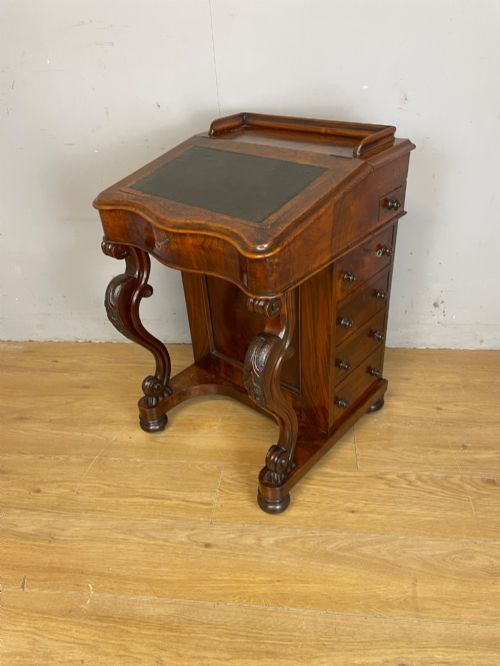
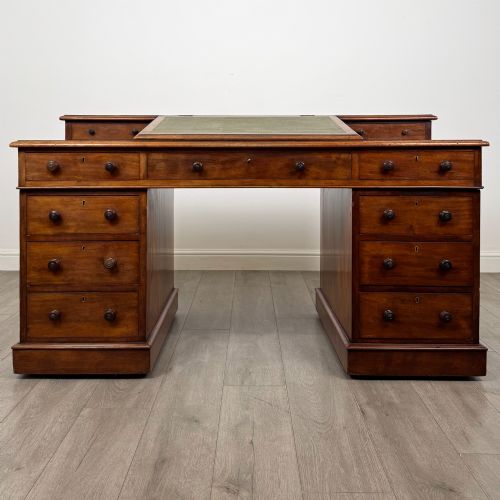
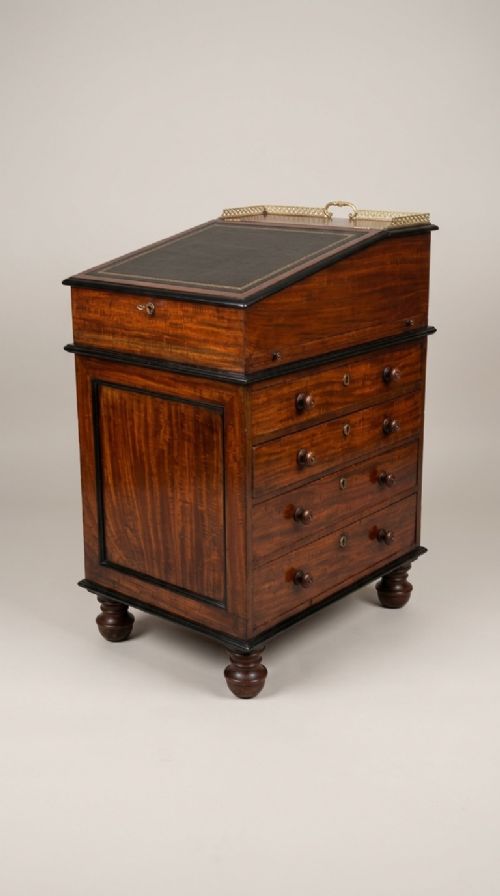
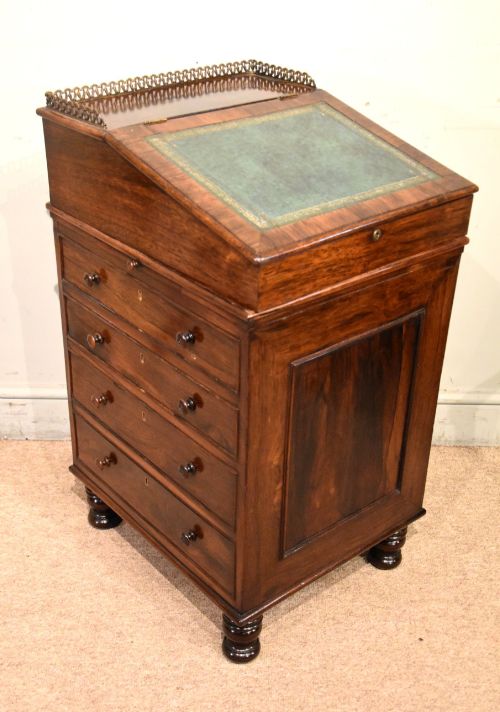
The most frequent form on this page is the Davenport desk, constructed with a sloping lid inset with leather and a bank of side drawers. Alongside these, you find Dickens desks, library reading tables, and architectural desks in oak, mahogany, and walnut.
Origins trace across the nineteenth century, including specific dates such as eighteen-fifty and eighteen-eighty, reflecting cabinet-making traditions from Georgian periods through to the late Victorian era.

Materials and construction methods
Cabinet makers utilised dense hardwoods including mahogany, burr walnut, rosewood, and oak as the structural carcase for these writing surfaces. Satinwood often appears in interior compartments, while brass mounts and inlay add decorative detail.
Writing surfaces are typically inset with leather, providing a smooth texture for pen and paper. Secondary timbers and brass hardware secure the drawers and internal stationery fittings.
Leather Top Writing Slope Retail Price Guide 2026
Typical asking prices for leather top writing slope among the pieces listed under this phrase on Sellingantiques today, from the lower quarter to the upper quarter. They describe what is for sale here now, not the wider market.
Listings feature oak, mahogany, rosewood, walnut, burr walnut, satinwood, and pollard oak across Victorian and Regency periods.
Evaluating craftsmanship and materials
Quality separates pieces through the selection of figured veneers, such as burr walnut or pollard oak, and the precision of cabinet joinery. Superior examples demonstrate refined proportions and meticulous wood selection across all visible surfaces.
The execution of secondary details, including inlaid satinwood interiors and brass mounts, dictates the grade of the desk. Finer workshops invested greater labour in internal fittings and drawer construction.
Gillows of Lancaster·Simpsons of Kendall
The Leather Top Writing Slope Glossary
- Davenport desk
- A compact Victorian form featuring a sloping writing surface above a pedestal of drawers. The design became a staple of nineteenth-century sitting rooms.
- Dickens desk
- A double-sided partner desk featuring sloped writing surfaces and a central well with a stationery gallery. These provide generous workspace for multiple users.
- Burr walnut
- A highly figured timber harvested from walnut tree growths, prized for swirling grain patterns. Cabinet makers utilised it extensively on nineteenth-century desk facades.
- Crossbanding
- A decorative border technique where veneer strips are laid perpendicular to the primary grain. This frames the edges of desk lids and tabletops.
- Pedestal desk
- A heavy freestanding desk supported by two banks of drawers. They offer expansive storage beneath the leather writing plane.
Leather Top Writing Slope: Frequently Asked Questions
What is a leather top writing slope?
A leather top writing slope is a compact or freestanding desk featuring an angled writing plane inset with leather. These pieces were designed for comfortable letter writing and document storage.
They appear primarily in Victorian and Regency forms, utilising dense hardwoods like mahogany and walnut.
How were these desks used originally?
These desks served as private writing stations for correspondence, accounting, and record keeping in homes and offices. The sloped surface provided an ergonomic angle for handwriting before the widespread use of typewriters.
Many incorporate internal compartments for inkwells, quails, and stationery.
How do I date a writing slope?
Dating relies on stylistic markers, timber choices, and construction techniques associated with periods like the Georgian, Regency, and Victorian eras. Mahogany and rosewood dominate earlier pieces, while burr walnut and ebonised details frequently mark mid to late nineteenth-century examples.
Maker signatures or stamps, when present, provide more precise chronological placement.
Where should I place a Davenport in a modern room?
A Davenport desk works effectively as a freestanding accent piece or writing station in a study, bedroom, or living room. Because they are finished on multiple sides, many models can float away from walls.
Their compact footprint makes them suitable for smaller interior spaces.