

Victorian Furniture Desk
These Victorian furniture desk pieces bring nineteenth-century workspace design into rooms through pedestals, kneeholes, and writing tables built in mahogany, walnut, and oak.
Victorian Furniture Desk
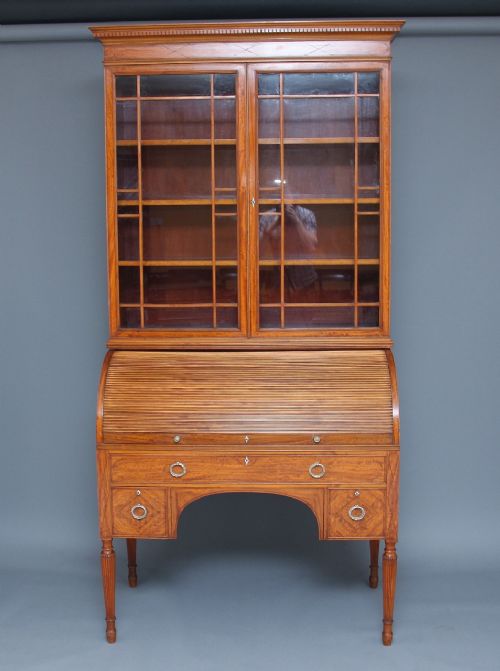
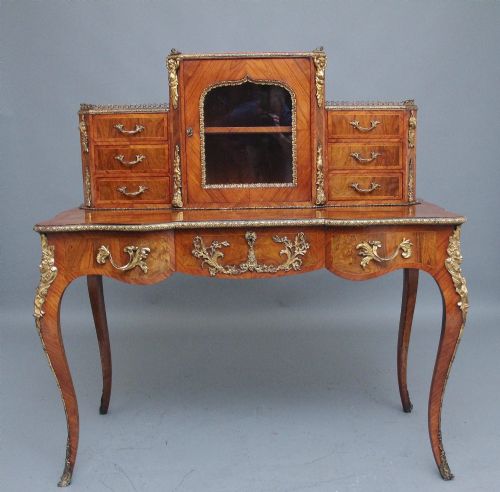
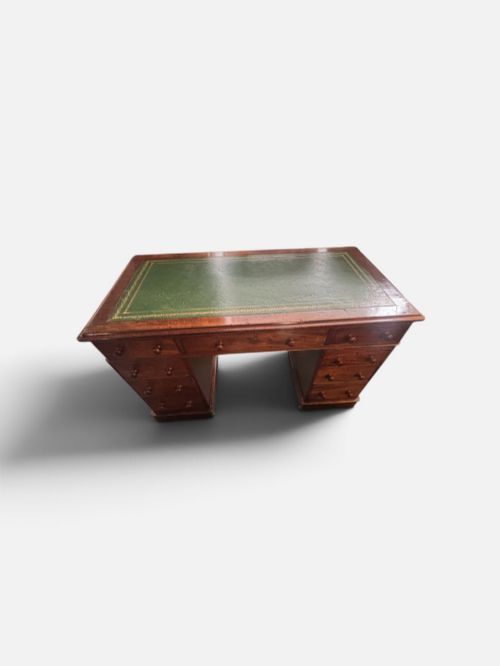
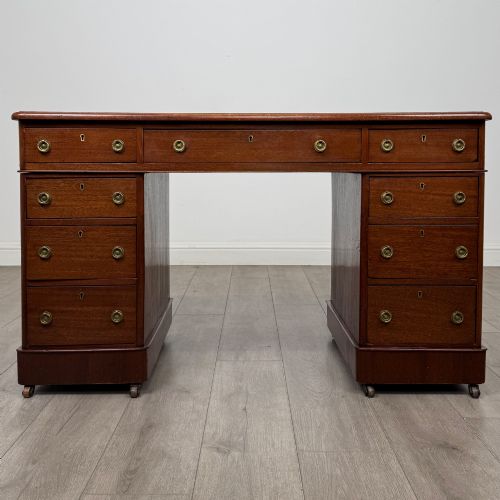
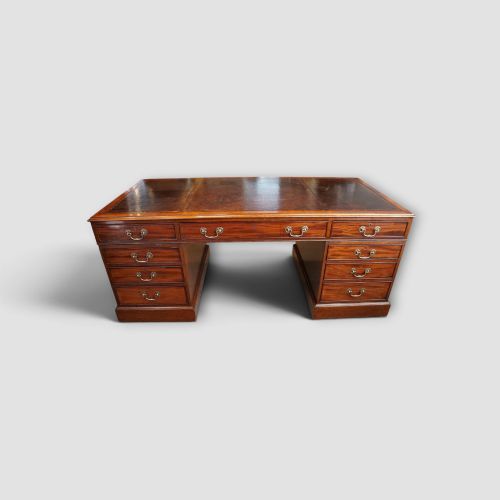
When you search for a victorian furniture desk, you encounter a range of workspace forms spanning the nineteenth century, from pedestal desks and kneeholes to writing tables and secretaire chests. The selection includes partners desks designed for two users, compact writing tables in revival styles, and campaign pieces built for travel.
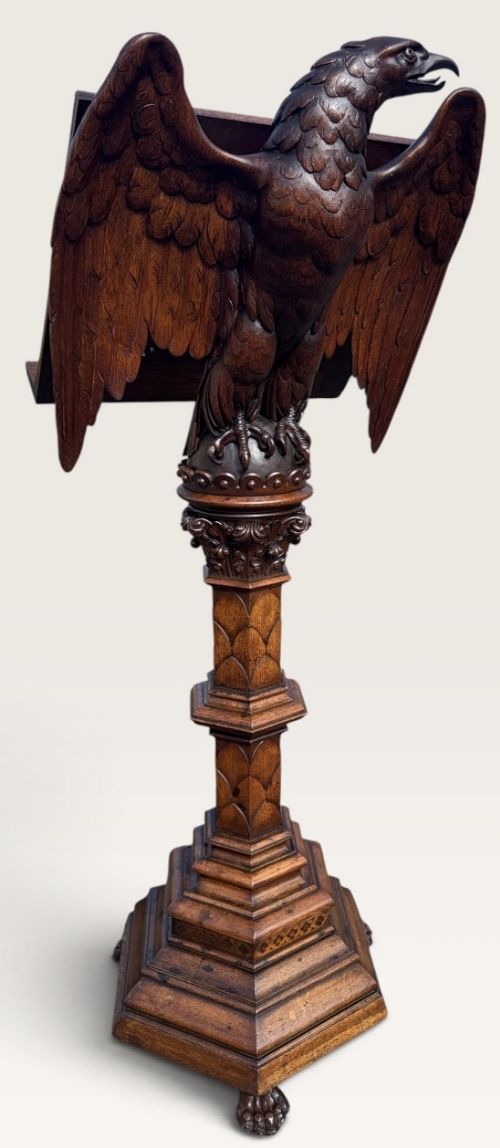
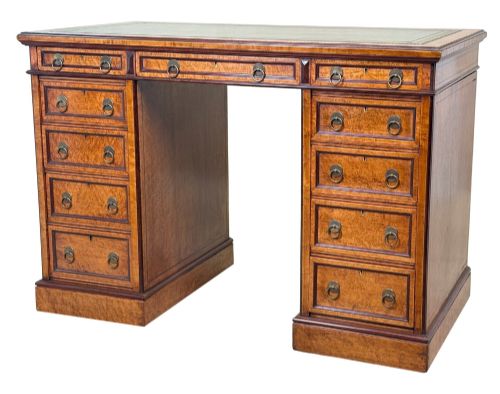
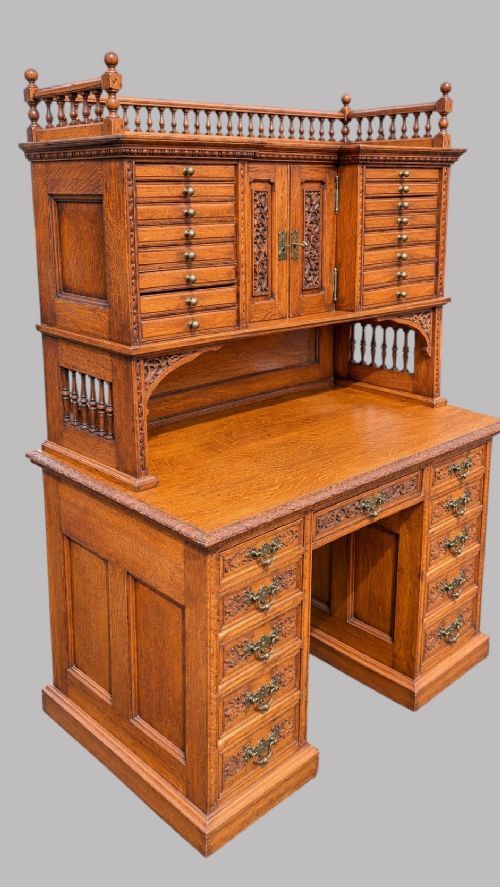
Pedestal desks and kneehole variations dominate the selection, typically constructed with banks of drawers flanking a central space. Alongside these, you find specialised forms like Wooton desks, military chests with secretaire drawers, and ecclesiastical prayer desks or pulpits.
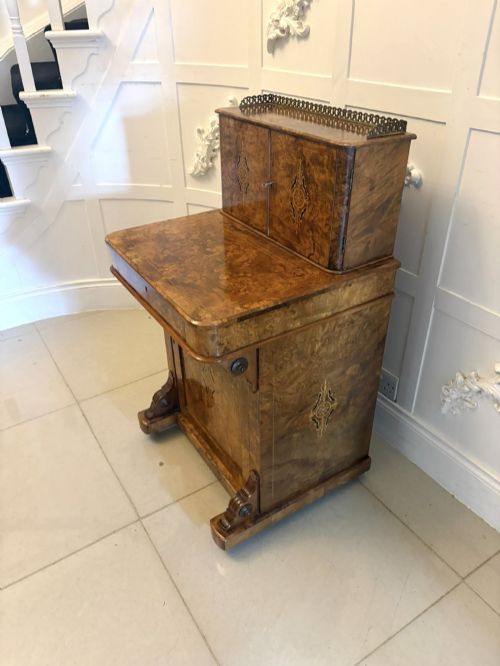
Makers and workshops of the period utilised various woods, producing pieces in plain mahogany and oak as well as highly figured burr walnut, rosewood, and ebonised finishes. Stylistic influences span Gothic Revival, Aesthetic Movement, Arts and Crafts, and French Revival alongside simpler country interpretations.
Construction and Materials
Makers constructed the primary carcases of these desks using solid timbers like mahogany, oak, and walnut, frequently applying veneers of burr walnut, flame mahogany, or thuya to prominent drawer fronts and writing surfaces. Secondary woods like pine appear in internal drawer linings and hidden framing.
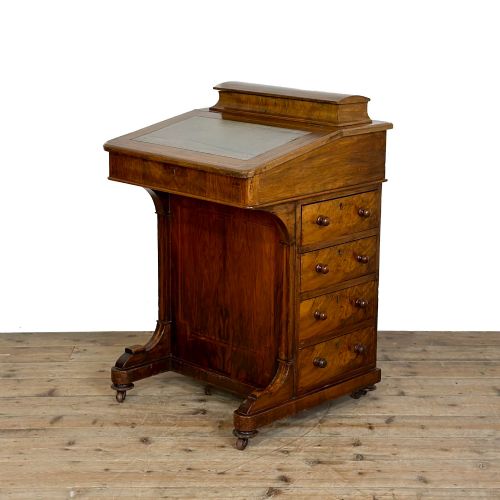
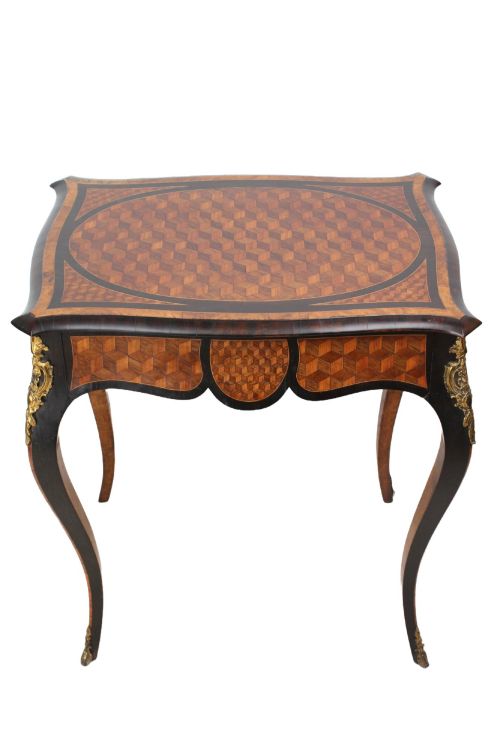
Writing surfaces frequently incorporate inset panels of tooled leather, held within moulded wooden borders, while campaign and military variations employ brass binding and flush-fitting handles to protect corners during transport. Decorative elements include hand-carved Green Man motifs, applied ivory inlay, Wedgwood plaques, and parquetry patterns.
Cabinetmakers utilised dovetailed drawer construction and turned wooden knobs or brass pulls, securing compartments with functioning brass lever locks. Ebonised finishes and parcel-gilding provided alternative surface treatments, while structural support came from turned legs, bracket feet, or heavy plinth bases.
One listed desk comes complete with a secret flap for hiding letters and small treasures from inquisitive houseguests.
Judging Quality
The distinction between ordinary and superior pieces rests on the selection of timber figure, the precision of cabinetmaking joints, and the integrity of secondary materials. Desks featuring matched flame mahogany or burr walnut veneers demonstrate greater ambition than plain or heavily stained alternatives.
Hardware specification separates workshop standards, with solid brass locks, heavy brass drop handles, and neatly dovetailed drawer boxes indicating superior execution. Secondary details, such as intricate parquetry, hand-carved ornament, or applied plaques by notable cabinetmakers, elevate specific examples above standard production.
Proportion and structural retention dictate long-term desirability, as pieces maintaining their original leather writing inserts, internal partitions, and matching keys retain greater architectural coherence. The integration of secondary woods and the absence of clumsy alterations confirm the original hand of the nineteenth-century workshop.
JAS Shoolbred·Trollope & sons·Charles Andrea Nosotti·Gillows·Jackson & Graham·Maple & Co.
The Victorian Furniture Desk Glossary
- Pedestal desk
- A heavy writing table comprising two separate pedestals of drawers supporting a single top, often fitted with an inset leather writing surface.
- Partners desk
- A double-sided variation of the pedestal desk designed with drawers and cupboards facing both directions so two people could work opposite each other.
- Secretaire
- A cabinet or chest incorporating a drop-down writing flap that conceals a fitted interior of small drawers and pigeonholes.
- Kneehole desk
- A compact desk featuring a central recess for the legs, flanked by single or double tiers of small drawers.
- Campaign furniture
- Portable furniture built in sections with brass corners and recessed handles, originally intended for military officers on the march.
Victorian Furniture Desk: Frequently Asked Questions
What is a partners desk?
A partners desk is a large double-sided writing table designed with drawers and cupboards on both faces. This configuration allowed two individuals to sit opposite each other and work simultaneously.
These pieces typically date from the nineteenth century and were constructed for use in libraries, studies, and administrative offices. They frequently feature leather-lined tops and heavy timber construction in mahogany or oak.
How do I identify a Victorian kneehole desk?
A Victorian kneehole desk is characterised by a central recess for the user's knees, flanked by two banks of smaller drawers. They generally measure smaller than full pedestal desks, making them suitable for domestic studies.
Construction materials commonly include mahogany, walnut, or oak, often finished with a tooled leather writing surface. The presence of dovetailed drawer linings and original brass hardware helps confirm their nineteenth-century origin.
What is a campaign writing slope?
A campaign writing slope is a portable box that folds open to provide an angled writing surface and storage for paper and ink. They were built for travel by military officers and officials during the nineteenth century.
These pieces use durable timbers like camphor wood or mahogany, reinforced with brass corners and flush handles to withstand movement. Internal compartments often include secret drawers and lidded inkwells.
How do I care for a leather desk top?
Leather desk tops require gentle cleaning with a damp cloth and occasional treatment with specialist leather balms to prevent drying and cracking. Avoid using harsh chemical cleaners or placing hot cups directly on the surface.
Many nineteenth-century desks retain their original gold-tooled leather inserts, which benefit from minimal moisture and protection from direct sunlight to preserve the colour and tooling.